
In this guide
Quick answer
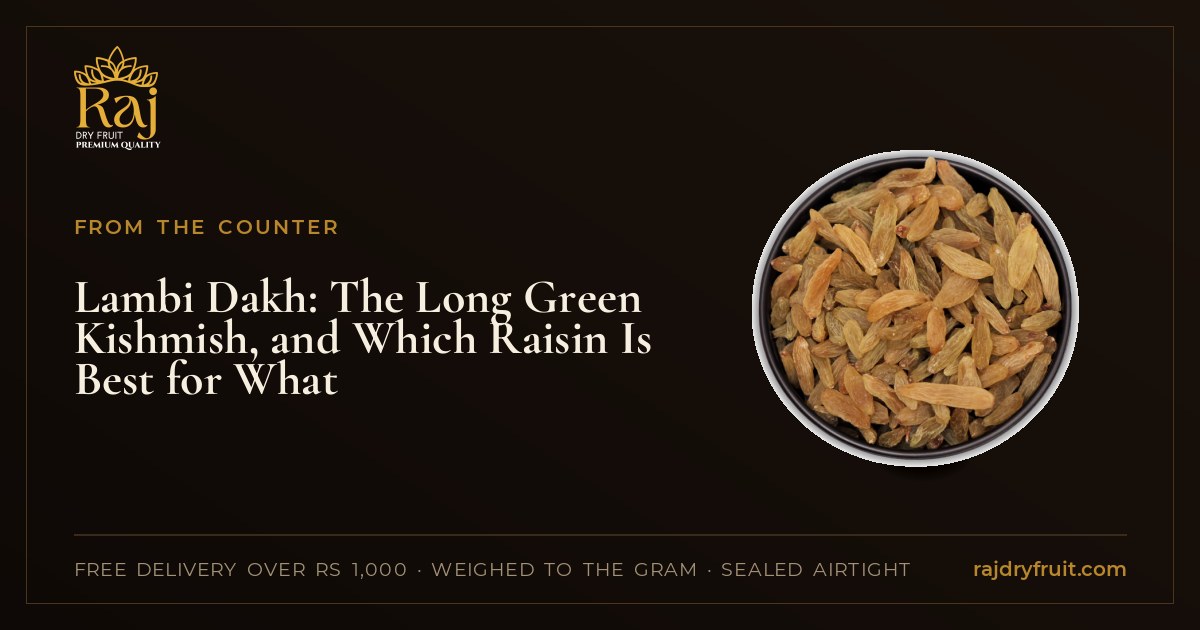
Lambi dakh is the long, slender, green seedless kishmish, made from long-berried grapes dried slowly in the shade so they keep their green colour. It is the premium raisin for snacking, gift boxes and soaking, the best kishmish to eat as it is. For halwa, kheer and pulao regular dakh does the same job for less.
What makes lambi dakh different?
Three things set it apart from the ordinary kishmish in most kitchens. The shape is long and thin, often two to three times as long as it is wide, because it comes from long-berried seedless grapes. The colour is green to golden-green, because the grapes are dried in shade, in airy sheds, rather than in direct sun, which would darken them. And the texture is firmer and meatier, with a sweet, slightly tangy taste.
Much of India’s kishmish comes from the grape belt of Nashik and Sangli in Maharashtra and Vijayapura in Karnataka, where shade-drying sheds turn the season’s grapes into raisins. The raisin has been made this way for centuries; the long green style was long associated with Afghanistan, which is why some older shops still call it Kandhari or Afghani kishmish.
Which kishmish is best for what?
There is no single best kishmish, only the best one for a particular job. This is how the four common raisins line up.
| Raisin | Look | Taste | Best for |
|---|---|---|---|
| Lambi dakh | Long, slender, green | Sweet, firm, slightly tangy | Snacking, gift boxes, guests, soaking |
| Regular dakh | Smaller, rounder, golden-green | Sweet, softer | Halwa, kheer, pulao, sevaiyan, laddoos |
| Kali dakh | Black, seedless | Deep, rich, less tangy | Overnight soaking, cakes, trail mix |
| Munakka | Large, brown, with seeds | Very sweet, sticky | Soaking, winter use, milk |
Kishmish, dakh and munakka are often used as if they mean the same thing. Our guide on the difference between kishmish, munakka and dakh sorts out the names.

How do you tell good lambi dakh from poor?
Long green kishmish is the raisin most often dressed up to look better than it is. A few checks before you buy, or as soon as the pack arrives:
- Colour: natural green to golden-green, with slight variation between pieces. An unnaturally even, bright colour across every raisin is worth a second look.
- Length: most pieces should be long and slender. A pack with many short, round pieces is a mixed grade.
- Feel: firm and plump, slightly sticky, not hard and dry or wet and clumped.
- Stalks and stones: a few stalks are normal; many mean poor cleaning.
- Taste: sweet with a little tang. Sourness or a fermented smell means old or damp stock.
Wash raisins quickly in water before eating to remove dust and any light oil coating used to keep them separate, then pat them dry.
What does lambi dakh cost against other raisins?
Lambi dakh sits at the top of the kishmish shelf. Today kishmish works out to at today's shop rate across our grades, and munakka to at today's shop rate. In our packs, lambi dakh is at today's shop rate, regular dakh is at today's shop rate, and kali dakh is at today's shop rate. For a full breakdown, see the kishmish price page and dakh rate per kg.
The price gap is the reason to match raisin to job. A spoon of kishmish in a pot of halwa does not need the long green grade; it disappears into the sweet. A bowl of kishmish on the table, or in a gift box, is where the long green grade shows its worth.
How much kishmish does a household use?
For a family of four that soaks a spoon of kishmish daily, uses it in sweets once a week and keeps a small snacking bowl, about 500 g of kishmish lasts a month. A sensible split is 250 g lambi dakh for the bowl and soaking, and 250 g regular dakh for the kitchen. In festival months, double the kitchen share.
Kishmish keeps well: three to four months in an airtight jar in a cool cupboard, and six months or more in the fridge. If raisins harden, soak them in warm water for ten minutes before using them in cooking.
Is lambi dakh good for soaking?
Yes, and it is one of the most common ways it is eaten. Ten to fifteen lambi dakh soaked overnight in half a cup of water swell up, soften and turn sweeter, and many families eat them first thing in the morning with the soaking water. Kali dakh is the other popular soaking raisin; our guide to black raisins compares the two. Raisins are naturally high in sugar, so if you manage diabetes, speak to your doctor about portions.
At Raj Dry Fruit, orders start at ₹1,000 and every order ships free. A household basket of 250 g lambi dakh, 250 g regular dakh, 500 g badam and 500 g kaju covers soaking, snacking and the month’s cooking in one delivery. Every raisin we stock is in the dakh and kishmish collection.


Questions people ask
Which kishmish is best?
For snacking, soaking and gifts, long green kishmish (lambi dakh) is usually considered the best. For cooking, regular dakh works just as well and costs less. Kali dakh is the favourite for overnight soaking in many homes.
What are long green raisins called?
In India they are called lambi dakh, long kishmish or green kishmish, and in some older shops Kandhari or Afghani kishmish. They are seedless raisins made from long-berried grapes dried in the shade. The shade drying keeps the green colour.
Which is the best kishmish for halwa and kheer?
Regular dakh is the practical choice for halwa, kheer and pulao. It plumps up well in hot cooking and costs less than lambi dakh. Add it in the last few minutes so it stays whole.
Is lambi dakh the same as munakka?
No. Lambi dakh is a small, seedless green raisin, while munakka is a large brown raisin with seeds. Munakka is stickier and sweeter, and is usually soaked. They come from different grapes and are used differently.
Written at our counter, where these questions get asked every week.


