
In this guide
Quick answer
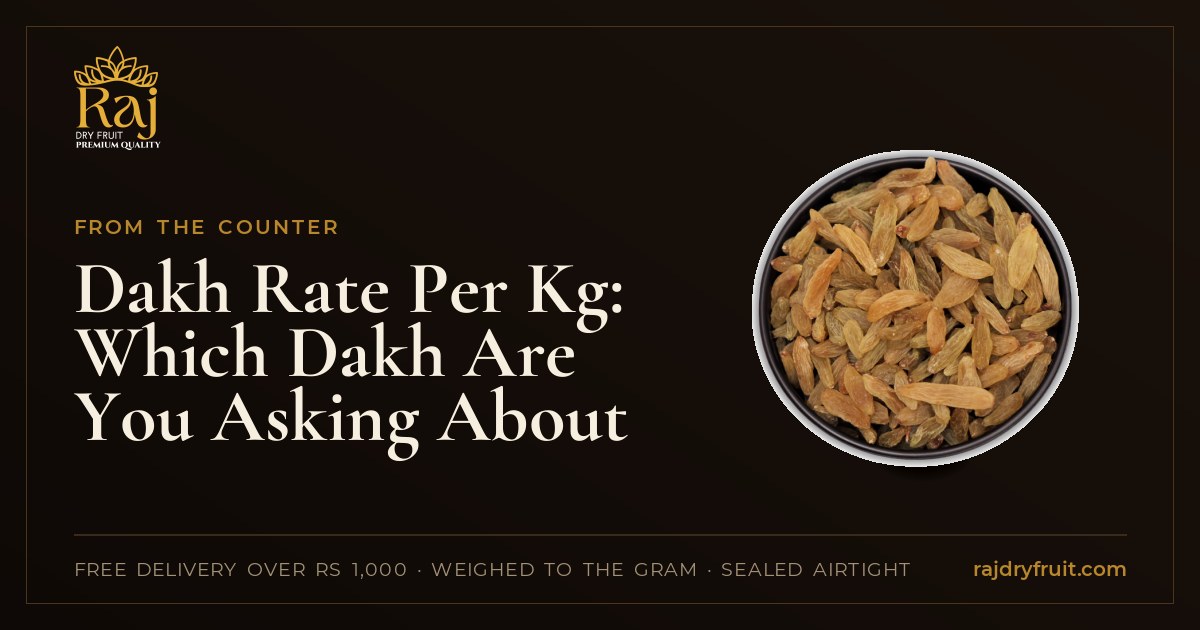
Dakh is the word half of western India uses for raisins, and it is the reason a quoted rate so often fails to match what arrives. The word covers four quite different products at four quite different figures, and the shop and the buyer are rarely picturing the same one.
What does dakh mean?
It is the Gujarati and Rajasthani word for a dried grape. In practice it is used loosely for any raisin, which is where the trouble starts. In Hindi the same fruit is kishmish, and in the trade the large seeded one is abjosh or munakka. One fruit, four words, and none of them tells the shop which grade you want.
Which dakh are you being quoted for?
| Asked for as | What it is | Where the rate sits |
|---|---|---|
| Lambi dakh | Long, golden, seedless | The common one, mid range |
| Round or regular dakh | Small, round, seedless | The cheapest of the four |
| Kali dakh | Black, seedless, chewy | Dearer than golden |
| Munakka or abjosh | Large, seeded, soft | The dearest by a distance |
At our counter today the seedless kinds work out to at today's shop rate, and the long golden one most people mean by lambi dakh is at today's shop rate a pack. Those figures are read off the shop as this page loads, so they move the day the rate does.
Why is kali dakh dearer than the golden one?
Because it is a different grape dried a different way, not a golden raisin that has gone dark. Black raisins are dried from a darker variety and are left longer, which costs more time and loses more weight, and they arrive chewier and less sweet. Households buy them for exactly that, not as a cheaper alternative.
They are also the ones most often sold under a borrowed name. Black raisins are not prunes, whatever a label says, and the comparison of prunes and kali dakh sets out what each actually is before you pay for one expecting the other.
There is a fifth thing sold under the same word in some shops, which is green dakh — the long seedless raisin dried in the shade rather than the sun, so it keeps its colour. It is the same grape as the golden one and is priced a little above it, because shade drying takes longer and more of the crop is lost on the way. If a shop quotes you green and golden at the same figure, one of the two is not what it says.
How do you ask so the rate matches what arrives?
- Say seedless or seeded first. That one word separates munakka from everything else and it is the biggest gap in the four rates.
- Then say the colour — golden, green or black.
- Then say long or round if you are asking for a seedless one, as the long grade is dearer.
- Ask for the net weight of the pack, not just the figure, because packs in this category are rarely round numbers.
Done in that order, two shops become comparable in one sentence. Done the usual way — “what is your dakh rate” — you will be quoted the cheapest thing on the shelf, which is fine until it arrives.
Which one should you actually buy?
For poha, kheer and daily cooking, the round seedless one, which is the cheapest and disappears into everything. For a jar on the table and for children, the long golden one, which is sweeter and looks better. For eating deliberately in the morning, the black one or munakka, which is what most households here keep separately from the cooking jar.
A house that keeps two jars rather than one almost always spends less over a year, because the expensive grade stops being used for cooking. Our orders start at ₹1,000 and every order ships free, so both jars travel in the same order. Today’s full set of figures is on the kishmish price page, and the names are untangled properly in the guide to kishmish, munakka and dakh.
Questions people ask
Is dakh the same as kishmish?
Yes, in everyday use. Dakh is the Gujarati and Rajasthani word and kishmish the Hindi one, both for a dried grape. Neither word tells you the grade.
What is lambi dakh?
The long golden seedless raisin, which is the one most households picture when they say dakh. It costs more than the small round kind and less than munakka.
Why is my dakh sticky?
Warmth. Raisins sugar and stick when the jar sits near a stove or in a humid month. It is not spoilage, though a cold shelf keeps them loose and separate.
Which dakh is best for cooking?
The small round seedless one. It is the cheapest of the four and behaves exactly like the others once it is in the pot. You can see the whole shelf with today’s rates on the dry fruits page.
We deliver across India See 87 city pages
Written at our counter, where these questions get asked every week.


