
Guides from our counter
Knowledge Centre
The questions people actually ask us before they buy — what separates two almond lots, how to judge a khajur with your hands, what mukhwas is supposed to be. Answered the way we would answer them across the counter.
-
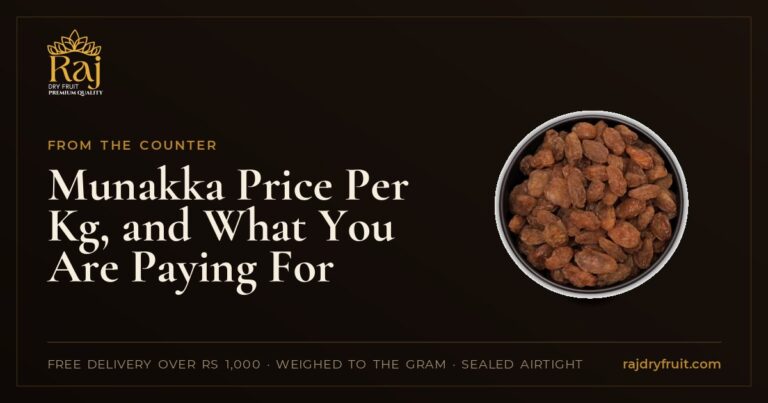 Munakka Price Per Kg, and What You Are Paying For
Read the blog ›
Munakka Price Per Kg, and What You Are Paying For
Read the blog ›
-
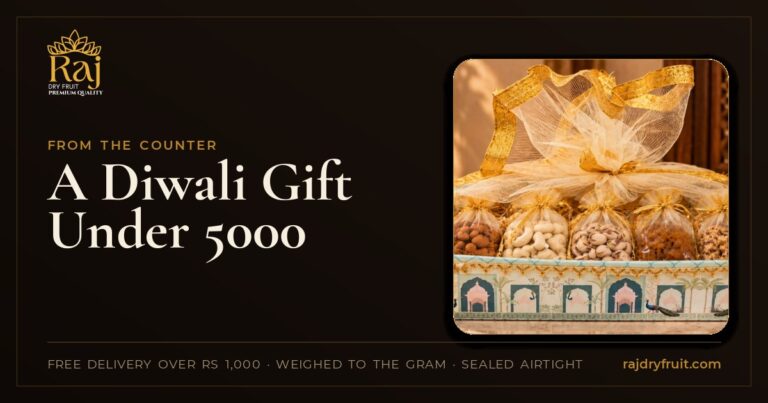 A Diwali Gift Under 5000: The Box for a Director, a Big Client or the Samdhi
Read the blog ›
A Diwali Gift Under 5000: The Box for a Director, a Big Client or the Samdhi
Read the blog ›
-
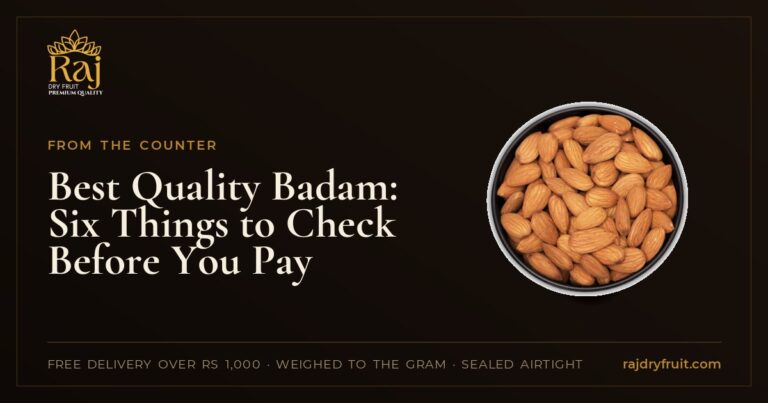 Best Quality Badam: Six Things to Check Before You Pay
Read the blog ›
Best Quality Badam: Six Things to Check Before You Pay
Read the blog ›
-
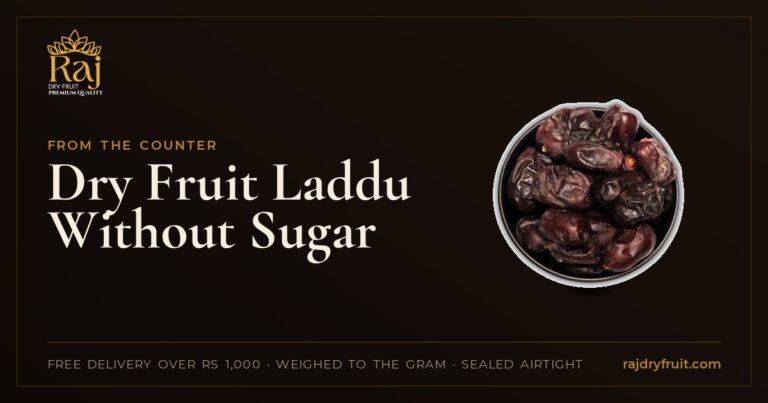 Dry Fruit Laddu Without Sugar: The Dates Base, Ratios for a Kilo, and How Long They Keep
Read the blog ›
Dry Fruit Laddu Without Sugar: The Dates Base, Ratios for a Kilo, and How Long They Keep
Read the blog ›
-
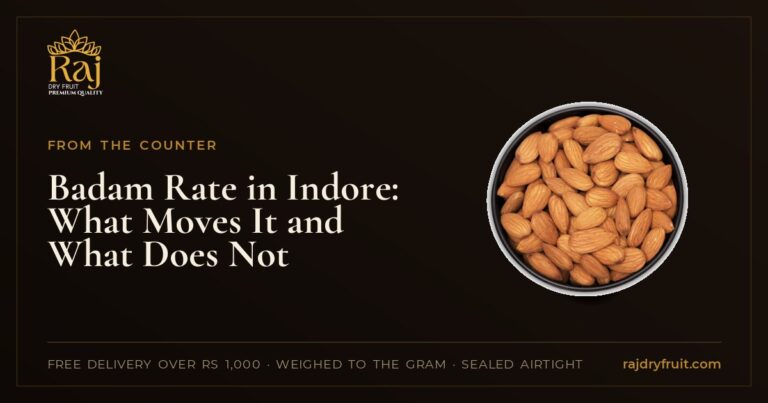 Badam Rate in Indore: What Moves It and What Does Not
Read the blog ›
Badam Rate in Indore: What Moves It and What Does Not
Read the blog ›
-
 Dakh Rate Per Kg: Which Dakh Are You Asking About
Read the blog ›
Dakh Rate Per Kg: Which Dakh Are You Asking About
Read the blog ›
-
 A Dates Gift Box: Medjool, Ajwa and Kalmi, and Which One to Send to Whom
Read the blog ›
A Dates Gift Box: Medjool, Ajwa and Kalmi, and Which One to Send to Whom
Read the blog ›
-
 Dhanteras Gift Ideas Beyond Gold and Steel: A Box for the Day of New Beginnings
Read the blog ›
Dhanteras Gift Ideas Beyond Gold and Steel: A Box for the Day of New Beginnings
Read the blog ›
-
 Kaju Tukda: Which Broken Cashew for Which Dish, and Why It Saves Money
Read the blog ›
Kaju Tukda: Which Broken Cashew for Which Dish, and Why It Saves Money
Read the blog ›
-
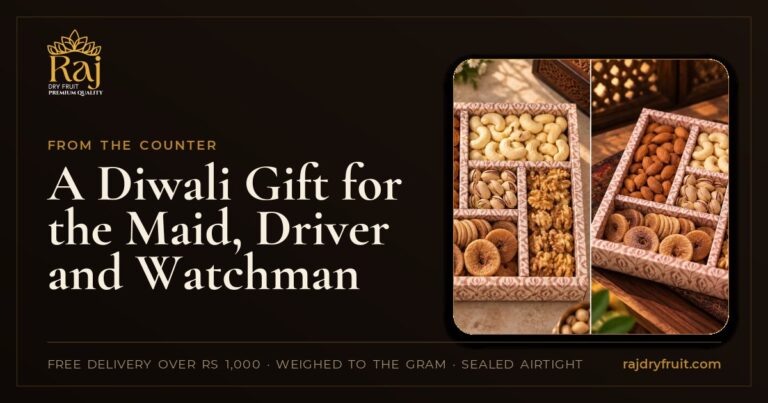 A Diwali Gift for the Maid, Driver and Watchman: Small Boxes That Still Feel Like Respect
Read the blog ›
A Diwali Gift for the Maid, Driver and Watchman: Small Boxes That Still Feel Like Respect
Read the blog ›