
In this guide
Quick answer
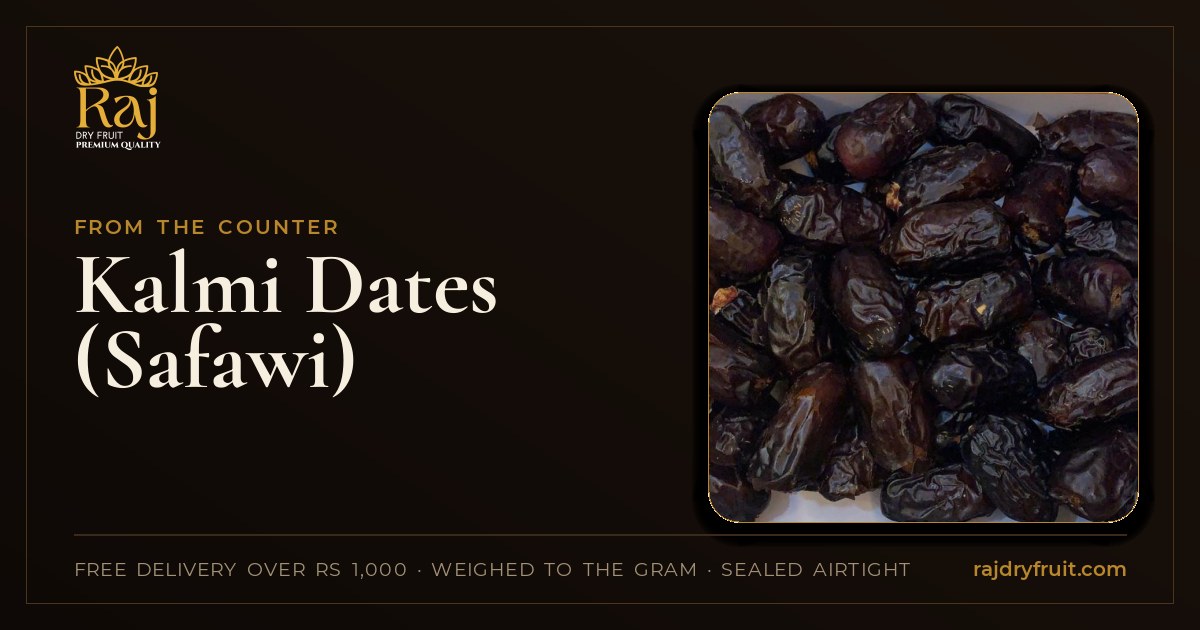
Kalmi dates are the Safawi variety grown around Madinah in Saudi Arabia: long, almost black, slightly wrinkled and semi-dry, with a soft chew and a mild sweetness that sits between everyday khajur and the richer Medjool. Families buy them as a daily date that feels premium without the price of Ajwa, and for iftar and guests.
What makes a Kalmi date different?
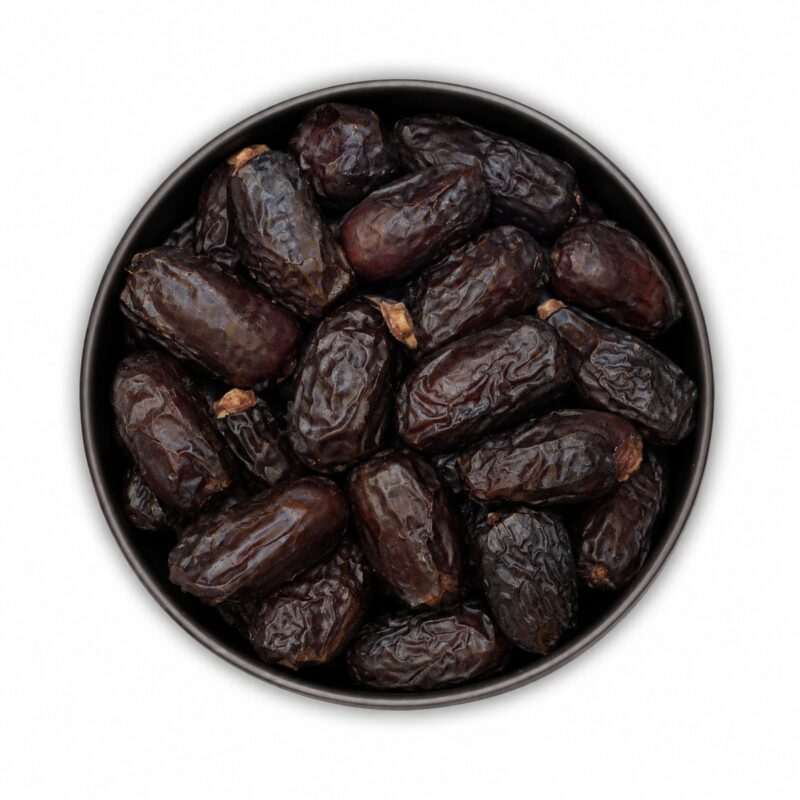
Shape and texture first. A Kalmi date is long and narrow, often 4 to 5 cm, with a dark brown to black skin that wrinkles lengthwise. The flesh is firm enough to hold its shape when you bite it, yet soft enough not to feel dry. It is less sticky than Medjool, so it travels well in a tiffin and does not glue itself to the box.
The taste is a gentle caramel sweetness with a faint hint of dried fruit, not the honey-like intensity of a soft Medjool. Many people who find Medjool too sweet to eat more than one prefer Kalmi for exactly this reason. The names are used interchangeably in India: Safawi is the Arabic cultivar name, and Kalmi is the trade name most Indian shops use.
How does Kalmi compare with Ajwa and Medjool?
All three are premium dates, but they are bought for different reasons. The table sets out the differences a buyer actually notices.
| Date | Look | Texture and taste | Roughly per kilo | Bought for |
|---|---|---|---|---|
| Kalmi (Safawi) | Long, dark, wrinkled | Semi-dry, chewy, mildly sweet | 80 to 110 dates | Daily eating, iftar, guests |
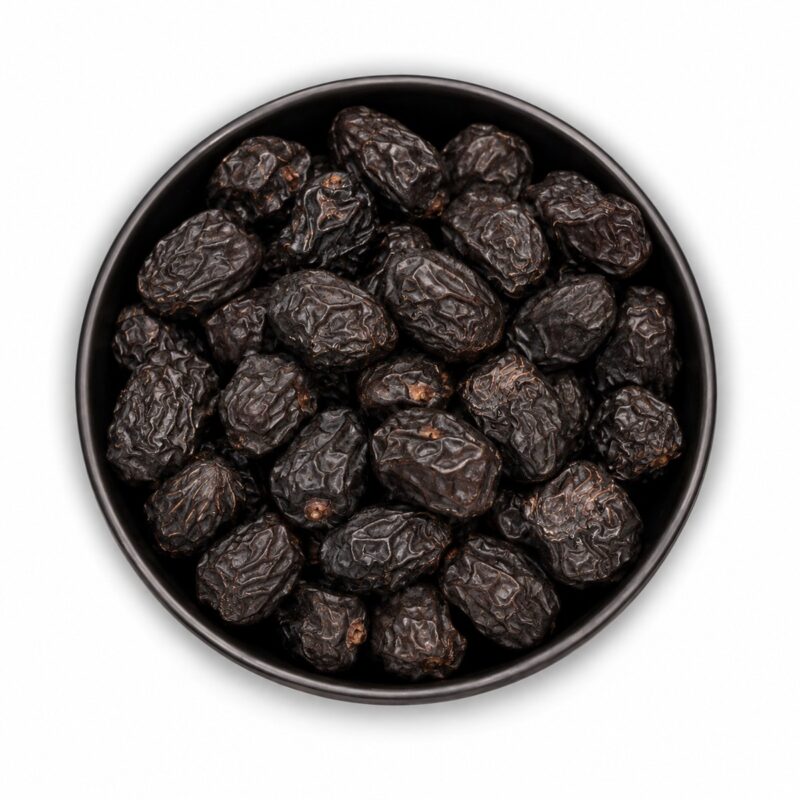
| Ajwa | Small, round, black, fine wrinkles | Soft, dry-ish, less sweet, slight prune note | 110 to 150 dates | Religious significance, gifting |
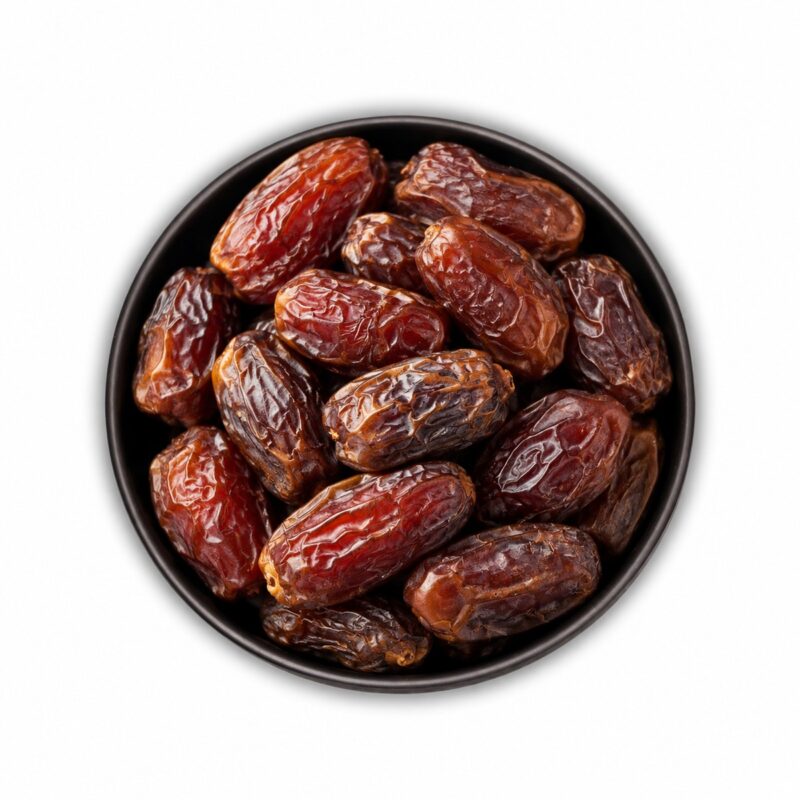
| Medjool | Large, plump, amber to brown | Very soft, sticky, rich and sweet | 35 to 50 dates | Dessert, gifting, energy before the gym |
Ajwa carries a special place for many Muslim families because of its association with Madinah, and its price reflects that demand. Kalmi comes from the same region and is the date many families eat through the year while keeping Ajwa for special occasions. Our guide to the types of dates covers the cheaper everyday varieties as well.
Who should buy Kalmi dates?
Kalmi suits anyone who eats dates every day and wants better than the loose khajur sold in the market, without paying Medjool or Ajwa rates. In practice that means:
- Households that break the Ramzan fast with dates and need several hundred over the month.
- People who eat two or three dates with milk at night, a habit we cover in dates with milk at night.
- Office and school tiffins, because the dates do not stick together or leak syrup.
- Guests and hosts who want a date that looks premium in a bowl.
Kalmi is a less obvious choice for baking or a date shake, where a soft, cheaper date blends better and costs less.
How many Kalmi dates should you eat in a day?
Two to four is the usual household habit. A Kalmi date weighs roughly 9 to 12 g, so three of them come to about 30 g. Dates are rich in natural sugar: USDA figures put dates at around 75 g of carbohydrate and 7 g of fibre per 100 g, so 30 g carries about 22 g of carbohydrate. Anyone watching blood sugar should speak to their doctor about how many suit them.
What do Kalmi dates cost today?
Across our date shelf, khajur works out to at today's shop rate today, and Kalmi sits in the premium band of that range. Kalmi pack prices are at today's shop rate, and every date we stock is listed on the khajur price page.
A 500 g pack of Kalmi lasts a two-person household about a month at three dates a day each. Our orders start at ₹1,000 and every order ships free, and a Kalmi pack with 500 g of kaju and 500 g of badam crosses it easily. For gifting, our premium dates page puts Kalmi beside Ajwa and Medjool, and the whole shelf is in the dates collection.
For background on how many date cultivars exist and where they grow, the date palm entry on Wikipedia is a good starting point.
How should Kalmi dates be stored?
In an airtight jar, away from the stove and sunlight. Because they are semi-dry, Kalmi dates keep well: two to three months at room temperature in a cool kitchen, six months or more in the fridge. If they harden in winter, warm a few in your palm or leave them in a closed box with a slice of bread overnight. White sugar spots on the skin are usually natural sugars coming to the surface, not mould, though a sour smell means the pack should go.
Questions people ask
Are safawi dates and kalmi dates the same?
Yes. Safawi is the cultivar name from Madinah and Kalmi is the name most Indian shops use for it. The long, dark, semi-dry date sold under either name is the same variety.
Which is better, ajwa dates vs kalmi dates?
Neither is better for eating; they differ in taste and purpose. Ajwa is smaller, softer and prized for its link to Madinah, while Kalmi is longer, chewier and better value for daily eating.
What decides the kalmi dates price?
Size, how recent the harvest is, and the grade of the lot. Larger, evenly dark dates from the latest season cost more than small or mixed sizes.
Do Kalmi dates have seeds?
Yes, they are sold with the stone in. The stone is long and thin and slides out easily if you press the date open along its side.
Written at our counter, where these questions get asked every week.


