In this guide
Quick answer
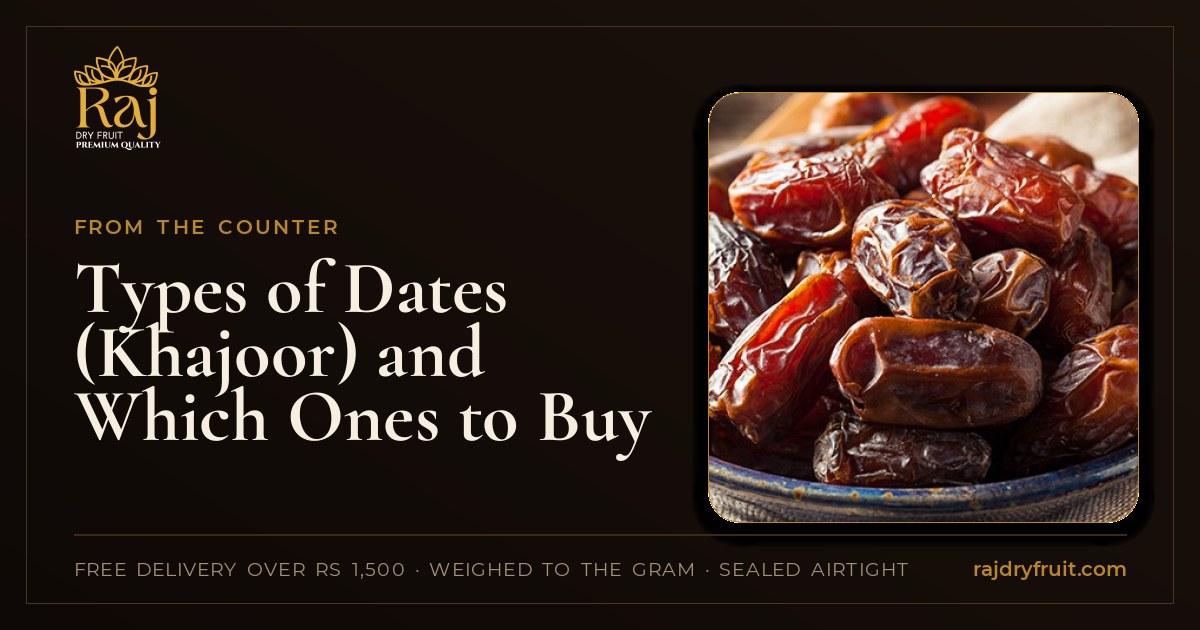
The types of dates you will find in most Indian shops are Medjool, Ajwa, Kalmi (also sold as Safawi), Fard, Kimia, everyday black khajoor, and the dry kinds, kharak and chuara. The best dates are simply the ones that suit the job: Medjool and Kimia for eating soft, Ajwa and Kalmi for gifting and slow eating, Fard and black khajoor for everyday use and cooking, and chuara for boiling in milk.
We keep all eight on our shelf, and the difference between them is one of the questions we are asked most. This is how we explain it at the counter.
Soft dates and dry dates are not the same thing
Every date grows on the same kind of palm. What separates a soft khajoor from a hard chuara is when it was picked and how it was dried.
Soft dates are left on the tree until they are fully ripe and packed with much of their moisture still in them. They are sticky and sweet, and they keep best somewhere cool.
Kharak and chuara are picked earlier, before the fruit softens, then boiled and dried in the sun until they are hard. They are less sweet, they keep for months, and they are meant to be soaked, boiled or ground rather than eaten straight from the packet. In many homes the words kharak and chuara are used for the same thing: dry dates.
Types of dates compared
| Date | Taste | Texture | Best use |
|---|---|---|---|
| Medjool | Rich, caramel-like, very sweet | Large, soft, fleshy | Eating as they are, stuffing with nuts, gifting |
| Ajwa | Mild, less sugary, gently fruity | Small to medium, near black, soft but fine and slightly dry | Slow eating, gifting, breaking a fast |
| Kalmi / Safawi | Deep and sweet without being cloying | Medium, dark, soft and moist | Everyday eating, gift boxes, milk |
| Fard | Sweet with a light toffee note | Medium, dark brown, firm and chewy | Daily snacking, chopping into sweets and shakes |
| Kimia | Very sweet, almost syrupy | Soft, moist, thin skin, nearly black | Eating fresh, date shakes |
| Black khajoor | Plain, honest sweetness | Soft and sticky | Laddoo, halwa, chutney, everyday use |
| Kali Kharak | Mildly sweet | Hard, dry, darker skin | Soaking, boiling in milk, grinding |
| Chuara | The least sweet, a little woody | Hard and dry | Boiling in milk, panjiri, family customs |
The soft dates, one by one
Medjool, the large soft date
Medjool Dates are the ones people picture when they think of a premium date: big, soft, with a thin skin that wrinkles around a lot of flesh. The taste is close to caramel.
Because each one is large, two Medjool dates go further than four smaller ones. They are the date we suggest for stuffing with an almond or a walnut half and putting out for guests. They are also the most expensive soft date on our shelf, so they are wasted if they are going to be blended into a shake.
Ajwa and Kalmi, the Medina dates
Ajwa Dates come from around Medina in Saudi Arabia. They are smaller, very dark and less sugary than most, with a fine, slightly dry flesh. People who find other dates too sweet usually like Ajwa. Many families buy them for Ramzan, to break the fast with.
Kalmi / Safawi Dates are also a Medina date. They are softer and moister than Ajwa, sweet but not heavy, and they are the date we would choose for a gift box that has to please everybody. They also chop cleanly into warm milk.
Fard, Kimia and everyday black khajoor
Fard Black Dates usually come from Oman. They are firmer and chewier than the soft dates above, which makes them easy to carry and easy to chop. For a household that eats a few dates every day, Fard is good value.
Kimia is the name Indian shops use for soft, very dark Iranian dates. They are the sweetest and moistest of the lot, which also means they are the most delicate: keep them in the fridge in summer.
Our Black Dates – Khajoor are the everyday kitchen date. They are soft, sticky and priced for cooking, so this is the one to reach for when dates are going into a laddoo, a halwa or a tamarind chutney and nobody will see them whole.
Kali Kharak and chuara, the dry dates
Kali Kharak is a darker dry date. Like pale chuara, it is hard enough to need soaking or boiling before it is pleasant to eat, and it keeps well in an airtight jar.
Chuara is the one most North Indian kitchens know best. It is boiled in milk until soft, ground into panjiri, or used in wedding and puja customs in many families. It is also the cheapest way to keep dates in the house for months.
Which are the best dates in India to buy
There is no single best date, only the best one for what you are doing with it.
- For guests and gifting: Medjool or Kalmi.
- For something less sweet: Ajwa.
- For eating a few every day: Fard or black khajoor.
- For cooking and sweets: black khajoor.
- For milk at night: soft Kalmi chopped in, or chuara boiled in.
Across our dates shelf, soft dates run from around ₹380 to ₹1,380 a kilo, and dry dates from around ₹340 to ₹480. Today’s figures are on our product pages. Whichever kind you pick, the checks for freshness are the same, and we have written them up in how to judge a khajur before you buy it.
Prices on this page were checked in September 2026 and are a guide only. Dry fruit rates change with the crop and the season, so our product pages always show today’s price.
Questions people ask
Which type of date is the sweetest?
Kimia and Medjool are the sweetest of the dates we keep. Ajwa is noticeably milder, and chuara is the least sweet of all.
Are black dates a separate variety?
Not one single variety. Several kinds, including Ajwa, Kimia, Fard and Kalmi, ripen to a very dark brown or black, and shops often sell them under the general name black dates.
What is the difference between khajoor and chuara?
Khajoor is the soft, ripe date. Chuara is a date picked earlier, then boiled and dried until hard, so it is less sweet and keeps much longer.
How should I store dates?
Keep soft dates in an airtight box, in the fridge in hot months. Dry dates only need a clean, airtight jar away from damp.
Written at our counter, where these questions get asked every week.