
In this guide
Quick answer
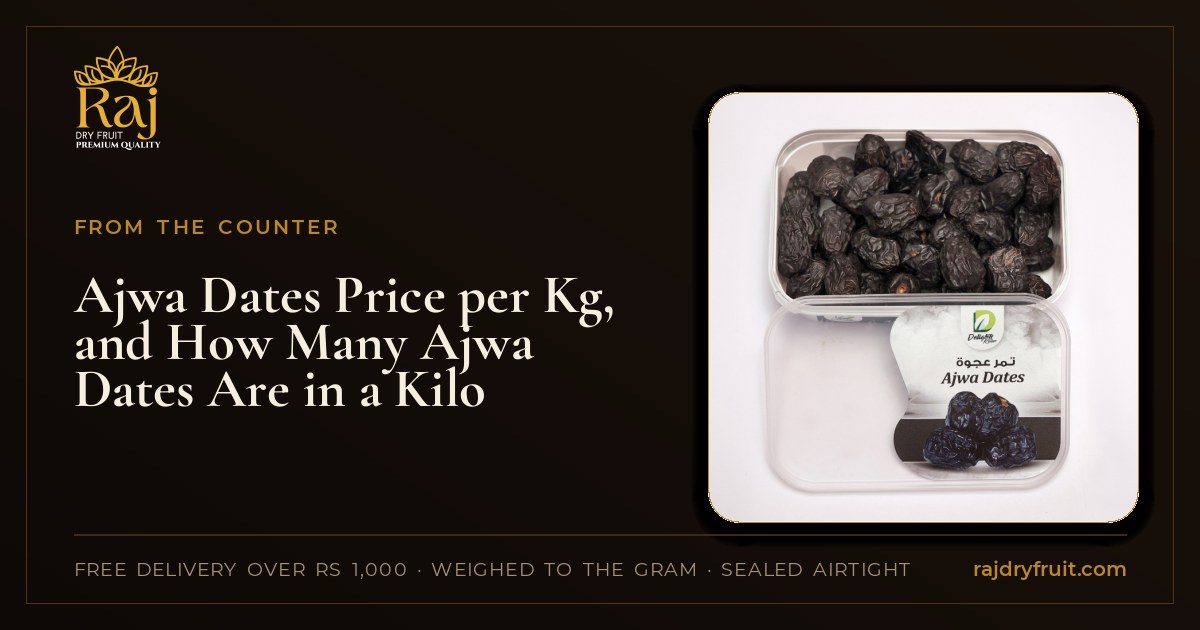
Our ajwa dates price today is at today's shop rate across pack sizes, and a kilo holds roughly 100 to 140 dates, because a single Ajwa weighs about 7 to 10 g. The rate is higher than other dates because Ajwa grows only around Madinah, the harvest is small, and demand peaks every Ramzan.
How many Ajwa dates are in 1 kg?
Roughly 100 to 140, depending on the size grade. Ajwa is a small, round date, so a kilo holds far more pieces than a kilo of Medjool. That count matters more than people think: it tells you how long a pack lasts and how many guests a box will serve.
| Date | Weight of one date | Dates per kg | Dates per 250 g | A 250 g pack lasts (2 a day) |
|---|---|---|---|---|
| Ajwa | 7 to 10 g | 100 to 140 | 25 to 35 | About 2 to 2.5 weeks |
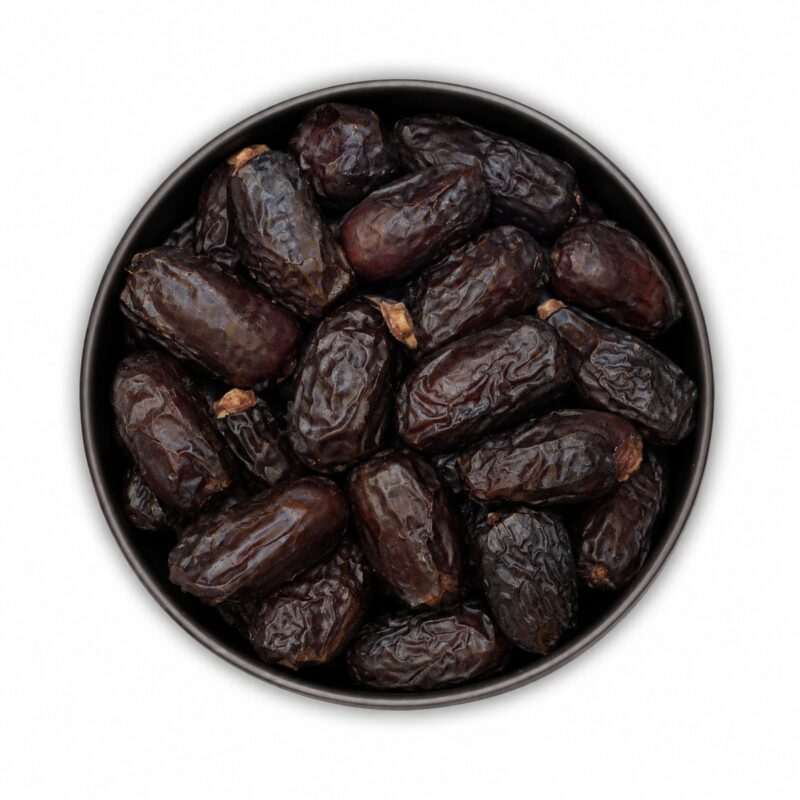
| Kalmi (Safawi) | 9 to 12 g | 80 to 110 | 20 to 28 | About 2 weeks |
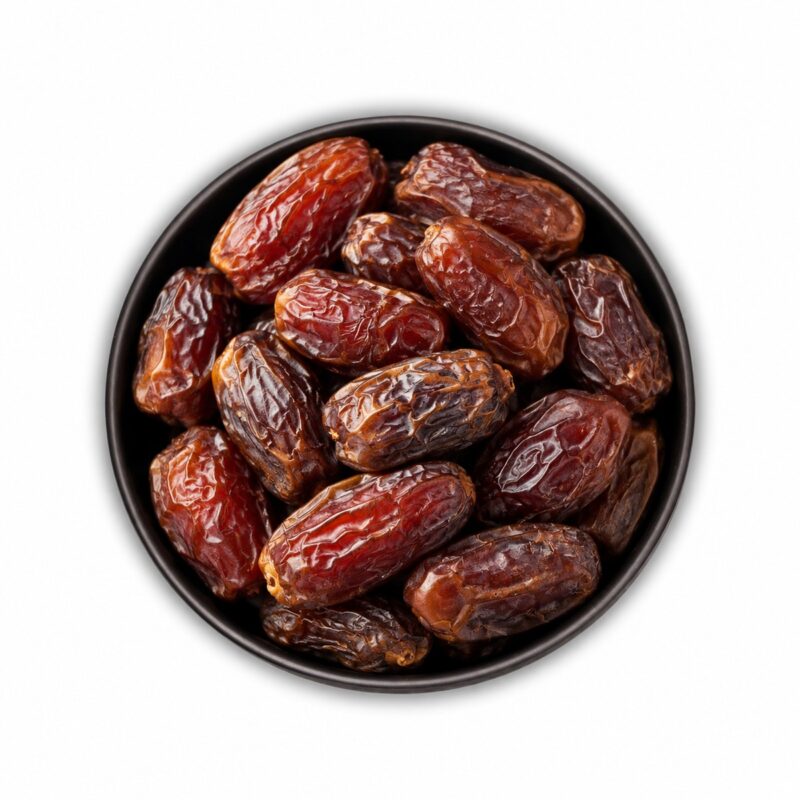
| Medjool | 20 to 28 g | 35 to 50 | 9 to 12 | About 5 days |
So when you compare an Ajwa price with a Medjool price, compare per date as well as per kilo. A kilo of Ajwa feeds a family for far longer than a kilo of Medjool, even when the kilo rate looks similar.
Why is the Ajwa price so high?
Three reasons, none of them a shop’s mark-up. First, origin: Ajwa is a single cultivar grown around Madinah in Saudi Arabia, and the true crop is limited. Second, meaning: for many Muslim families, Ajwa has a special religious association, which keeps demand steady through the year and very high in Ramzan. Third, grading: the best Ajwa is sorted by size and evenness, and the top grades command a premium.
Prices also move with the season. They tend to rise in the weeks before Ramzan and settle afterwards. The cheapest time to stock up is usually a few months after Eid, when the market is quieter. Our khajur price page shows how Ajwa sits against every other date we stock; across the whole shelf, khajur runs to at today's shop rate today.
How can you tell real Ajwa from look-alikes?
Because Ajwa is costly, cheaper dark dates are sometimes sold under its name. Check these points on any pack:
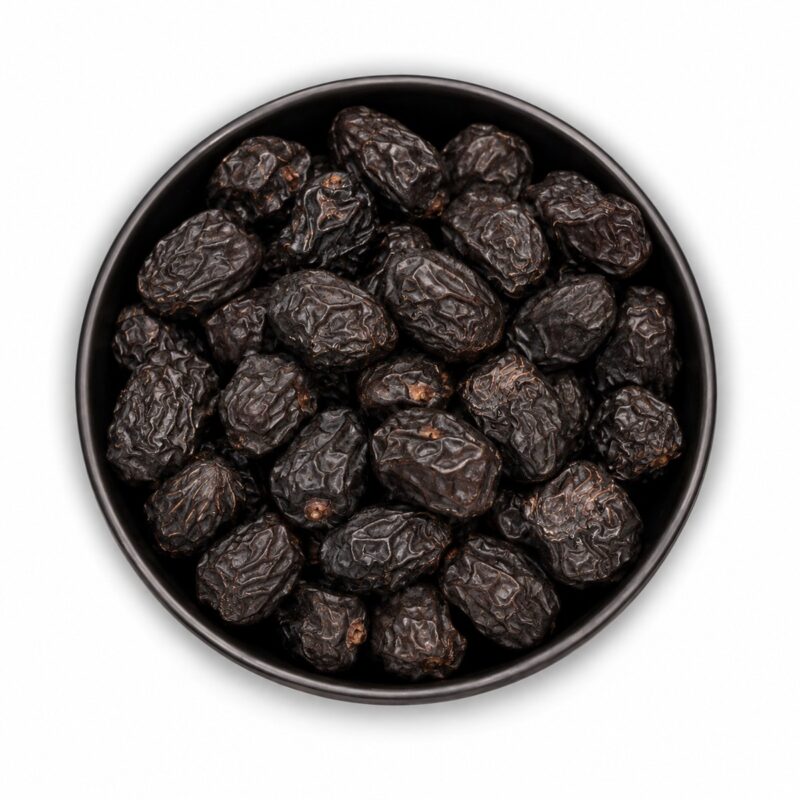
- Shape: genuine Ajwa is small and round to slightly oval, not long and narrow. Long, dark dates are usually Kalmi or Safawi.
- Skin: very dark brown to black, matte, with fine wrinkles running across rather than deep folds.
- Texture: soft and slightly dry, never sticky or syrupy.
- Taste: mild, less sweet than most dates, with a faint prune-like note.
- Seed: small relative to the date, with a light grey-brown colour.
Our Ajwa dates guide goes deeper into each check, with pictures of the differences.
Is Ajwa the right date for you?
It depends on why you are buying. Ajwa is the right choice for families who value its significance, for Ramzan and Eid gifting, and for anyone who likes a less sweet, softer date. For a daily date with milk, a Kalmi or soft black date does the same job for much less. For a rich dessert date or a gift that looks generous, Medjool fits better; its pack prices are at today's shop rate.
Many families keep two jars: Ajwa for the morning, seven at a time in some homes, and a cheaper date for cooking and shakes. Our post on Kalmi dates explains the everyday option, and the premium dates page shows all three side by side.
Does Ajwa make a good gift?
Yes, and it is one of the most appreciated gifts during Ramzan and around Eid. A small box of 250 g holds 25 to 35 dates, enough for a family to share at iftar for a week. Because Ajwa is soft but not sticky, the dates stay separate in the box and look neat when it is opened. For a larger gift, pair a pack of Ajwa with Medjool and some kaju, so the recipient has both the dates that carry meaning and the dates that feel indulgent. Keep the box out of direct sunlight in transit; heat makes any date sweat and stick.
How much Ajwa should a family order?
For a household of four eating two Ajwa a day each, a kilo lasts about two to three weeks. For Ramzan, many families plan around two dates per person at iftar for 30 days, which for four people is 240 dates, or roughly two kilos.
Our orders start at ₹1,000 and every order ships free. A kilo of Ajwa on its own usually gets you most of the way there; add 500 g of kaju or badam and you are comfortably across. Ajwa keeps well too: three months in an airtight jar at room temperature, six months or more in the fridge. Every Ajwa pack we sell is listed on the Ajwa dates product page.
Questions people ask
What is the ajwa dates price 1kg for a good grade?
Good, evenly sized Ajwa sits at the upper end of our Ajwa pack prices shown above. Smaller or mixed sizes cost less, so check the grade before comparing two shops.
How many ajwa dates in 1 kg exactly?
There is no single number, because size varies by lot. Most kilos hold between 100 and 140 dates, with larger grades nearer 100.
Is the ajwa dates price in Mumbai different?
Not from us. We ship at the same rate to every city, including Mumbai, and delivery is free on orders above the minimum. Local shop prices vary with rent and stock age.
Should Ajwa dates be soaked?
There is no need. They are soft enough to eat as they are. Some families soak them overnight in water or milk and eat them in the morning, which is a matter of habit.
Written at our counter, where these questions get asked every week.


