
In this guide
Quick answer
A panjiri recipe for one batch uses 500 g whole wheat atta, 250 g ghee, 250 g powdered sugar and about 400 g of dry fruits and gond: 100 g gond, 100 g badam, 75 g kaju, 50 g makhana, 50 g magaj and 25 g grated coconut. Roast each separately in ghee, then mix. It makes about 1.4 kg.
What goes into one batch of panjiri?
Panjiri is the loose, crumbly winter sweet of Punjab and much of North India: roasted atta, ghee, sugar and a generous mix of dry fruits and edible gum. Every family has its own version. This is a balanced one that most households will recognise.
| Ingredient | Quantity | Prepared how |
|---|---|---|
| Whole wheat atta | 500 g | Roasted in ghee until brown |
| Ghee | 250 g, divided | For the gond, nuts and atta |
| Powdered sugar or boora | 250 g | Mixed in once the atta cools |
| Gond (edible gum) | 100 g | Fried until puffed, then crushed |
| Badam | 100 g | Roasted, coarsely chopped |
| Kaju | 75 g | Roasted, coarsely chopped |
| Makhana | 50 g | Roasted crisp, crushed |
| Magaj (melon seeds) | 50 g | Roasted lightly |
| Dry coconut, grated | 25 g | Roasted lightly |
| Elaichi, saunth | 8 pods, 1 tablespoon | Powdered, added at the end |
Some families add 50 g of kishmish, a teaspoon of ajwain, or a pinch of piplamool for extra warmth. If you are curious about that last one, our note on piplamool explains what it is.

In what order should everything be roasted?
Order matters because each item needs a different heat, and the gond must be fried first while the ghee is clean.
- Heat 75 g ghee in a heavy kadhai. Fry the gond in small batches on a medium-low flame until each piece puffs up white. Lift out and crush with a bowl once cool.
- In the same ghee, roast makhana for four to five minutes until it snaps when pressed. Lift out.
- Roast badam and kaju together for three minutes, then magaj and coconut for one minute. Lift out and chop the nuts coarsely.
- Add the remaining ghee and the atta. Roast on a low flame, stirring all the time, for 20 to 25 minutes until it is a deep golden brown and smells nutty.
- Switch off and let the atta cool until just warm. Adding sugar to hot atta melts it and makes the panjiri sticky.
- Mix in the sugar, then the gond, makhana, nuts, seeds, elaichi and saunth. Cool completely before storing.
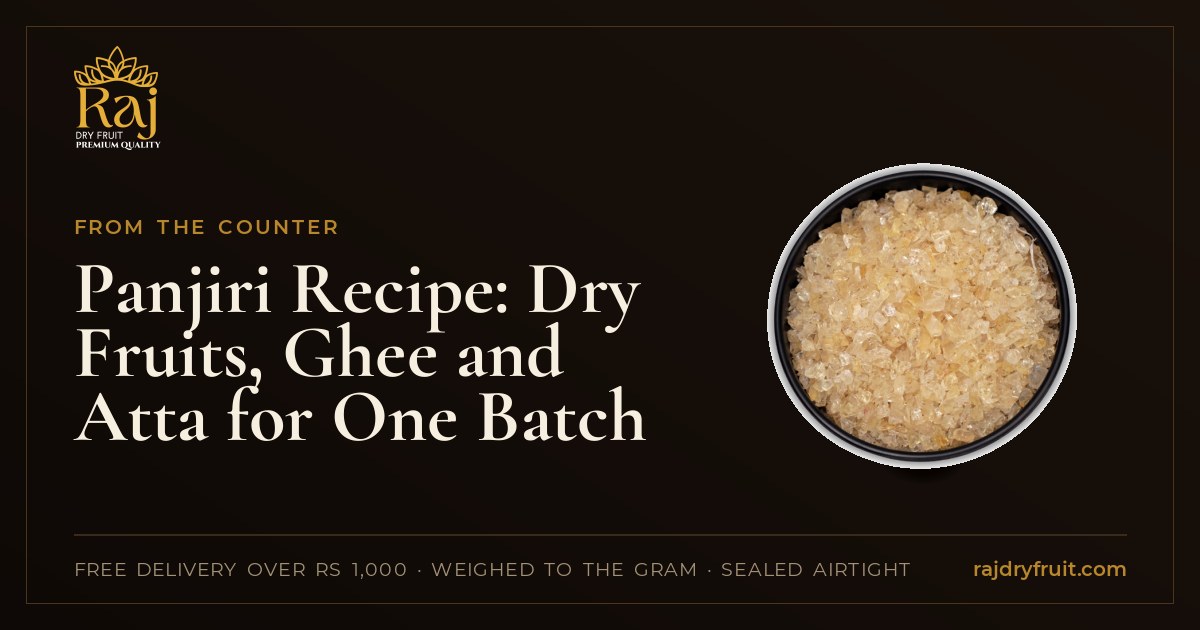
Barik (fine) gond puffs faster and more evenly than the large whole pieces, which makes it easier for panjiri. Our gond edible gum guide explains the difference, and you can buy it from the goond barik product page.
Panjiri vs gond laddoo: what is the difference?
They share almost every ingredient, so the difference is in the binding and how they are eaten.
- Panjiri is loose. It has less ghee for its weight, and is eaten by the spoon, sprinkled on warm milk, or offered as prasad.
- Gond laddoo and pinni use more ghee, and often jaggery or khoya, so the mix can be pressed into balls. They are richer per piece and easier to carry.
- Panjiri keeps longer because it has less moisture: three to four weeks in a closed tin, against about two weeks for laddoos.
- Prasad: panjiri is the classic prasad for Janmashtami and Satyanarayan puja; laddoos are more of a winter snack.
If you want to turn half a batch into laddoos, warm an extra 75 g of ghee, mix it into the panjiri, and press. Our pinni and gond laddoo guide has the full laddoo version.
How much panjiri should you eat in a day?
Panjiri is dense. One batch has roughly 6,000 to 7,000 kcal across 1.4 kg, so a heaped tablespoon of about 25 g carries around 120 kcal. Most families take one to two tablespoons a day in winter, usually in the morning or with warm milk at night. Children get a teaspoon or two.
Panjiri is also the traditional food made for new mothers in many Punjabi homes after delivery, often with extra gond and ajwain. Recipes and quantities for that vary a lot between families, and a new mother’s diet should be agreed with her doctor, especially in the first weeks.
What does a batch cost to make?
People often ask what panjiri costs per kilo. Made at home, the cost is mostly the dry fruits and ghee, and you decide the mix. Today badam works out to at today's shop rate, kaju to at today's shop rate, and makhana to at today's shop rate. Barik gond is at today's shop rate in our packs. A batch made at home has more dry fruit in every spoon than most shop panjiri, which tends to be heavy on atta and sugar.
At Raj Dry Fruit, orders start at ₹1,000 and every order ships free. A panjiri basket of 250 g barik gond, 250 g makhana, 500 g badam and 500 g kaju makes two full batches with nuts to spare for the jar. The rest of the season’s list is on our winter dry fruits page.
How should panjiri be stored?
Store it fully cooled in a steel or glass tin with a tight lid, away from the stove. It keeps three to four weeks at room temperature in winter. If it starts to smell of stale ghee, it is past its best. Do not refrigerate it in a loose box; the cold makes the ghee set hard and the panjiri lumpy.


Questions people ask
Panjiri kitne rupaye kilo hai?
Shop panjiri prices vary a lot because the dry fruit share varies. Making it at home lets you choose how much badam, kaju and gond goes in. The cost is mainly the dry fruits and ghee, priced at today’s rates above.
Which is better, panjiri or gond ladoo?
Neither is better; they are the same ingredients in different forms. Panjiri is lighter per spoon and keeps longer, while gond laddoo is richer and easier to carry. Choose by how your family likes to eat it.
How much panjiri to eat in a day?
One to two tablespoons, about 25 to 50 g, is the usual daily amount for an adult in winter. It is calorie-dense, so larger portions add up quickly. Children usually have a teaspoon or two.
Can panjiri be made without sugar?
Yes. Many families use powdered jaggery or chopped dates in place of sugar. Add jaggery powder only once the atta has cooled, and expect a darker, softer panjiri that keeps a little less long.
Written at our counter, where these questions get asked every week.


