

In this guide
- Why does Kota settle on W240 and not the biggest kernel?
- What goes into a Kota kachori masala and a mawa sweet?
- When does the Kota rate firm up?
- How big should a Kota household basket be?
- How do you keep kaju fresh through a Kota summer?
- What does a Kota family do differently from a Jaipur or Indore one?
- FAQs
Quick answer
The kaju price in Kota today is at today's shop rate for jumbo cashew, shipped free by Raj Dry Fruit. Most Kota kitchens settle on W240, a mid-large kernel that works in a wedding gravy and still looks good in a gift jar. The rate follows raw nut arrivals and the dollar, so read the live figure before ordering.
Why does Kota settle on W240 and not the biggest kernel?
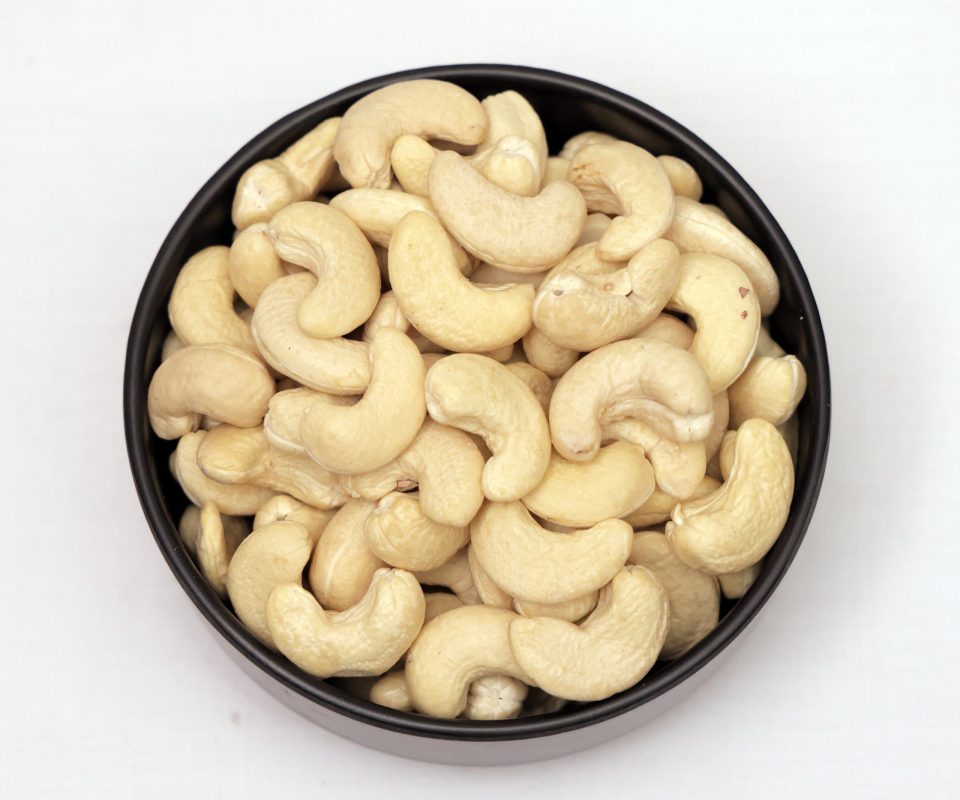
Kota feeds a large student population and a long wedding calendar at the same time. That mix rewards a grade that is generous enough to look good on a plate but not priced like a showpiece. W240 means roughly 240 kernels to a pound, which is about 53 pieces in 100 g.
| Grade | Pieces in 100 g | Where Kota uses it |
|---|---|---|
| W180 | About 40 | Jars for relatives in Jaipur and Bundi |
| W240 | About 53 | Wedding gravies, katli, daily jar |
| W320 | About 70 | Paste for kachori masala, kheer |
| Broken | Mixed | Grinding for curries only |
If you want the wider picture for the city, the Kota dry fruit page lists what ships there and how the free-delivery rule works.
What goes into a Kota kachori masala and a mawa sweet?
Kota is known for its kachori, and the thick white gravy served alongside it at weddings is built on a smooth kaju paste. Cooks soak about 50 g of kernels per litre of gravy, grind them with a little milk and stir the paste in at the end so it does not split. Mawa kachori and kaju katli come next in the festival season. A few Kota families also keep roasted kaju in the tiffin for children who study late.
When does the Kota rate firm up?
Three periods matter. Late November to February is wedding time, when halwais and caterers buy together. Before the board exams, hostel messes restock. And any time the dollar strengthens against the rupee, landed cost of imported raw nut goes up within a couple of weeks.
- A good African crop eases the rate, a delayed one firms it.
- Festival weeks add pressure for two to three weeks around the date.
- Your own choice of grade moves the bill more than any market swing.
Our guide to why dry fruit prices change walks through the same drivers with examples, and the kaju price page shows the figure for every day.
How big should a Kota household basket be?
Because orders start at ₹1,000 and every order ships free, small households can still make a basket that makes sense. A balanced choice for four people is 500 g kaju, 500 g badam and 250 g pista. On today’s figures kaju is at today's shop rate, badam is at today's shop rate and pista is at today's shop rate, so you can add it up on a phone before checking out.
Two sensible habits help. Keep a 250 g jar open for the week and the rest sealed. And when a wedding invitation arrives, add one extra jar of W240 for the return gift instead of buying a separate box.
How do you keep kaju fresh through a Kota summer?
- Pour the pack into a dry steel box the same day it arrives.
- Keep it on a shelf away from the gas stove and the window.
- Use a dry spoon every time.
- From April, move the spare jar to the fridge door.
Per 100 g, USDA FoodData Central lists raw cashew at about 553 kcal with 18 g protein and 44 g fat. Check with your doctor if you are on a diet plan.
What does a Kota family do differently from a Jaipur or Indore one?
The difference is rhythm. A Kota household often has a child or a nephew in a coaching hostel, and the weekly parcel from home is as much a ritual as the exam itself. A parcel with a 250 g pack of roasted kaju, a small pack of makhana and a few dates is easy to post and easy to share with a roommate. Families describe it as the one thing that tastes like home during a long preparation year.
Weddings in Hadoti follow the usual Rajasthani pattern of long menus and many guests. Caterers use the kaju paste in gravy for paneer, in the white korma, and in the stuffing of sweet dishes. If you are hosting a function at home and doing part of the cooking yourself, work out how many people you are feeding and allow 15 to 20 g of kernel per head for gravies. For a hundred guests that is about two kilos of W320.
When the season is cold, our winter dry fruits page groups the jars that sell best in December, and the wedding dry fruits page covers trays and return gifts. Both are worth a look before you finalise the order, because a single combined basket is cheaper in time than three small ones.
- Hostel parcel: 250 g roasted kaju plus 250 g makhana.
- Home gravies for a function: W320 at 15 to 20 g per guest.
- Gift jars for relatives: W240 in a glass jar of 250 g.
- Kitchen jar for the week: a 250 g pack of whatever grade you cook with.
Planning the order in these four lots stops the common mistake of buying one huge pack and running out of the right grade halfway through the season.


Questions people ask
Which kaju do Kota halwais use for gravy?
They usually take W320 or broken pieces because the nut is ground. Only the garnish uses larger kernels.
Is kaju cheaper in Kota than in Jaipur?
The market rate is national, so the real difference comes from grade and freight. Compare the same grade before comparing the price.
How many kaju make a 30 g handful?
Around 16 pieces of W240. That is a small handful and a common daily portion.
Can I order only kaju for a Kota wedding gift?
Yes, as long as the order total crosses the minimum. Two 500 g jars of W240 do that comfortably.
Written at our counter, where these questions get asked every week.