In this guide
- How many calories are in 10 almonds, and in a handful?
- How do almond calories compare with other dry fruits, piece by piece?
- What is a sensible almond portion for weight gain or for watching weight?
- How can you make almond calories count?
- How do almond calories fit into a day of eating?
- Are roasted almonds different in calories?
- Which almonds should you buy?
- FAQs
Quick answer
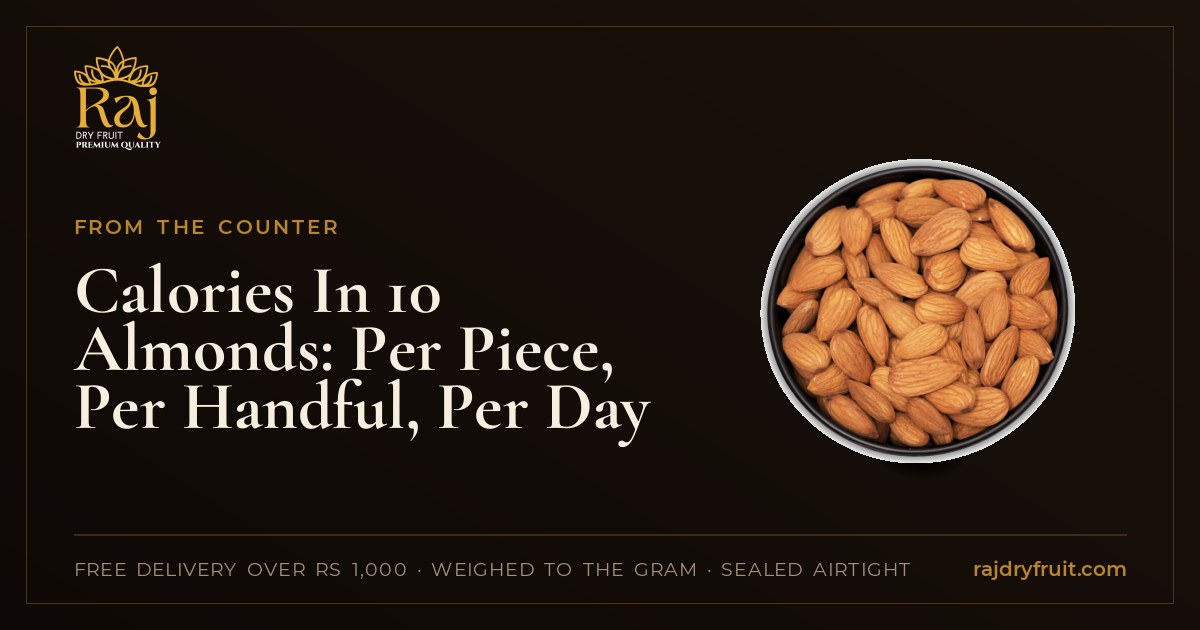
Calories in 10 almonds come to about 70 kcal, with roughly 2.5 g protein, 6 g fat and 1.3 g fibre, based on about 12 g of raw almonds. A full handful of 23 almonds, near 28 g, is close to 165 kcal. Jumbo almonds run slightly higher per piece.
How many calories are in 10 almonds, and in a handful?
Raw almonds carry about 579 kcal per 100 g, according to USDA FoodData Central. One almond weighs roughly 1.2 g, so ten of them are near 12 g and about 70 kcal. The classic “handful” of 23 almonds weighs about 28 g, which is where the 165 kcal figure comes from.
These are rounded numbers. A jumbo almond can weigh 1.5 g, and a small one under 1 g, so counting by weight on a kitchen scale is more exact than counting pieces. For a daily habit, the difference between 10 and 12 almonds is tiny, and it is the routine that matters.
How do almond calories compare with other dry fruits, piece by piece?
People often ask whether an almond is heavy or light next to other things in the jar. Per piece, almonds are modest, and dates and walnuts are heavier. The table uses typical piece weights and the same USDA data, rounded.
| Dry fruit | Typical piece | Calories per piece | Protein per piece |
|---|---|---|---|
| Almond (badam) | 1.2 g | about 7 kcal | about 0.25 g |
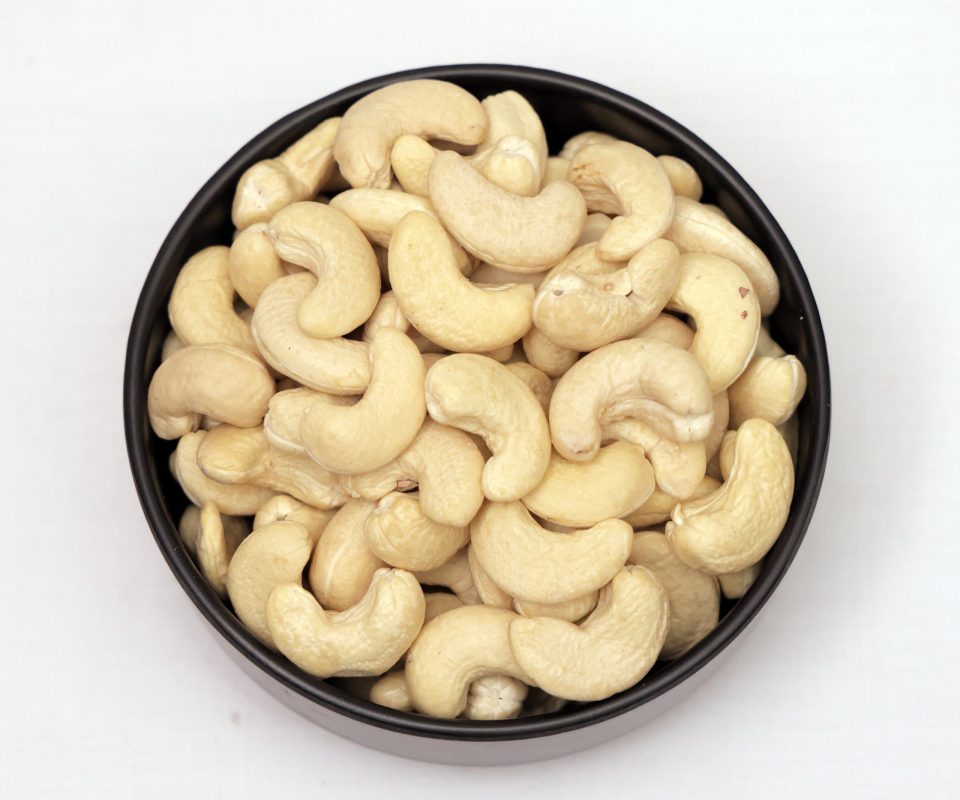
| Cashew (kaju) | 1.6 g | about 9 kcal | about 0.3 g |
| Walnut half (akhrot) | 3 g | about 20 kcal | about 0.45 g |
| Pista kernel | 0.7 g | about 4 kcal | about 0.15 g |
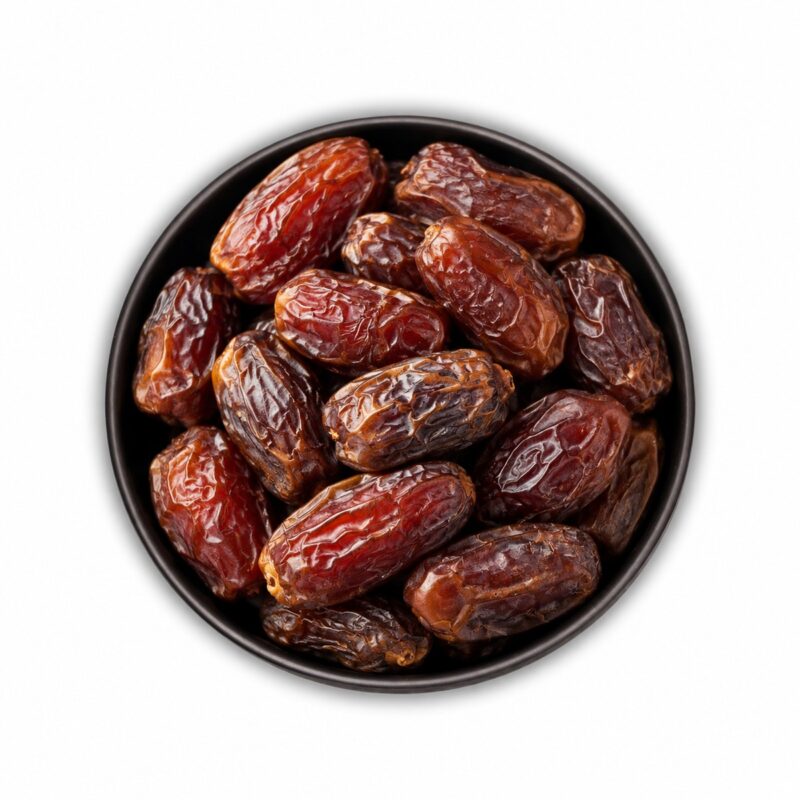
| Medjool date | 24 g | about 66 kcal | about 0.4 g |
| Dried anjeer | 8 g | about 20 kcal | about 0.3 g |
| Kishmish (raisin) | 0.5 g | about 1.5 kcal | about 0.02 g |

What is a sensible almond portion for weight gain or for watching weight?
This is not medical advice, and anyone with a health condition should speak to their doctor first. As a trainer would put it, weight moves when calories in beat calories out over weeks, and almonds are an easy way to add a measured number.
- Weight watch: 8 to 10 almonds a day, about 60 to 70 kcal, eaten as a snack in place of a biscuit.
- Maintenance: one handful, 20 to 23 almonds, near 165 kcal, split between morning and evening.
- Weight gain: two handfuls a day, about 330 kcal, plus a glass of milk and a banana, on top of regular meals.
- Gym day: 10 almonds with a few dates about 45 minutes before training for quick energy and a little protein.
Our protein-rich dry fruits page lists the other items that pair well when you want protein per rupee, and the protein in dry fruits guide has the grams side by side.
How can you make almond calories count?
Soaking overnight softens the skin, makes peeling easy and takes nothing out of the calorie count. Roasted almonds are slightly higher per gram because the water is lower, but the difference is small. If you use a dry fruit laddu to add calories, remember that ghee and dates add a lot as well, so a 40 g laddu can land between 150 and 200 kcal.
The how many almonds a day guide covers the daily limit in more detail, and the soaked almonds guide shows how to soak and peel.
How do almond calories fit into a day of eating?
A normal Indian day for a moderately active adult runs near 2,000 to 2,400 kcal, so a 165 kcal handful is under a tenth of it. That is why nuts rarely cause trouble in moderation, and why they can be the easiest extra for someone who struggles to eat enough. A rough rule used by trainers is to add 250 to 300 kcal a day for slow weight gain, which is one handful of almonds plus a glass of milk.
For the opposite goal, swap a packaged snack for almonds rather than adding them on top. Eat slowly, drink water, and stop at the count you set. Our calories in dry fruits guide lists the rest of the jar.
Are roasted almonds different in calories?
Slightly. Dry roasting drives off a little water, so 10 roasted almonds can read 75 to 80 kcal, against 70 for raw. Oil roasting adds more, depending on the amount of oil used. If you count calories closely, choose dry roasted or raw, and avoid salted and coated varieties.
Which almonds should you buy?
For counting calories, size matters less than freshness. Look for even tan skin, a clean smell and a crisp bite. Regular Californian almonds suit daily snacking, jumbo suits gifts, and our almonds collection lists all of them. Today, almonds work out to at today's shop rate, and cashew to at today's shop rate.
A simple first basket is 500 g badam, 500 g kaju and 250 g walnut kernels. Remember that orders start at ₹1,000 and every order ships free, so a household basket like this one goes through without a problem.

Questions people ask
How many calories are in 1 almond?
About 7 kcal for a 1.2 g almond. Jumbo almonds can reach 9 or 10 kcal. Counting by weight is more precise than counting pieces.
How many calories are in 100 g of almonds?
Around 579 kcal, with about 21 g protein, 50 g fat and 12 g fibre, according to USDA data. That is why a small handful goes a long way.
Do soaked almonds have fewer calories?
Not in any meaningful way. Soaking adds water weight, so a soaked almond weighs more but the energy per almond is almost the same. The change is in texture and ease of digestion for some people.
How many dry fruit laddu calories should I expect?
A 40 g laddu made with dates, nuts and ghee usually lands between 150 and 200 kcal. Check the recipe, because each spoon of ghee adds about 40 kcal.
Written at our counter, where these questions get asked every week.