In this guide
Quick answer
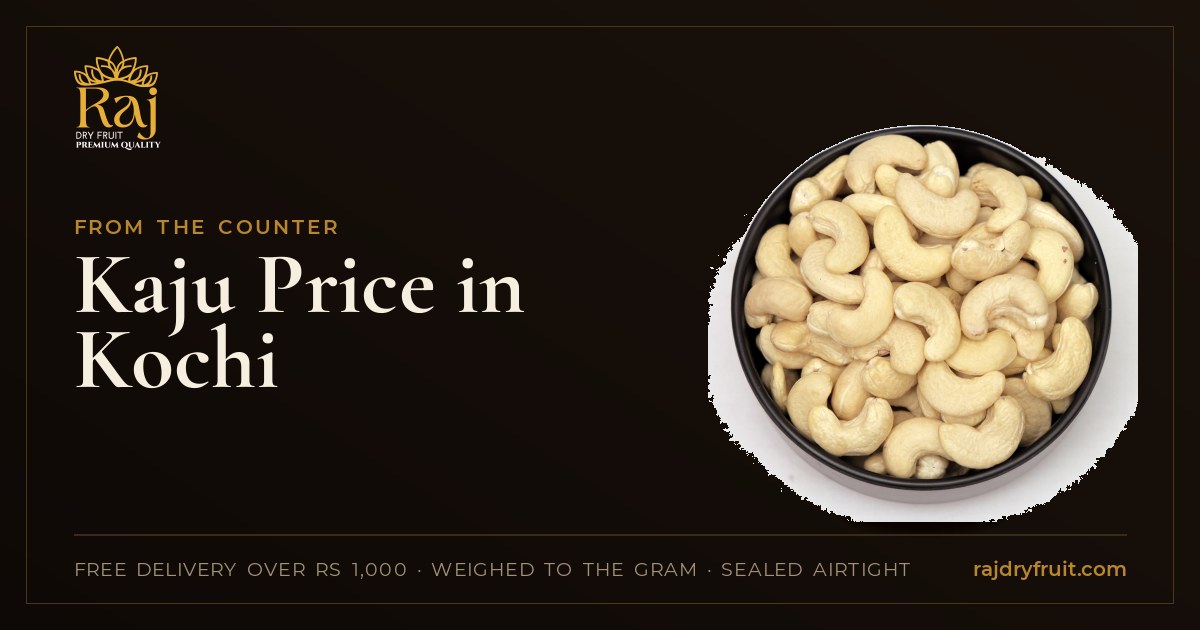
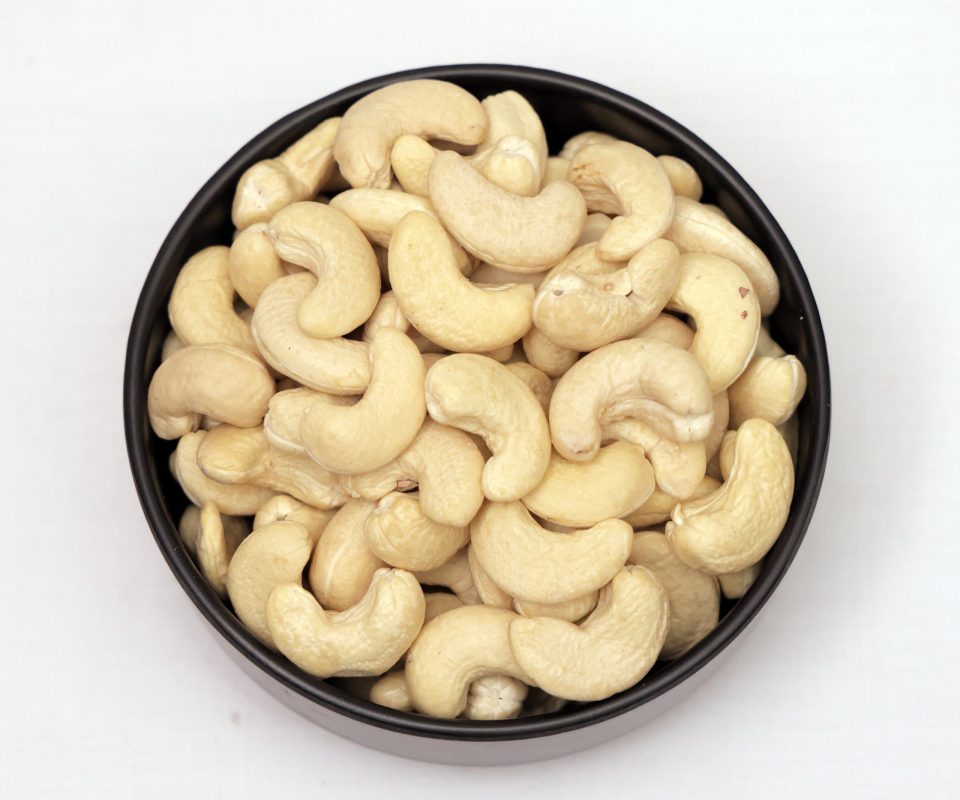
The kaju price in kochi today is at today's shop rate for W320 whole kernels, the grade most Kerala kitchens use. W240 costs more and goes into gift boxes and ada pradhaman for guests. Rates follow the cashew crop in Kollam, imports, and the Christmas rush.
Which kaju grade does Kochi buy?
Kerala is old cashew country. Kollam’s factories have processed kernels for generations, so Kochi shoppers know their numbers. The everyday buy is W320, and cooks are particular about whole, pale, unbroken pieces. See the page on dry fruits in Kochi for what we send to Kerala.
For gifting, Kochi families choose W240 or jumbo. Smaller pieces and tukda go into payasam and cake. The jumbo cashew we stock is the larger bracket, and the grades explained guide covers the numbers.
What goes into the sweets and dishes of Kochi?
Kaju is in ada pradhaman, parippu pradhaman and the rich payasams of Onam and Vishu, fried in ghee with coconut bits and raisins. Christmas changes the picture: late November is when many Kochi homes soak dried fruit for plum cake, and chopped cashews go into the batter.
Biriyani is the other big user. A Kerala biriyani is topped with fried kaju and kishmish, and Malabar-style dum biriyani often calls for 50 g of each per kilo of rice. Because the kernels are fried, a W320 or broken grade works fine.
What moves the kaju rate in Kochi?
Being close to a cashew belt does not fix the price. These factors move the kaju rate in Kochi.
- Raw cashew availability: Kerala’s own crop is small next to the factories’ needs, so African imports set the rate.
- Processing and labour costs in Kollam, where shelling and peeling are still largely manual.
- Christmas and Onam demand, with the Christmas cake season lifting W320 and pieces.
- Colour and whole-kernel yield: bright white whole kernels cost more.
- Pack size and packing, with larger packs cheaper per kilo.
Look at the live kaju price page for the day’s rate. Per 100 g, USDA FoodData Central lists cashews at about 553 kcal and 18 g protein.
How do the grades compare for a Kochi kitchen?
| Grade | What you see | Where it fits | How the rate behaves |
|---|---|---|---|
| W320 | Pale whole kernel | Payasam, biriyani, snacking | Moves with imports |
| W240 | Larger kernel | Gift boxes, cake topping | Lifts at Christmas |
| Jumbo | Largest whole kernel | Premium gifts | Highest per kilo |
| Pieces (tukda) | Split and broken | Cake batter, paste | Lowest per kilo |
For plum cake, pieces are enough. For topping a biriyani, whole W320 looks better. For comparison, badam works out to at today's shop rate today, so the two together make a fair daily bowl.
How do you check kaju quality before you buy in Kochi?
- Look at the colour: ivory to pale cream is right, while brown patches or dark spots mean age or scorching.
- Check the shape: whole, plump kernels with the curve intact, and few broken pieces in a pack sold as whole.
- Smell the pack: a clean, faintly sweet smell is good, and a sour or oily smell means the kernels are stale.
- Bite one: it should snap with a clean crunch and a milky taste, not feel chewy or leave a bitter aftertaste.
- Read the pack: it should name the grade (W320, W240) and carry a packing date, so you can compare grade for grade.
Kochi’s monsoon air is the real test. Check the crunch on arrival, move the kernels into a dry airtight jar, and put a week’s supply in a small tin. If a batch softens, a few minutes in a dry pan on low flame brings the crunch back.
How much should a Kochi home buy? An adult who eats 6 to 8 kernels a day, about 12 to 15 g, needs roughly 400 g a month. A family of four, plus guests and a festival sweet, lands near a kilo. Buying in a 500 g or 1 kg pack gives you a better rate per kilo than a small pack, and keeps the pantry stocked through the month. A quick dry roast of a handful on a low flame for four to five minutes also makes a good salted kaju at home, and it is a fair way to use up the last of a jar. Keep each jar to a month or two of stock, and top it up rather than letting a huge pack sit open.
What basket crosses the minimum order sensibly?
For a Kochi home planning Christmas baking and wedding visits, one balanced basket is:
- 500 g kaju (W320) for payasam, biriyani and cake
- 500 g badam for the daily bowl
- 250 g kishmish for cake and biriyani
That kind of household basket is how most families cross the minimum, because orders start at ₹1,000 and every order ships free. More choices are on the buy dry fruits online page, and the Christmas cake dried fruit guide covers the cake side in detail.


Questions people ask
What is the price of 1 kg kaju in Kochi today?
The live rate is in the opening paragraph and changes through the season. Pick the pack on the product page, and the cart shows the final price.
Is Kerala kaju cheaper than elsewhere?
Not by default. Kollam processes a lot of cashew, but much of it is imported raw nut, and the final price depends on grade, season and pack. Compare grade for grade.
Which kaju goes into plum cake?
Chopped pieces or tukda. They mix into the batter and soak up the rum or juice evenly. Whole kernels waste money inside a cake.
How should I store kaju in Kochi’s humidity?
Airtight jar, kept cool, and refrigerated in the rainy months. If the nuts go soft, dry roast for a few minutes. Use within three months.
Written at our counter, where these questions get asked every week.