In this guide
- How much protein do 10 kaju and 10 badam give?
- Is 10 kaju and 10 badam a day enough protein?
- How can you reach 15 to 20 g protein from dry fruits in a day?
- Why do the grams on a pack differ from your count?
- What does a 10 plus 10 snack look like with milk or curd?
- Which is better for protein, kaju or badam?
- What is a good weekly jar to buy?
- FAQs
Quick answer
10 kaju 10 badam protein comes to about 5.5 g: roughly 2.9 g from 10 cashews of 16 g and 2.5 g from 10 almonds of 12 g. The pair adds about 160 kcal. A 5 kaju and 5 badam version gives close to 2.7 g protein and 80 kcal.
How much protein do 10 kaju and 10 badam give?
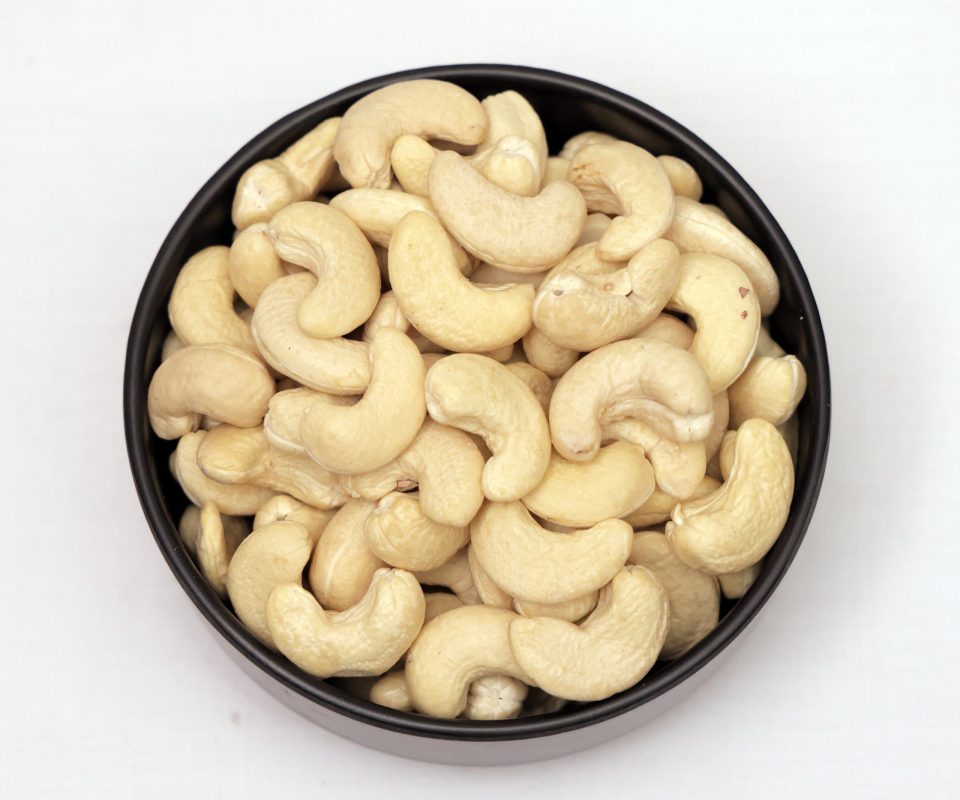
Cashew has about 18 g protein per 100 g and almond about 21 g, according to USDA FoodData Central. A cashew weighs near 1.6 g and an almond near 1.2 g, so counting by piece is a small amount of food. These are honest numbers, and they show why nuts are a supplement to protein, not the main source.
| Portion | Weight | Protein | Calories | Fat |
|---|---|---|---|---|
| 5 kaju | 8 g | 1.4 g | 44 kcal | 3.5 g |
| 5 badam | 6 g | 1.3 g | 35 kcal | 3 g |
| 5 kaju + 5 badam | 14 g | 2.7 g | 79 kcal | 6.5 g |
| 10 kaju | 16 g | 2.9 g | 88 kcal | 7 g |
| 10 badam | 12 g | 2.5 g | 70 kcal | 6 g |
| 10 kaju + 10 badam | 28 g | 5.4 g | 158 kcal | 13 g |
| 20 kaju + 20 badam | 56 g | 10.8 g | 316 kcal | 26 g |
Notice that cashew brings a bit more carbohydrate and almond brings more fibre. Both give healthy fat, which is where most of the calories come from.

Is 10 kaju and 10 badam a day enough protein?
No, and nobody should expect it to be. An adult doing light work needs roughly 0.8 g protein per kg of body weight, which is 48 g for a 60 kg person, and people who train hard often aim higher. The rest comes from dal, eggs, milk, curd, paneer, soya or chicken. Nuts help fill the gap between meals.
Think of 10 kaju and 10 badam as a 28 g snack that adds about 5 g protein, and then add more where you can. Our protein-rich dry fruits page lists which ones give the most per handful, and the trail mix guide shows how to combine them.
How can you reach 15 to 20 g protein from dry fruits in a day?
A weekly jar for a gym-going adult might look like this. It is not a medical plan, and a doctor or dietitian should guide anyone with a health condition.
- Morning: 10 soaked badam, about 2.5 g.
- Mid-morning: 10 kaju, about 2.9 g.
- Evening: 2 spoons pumpkin seeds (20 g), about 6 g.
- Post-gym: a spoon of sunflower seeds in curd, about 3 g.
- Night: 8 pista kernels, about 1.5 g.
That sums to roughly 16 g protein and 450 kcal. The protein in dry fruits guide has the full table, and the almonds a day guide explains the limits.
Why do the grams on a pack differ from your count?
Three things move the numbers. First, size: a W180 jumbo cashew can weigh 2 g and a W320 about 1.3 g, so ten pieces can differ by 7 g. Second, roasting: dry roasting removes a little water, so protein per gram edges up, but only by a point or two. Third, skins: almonds with skin carry the fibre, while blanched ones lose some of it.
The practical fix is a kitchen scale. Weigh 28 g of mixed nuts once, count the pieces, and you will know your own handful. After that you can eyeball it. The same trick works for seeds, where a heaped spoon of pumpkin seeds is about 10 g. Our jumbo cashew and almonds come in packs from 250 g, so a month’s habit is easy to count out.
What does a 10 plus 10 snack look like with milk or curd?
Adding a cup of 200 ml milk lifts the snack by about 6 g protein, and a bowl of 100 g curd adds around 4 g. So 10 kaju, 10 badam and a glass of milk is near 11 g protein and 320 kcal, which is a reasonable between-meal snack for a student or an office-goer. For a vegetarian training diet, this kind of combination does a lot of the work.
Which is better for protein, kaju or badam?
Per 100 g, badam is ahead by 3 g, and it has far more fibre. Kaju is softer, creamier and easy to eat for kids and elders. Pista is close to badam, and pumpkin seeds beat all of them. For taste and variety, most households keep both jars. Today, badam works out to at today's shop rate and kaju to at today's shop rate.
What is a good weekly jar to buy?
For two adults, 500 g kaju, 500 g badam and 250 g pumpkin seeds is a fortnight’s supply at 28 g a day each. Remember that orders start at ₹1,000 and every order ships free, so a basket like this ships free.


Questions people ask
How much protein do 5 kaju and 5 badam give?
About 2.7 g, with around 80 kcal. It is a small snack and best seen as an addition to meals.
How much protein is in one badam?
About 0.25 g per almond. Ten almonds give 2.5 g, and 23 almonds, a full handful, give about 6 g.
Is kaju protein as good as badam protein?
Both are plant proteins, and both are lower in some amino acids than milk or egg protein. Eaten with a normal Indian diet that includes dal and dairy, the difference is small.
Should I eat nuts before or after the gym?
Many people have a small handful with a date 30 to 45 minutes before training, and a bigger portion with a meal afterwards. Choose what sits comfortably.
Written at our counter, where these questions get asked every week.