In this guide
Quick answer
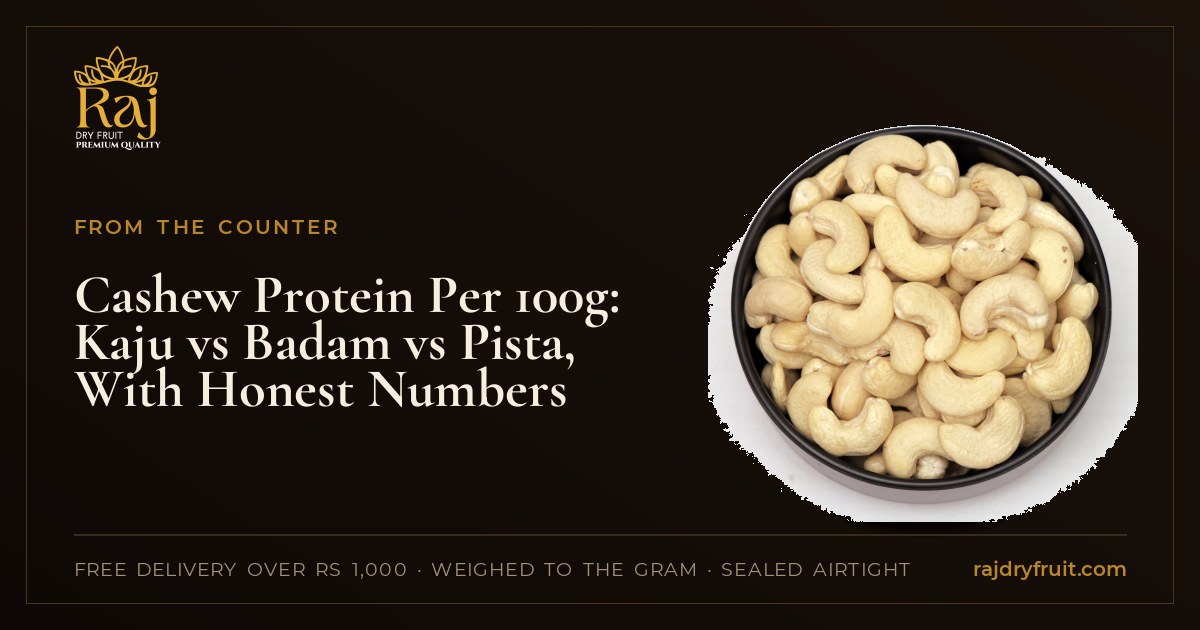
Cashew protein per 100g is about 18 g, along with 44 g fat, 30 g carbohydrate and 553 kcal. It is a plant protein with all nine essential amino acids, though lysine is on the low side, so it works best beside dal, milk or curd. Twenty grams of kaju gives about 3.6 g.
How much protein is in cashews per 100 g?
According to USDA FoodData Central, raw cashews carry about 18.2 g of protein per 100 g. That is a good number for a nut but well below dal or eggs, so cashews are best seen as a tasty protein top-up, not the main source. They are also higher in carbohydrate than almonds or pista, which is why they taste a little sweet and creamy.
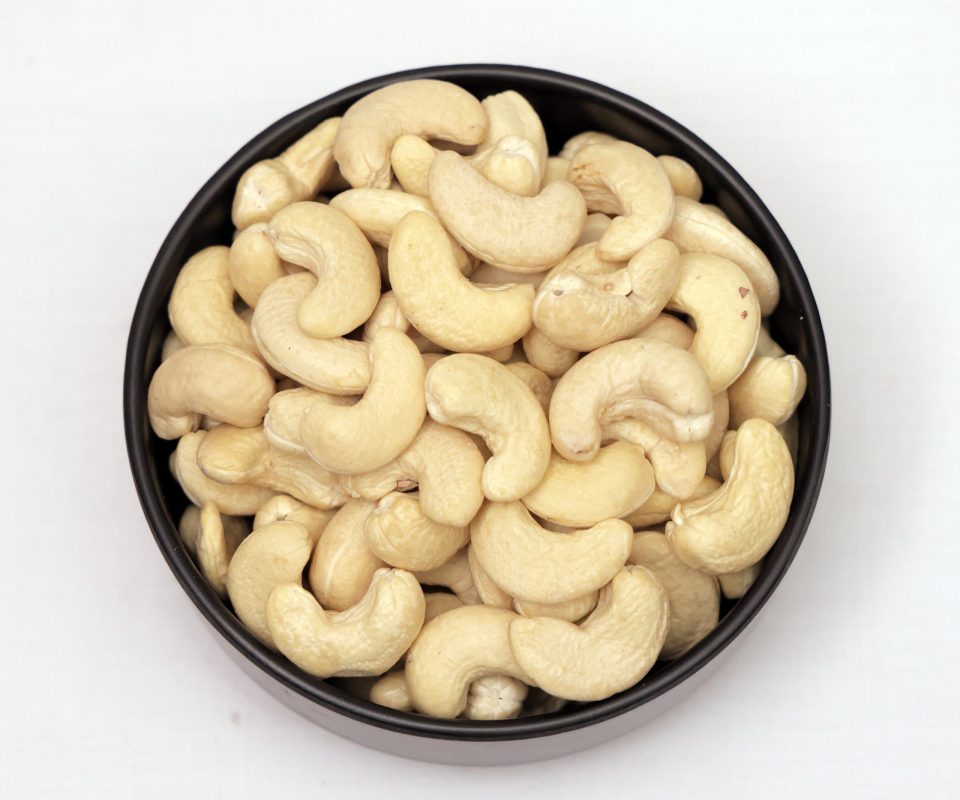
Pieces are small, so grams add up slowly. A 20 g portion, about 12 to 14 kernels, gives 3.6 g protein and 110 kcal. A 30 g handful gives 5.5 g protein and 165 kcal. The 20 gram kaju protein number is the one most people search for, and it is a decent snack but not a meal.
How do kaju, badam and pista compare per 100 g?
| Per 100 g, raw | Protein | Fat | Carbohydrate | Fibre | Calories |
|---|---|---|---|---|---|
| Cashew (kaju) | 18 g | 44 g | 30 g | 3 g | 553 kcal |
| Almond (badam) | 21 g | 50 g | 22 g | 12 g | 579 kcal |
| Pista (pistachio) | 20 g | 45 g | 27 g | 11 g | 560 kcal |
| Walnut (akhrot) | 15 g | 65 g | 14 g | 7 g | 654 kcal |
| Pumpkin seeds | 30 g | 49 g | 11 g | 6 g | 559 kcal |
Badam and pista edge out kaju on protein and are far ahead on fibre. Kaju wins on softness and on how easily it blends into gravies and milk. Walnut is lowest in protein but has the highest fat. Pumpkin seeds beat all of them on protein, and our protein-rich dry fruits page ranks the lot.
Is cashew protein complete?
Cashews contain all nine essential amino acids, but the amount of lysine is lower than in milk, eggs or soya. Nutrition writers therefore call it an incomplete protein in practice. The easy fix is to eat nuts as part of a normal Indian meal pattern with dal, curd, milk or paneer, where the amino acids make up for one another over the day.
If you are vegetarian and training, combine a handful of kaju with a glass of milk, or add cashew paste to a dal gravy. The protein in dry fruits guide has more on mixing.
How much cashew should you eat in a day?
- General snacking: 20 g, about 12 to 14 kernels, for 3.6 g protein.
- Active adults: 30 g, 18 to 20 kernels, split between two sittings.
- Weight gain: up to 50 g a day in two portions, with milk or a banana. Speak to your doctor if you have a health condition.
- Cooking: 25 g of soaked kaju per person, ground into a gravy, spreads the protein across a family meal.
Salted and fried cashews add sodium and oil, so for a protein habit pick raw or dry roasted. Our kaju grades guide explains why W320 is fine for snacking and W240 is for gifting.
How can you use cashew protein in cooking?
Cashew is the easiest nut to hide in food. Soak 25 g of kaju per person in warm water for 20 minutes, grind to a paste, and stir it into dal makhani, paneer gravy or a vegetable korma. It adds creaminess and a few grams of protein without any extra cream. In sweets, broken cashew pieces work well in barfi and kheer, where nobody sees the shape.
For snacking, dry roast kaju in a pan for four minutes with a pinch of black pepper. For breakfast, add 8 to 10 chopped kernels to oats or curd. For gym days, blend a handful with a banana and milk for a quick shake of around 350 kcal and 12 g protein. Our cashew collection lists plain, roasted and masala varieties.
One caution: flavoured cashews, such as peri peri or masala, carry added salt and oil. Enjoy them as an occasional snack, not as the daily protein jar, and keep to plain kernels for the habit.
Which cashew should you buy, and what does it cost?
Whole W320 or W240 kernels suit snacking. Broken pieces cost less and are good for gravies. Today, kaju works out to at today's shop rate, badam to at today's shop rate and pista to at today's shop rate, so the protein per rupee is highest with almonds and seeds, while cashew wins on taste.
A sensible first basket is 500 g kaju, 500 g badam and 250 g pista. Remember that orders start at ₹1,000 and every order ships free. The jumbo cashew page lists the pack sizes.


Questions people ask
How much protein is in 20 g of kaju?
About 3.6 g, with around 110 kcal. It is roughly 12 to 14 kernels of W320 size.
Is cashew a good source of protein for vegetarians?
It adds some protein but works best alongside dal, milk or curd. A handful is a snack, not a protein plan.
Which has more protein, kaju or badam?
Badam, at about 21 g per 100 g against 18 g for kaju. Badam also has far more fibre.
Does roasting change cashew protein?
Barely. Dry roasting removes a little water, so the protein per gram rises slightly, but the change is small. Oil roasting and salt add calories and sodium.
Written at our counter, where these questions get asked every week.