In this guide
Quick answer
The kaju price in guwahati today is at today's shop rate for the grade most Assamese homes buy, W320 whole kernels. Smaller pieces cost less, and the W240 jumbo size costs more. The rate shifts with fresh arrivals, freight into the Northeast, and how busy the wedding season is.
Which kaju grade does Guwahati buy?
Walk through the markets around Fancy Bazar and Paltan Bazar and one grade keeps coming up, the W320 kernel. It is the size that fits everyday use, from payokh and sewai to a handful with evening tea. If you are comparing dry fruits in Guwahati online, the city page lists what we send to Assam and what to expect.
For gifting and for wedding trays, families step up to W240, the bigger, whiter kernel that looks generous in a box. Our jumbo cashew is that kind of kernel. Broken pieces (tukda) are what many cooks choose for kheer and barfi, where the shape disappears anyway. The grades are explained in more detail in our kaju grades guide.
What goes into the sweets and dishes of Guwahati?
Assamese kitchens use kaju in payokh, the rice kheer served at weddings and Bihu, where a few chopped kernels and kishmish go in at the end. Til and narikol pitha and laru are often made with coconut, but a spoon of crushed kaju is a common upgrade for guests. Chhath and Guru Nanak Jayanti gatherings just past also ask for kaju in prasad packets.
Wedding season is on now, and a bride’s family often builds a tray with kaju, badam, kishmish and dates. In that case buy the whole kernel for the tray and the broken grade for the sweets, so the money goes where it shows.
What moves the kaju rate in Guwahati?
Kaju is a global crop, so the rate you see in Guwahati is rarely set locally. These are the things that push it up or down.
- Raw cashew arrivals from India’s coast and from African and Vietnamese origins, which set the base rate for every grade.
- Freight and transit time into the Northeast, which is longer than for the plains cities and is one reason rates differ from Kolkata.
- Wedding and festival weeks, when W240 and W320 move faster than the smaller pieces.
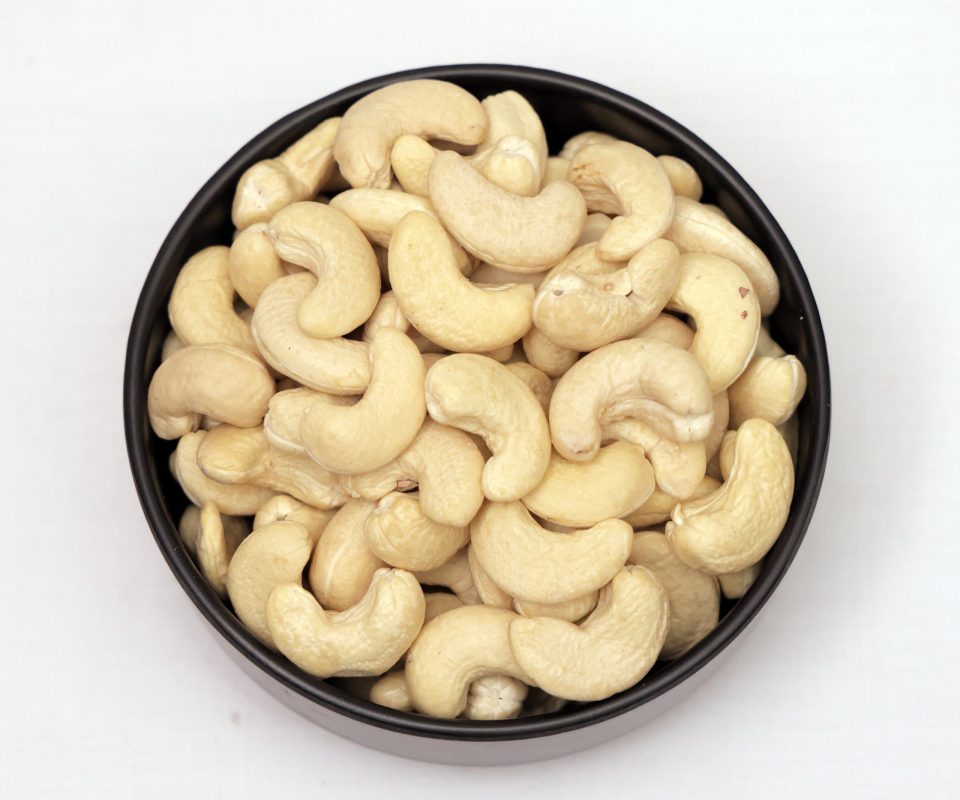
- Size and colour: whiter, whole kernels carry a premium over scorched or split ones.
- Pack size, because a 250 g pack works out dearer per kilo than a 1 kg bag.
For the day-to-day figure, check the live kaju price page, which shows today’s rate for a kilo. Nutrition numbers on cashews come from USDA FoodData Central: roughly 553 kcal and 18 g protein per 100 g.
How do the grades compare for a Guwahati kitchen?
| Grade | What you see | Where it fits | How the rate behaves |
|---|---|---|---|
| W320 | Medium whole kernel, ivory colour | Daily kheer, snacks, tea-time bowls | Steadier through the year |
| W240 | Larger, fuller kernel | Gift trays, wedding boxes, roasted kaju | Rises first in wedding weeks |
| Jumbo (W180 to W210) | Biggest whole kernel | Presentation, premium gifting | Highest per kilo |
| Tukda (broken) | Four-piece or smaller bits | Barfi, payokh, gravies | Lowest per kilo |
If the cashew is going to be chopped or ground, a broken grade costs less and tastes the same. If it will be seen, buy whole. For comparison, badam works out to at today's shop rate today, so the two together make a fair daily bowl.
How do you check kaju quality before you buy in Guwahati?
- Look at the colour: ivory to pale cream is right, while brown patches or dark spots mean age or scorching.
- Check the shape: whole, plump kernels with the curve intact, and few broken pieces in a pack sold as whole.
- Smell the pack: a clean, faintly sweet smell is good, and a sour or oily smell means the kernels are stale.
- Bite one: it should snap with a clean crunch and a milky taste, not feel chewy or leave a bitter aftertaste.
- Read the pack: it should name the grade (W320, W240) and carry a packing date, so you can compare grade for grade.
Northeast deliveries spend longer on the road, so ask for a recent packing date and open the pack as soon as it arrives. If the kernels look pale and smell clean, they are in good shape. Wedding-season orders are best placed a week early, so the pack is in hand before the guests are.
How much should a Guwahati home buy? An adult who eats 6 to 8 kernels a day, about 12 to 15 g, needs roughly 400 g a month. A family of four, plus guests and a festival sweet, lands near a kilo. Buying in a 500 g or 1 kg pack gives you a better rate per kilo than a small pack, and keeps the pantry stocked through the month. A quick dry roast of a handful on a low flame for four to five minutes also makes a good salted kaju at home, and it is a fair way to use up the last of a jar. Keep each jar to a month or two of stock, and top it up rather than letting a huge pack sit open.
What basket crosses the minimum order sensibly?
The minimum is easy to cross with a household basket. A Guwahati family stocking for the cold months, wedding invites and daily snacking might take:
- 500 g kaju (W320 or jumbo) for kheer and the tea-time bowl
- 500 g badam, to soak overnight for children and elders
- 250 g pista for sweets and guests
That kind of household basket is how most families cross the minimum, because orders start at ₹1,000 and every order ships free. You can add a pack of kishmish or a few dates for the tray. See the full range on the buy dry fruits online page, or compare with the kaju price in Kolkata if you buy for family in Bengal.


Questions people ask
What is the rate of 1 kg kaju in Guwahati today?
The live figure sits in the opening of this post and changes with the market, so check it on the day you order. A 1 kg pack of W320 works out cheaper per kilo than small packs. Add the pack to the cart and the final price shows before payment.
Which kaju is best for payokh and sweets?
W320 whole or tukda pieces. The sweet hides the shape, so there is little point paying for jumbo. Fry the kernels lightly in ghee before adding them for a nuttier bite.
Why is the dry fruits rate in Guwahati different from other cities?
Freight, local demand in wedding season and pack size all play a part. The nuts themselves are the same crop, so a difference is mostly logistics and timing, not quality.
How long does kaju keep in Assam’s humid weather?
Keep it in an airtight jar away from the stove and sunlight. In humid weeks, store it in the fridge to stay crisp, and use within two to three months. A sour or paint-like smell means it has turned.
Written at our counter, where these questions get asked every week.