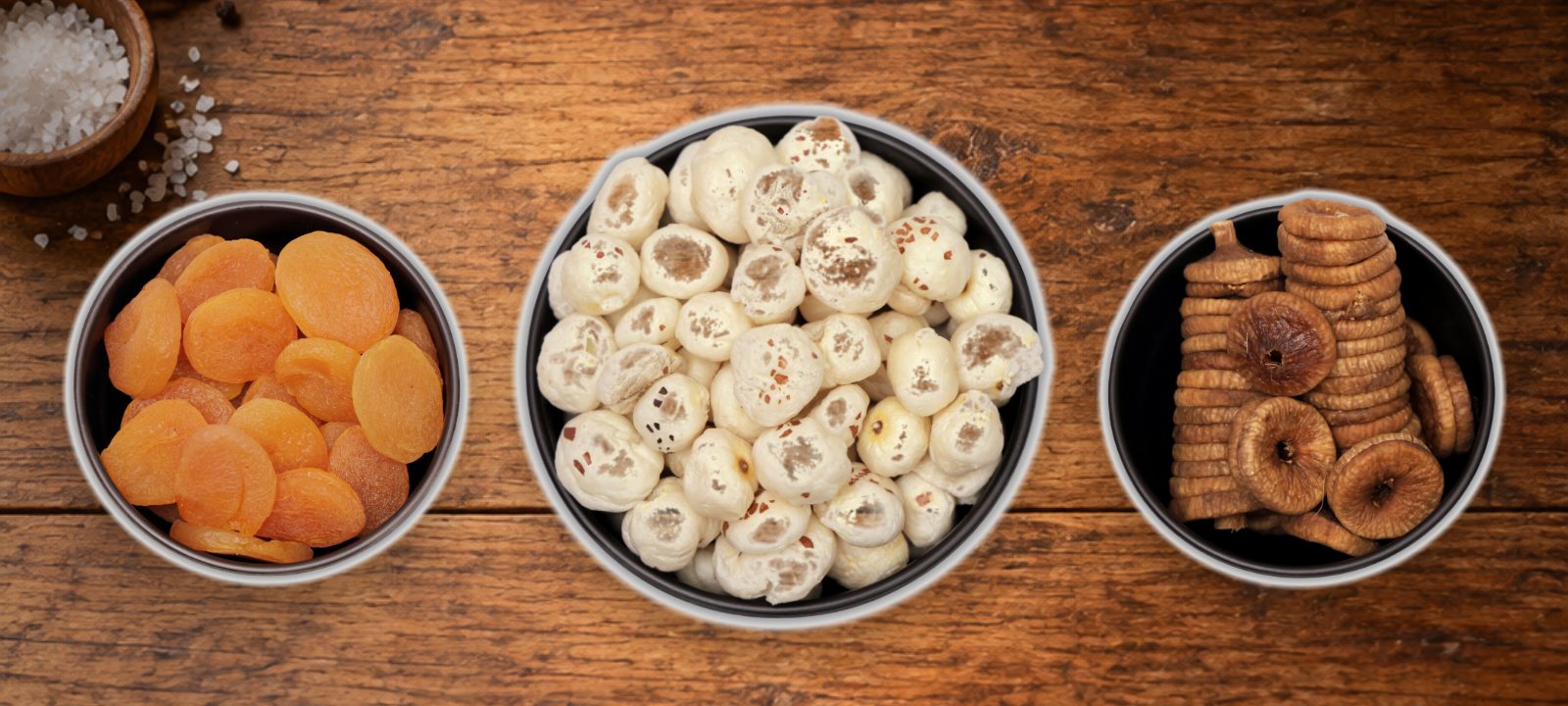


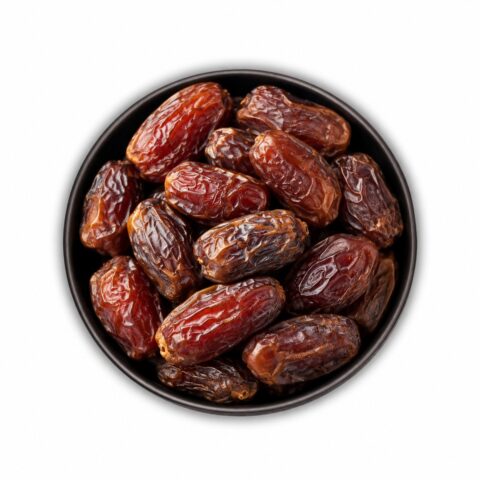


The lowest-calorie dry fruits are the dried fruits themselves: khubani (apricots) at about 241 kcal per 100 g, anjeer at about 249 and dates at under 300. Nuts run to double that. For a crunchy snack, makhana gives the biggest bowl for the fewest calories.
So the honest answer to “zero calorie dry fruits” is that there are none. There are light choices, and there are portions that keep a heavy food light.
Calories per 100 g, lightest first
Approximate values per 100 g
| Item | Hindi name | Calories (kcal) | Fat | Fibre | Protein |
|---|---|---|---|---|---|
| Dried apricots | Khubani | 241 | 0.5 g | 7.3 g | 3.4 g |
| Dried figs | Anjeer | 249 | 0.9 g | 9.8 g | 3.3 g |
| Medjool dates | Khajur | 277 | 0.2 g | 6.7 g | 1.8 g |
| Raisins | Kishmish | 299 | 0.5 g | 3.7 g | 3.1 g |
| Fox nuts | Makhana | 347 | 0.1 g | 14.5 g | 9.7 g |
| Cashews | Kaju | 553 | 44 g | 3.3 g | 18 g |
| Pistachios | Pista | 560 | 45 g | 10.6 g | 20 g |
| Almonds | Badam | 579 | 50 g | 12.5 g | 21 g |
| Walnuts | Akhrot | 654 | 65 g | 6.7 g | 15 g |
Read the fat column alongside the calories. Makhana has about 347 kcal per 100 g and almost no fat, about 0.1 g; walnuts sit at about 654 kcal and 65 g of fat. Nuts are not bad food. They are dense food, which is why the portion matters far more than the name.
The portion is the real lever
What a sensible snack portion of each comes to, worked out from the same per 100 g figures:
| Snack | Portion | Calories, about |
|---|---|---|
| Makhana, roasted | 20 g, a full bowl | 69 |
| Khubani | 30 g, 4 to 5 pieces | 72 |
| Anjeer | 30 g, 2 to 3 figs | 75 |
| Medjool date | 1 large date, about 24 g | 66 |
| Badam | 15 g, about 12 almonds | 87 |
| Pista | 15 g | 84 |
A full bowl of makhana and a small fistful of badam land in the same range, so both can be a light snack. Eating straight from a 500 g packet is where it goes wrong. Pour the portion into a katori and close the pack.
Makhana, the snack that fills a bowl
Dry roast makhana in a kadhai on low heat for 6 to 8 minutes, stirring, until a piece snaps cleanly between your teeth. Add half a teaspoon of ghee in the last minute if you like, then a pinch of salt, black pepper or chaat masala. Roasted at home it stays crisp for about a week in a closed jar. Pistachios in the shell work on the same idea from the other side: roasted pista take time to open, which slows the eating down.
After a meal: mukhwas, not a second dessert
The habit of a spoon of saunf or roasted mukhwas after dinner does a useful job: it closes the meal with something fresh and aromatic, in a teaspoon rather than a bowl. Keep a small jar on the dining table instead of a box of mithai.
A light-snacking shelf for the month
250 g of makhana, 250 g of khubani or anjeer, 250 g of roasted badam for the small salty portion, and 100 g of saunf or mukhwas. More ways to snack through the day are on our healthy snacks page, and if sugar rather than calories is what you are watching, see low-sugar dry fruits. Makhana has its own makhana shelf.
Questions people ask
Which dry fruit has the lowest calories?
Among what we keep, dried apricots (khubani) at about 241 kcal per 100 g, then anjeer at about 249. Every nut is well above 500 kcal per 100 g.
Is makhana low calorie?
Per 100 g makhana has about 347 kcal, which is not low, but it is so light that a full bowl weighs only about 20 g. It is also almost free of fat when dry roasted.
Are there any zero calorie dry fruits?
No. Every dried fruit, nut and seed has calories, because drying concentrates the sugar and nuts are rich in fat. What changes is the portion and how filling the snack is.
Can I eat dry fruits while trying to lose weight?
Many people do, in measured portions, and choose khubani, anjeer and makhana over large handfuls of nuts. If you are following a plan from a doctor or dietitian, fit the portions into it.