
In this guide
- How does a Gwalior household split its kaju between kitchen and guests?
- Which winter sweets of the Chambal belt call for kaju?
- Why does demand jump in the second half of November?
- What sort of basket suits a family of five?
- How do you tell fresh kaju from tired kaju?
- What is the best way to keep kaju through a Gwalior summer?
- FAQs
Quick answer
The kaju price in Gwalior today is at today's shop rate for jumbo cashew, delivered free by Raj Dry Fruit. Gwalior buys two grades side by side: W320 for the sweet kitchen and W240 for plates and boxes that guests see. The figure follows raw nut arrivals and the dollar, so read it live before you order.
How does a Gwalior household split its kaju between kitchen and guests?
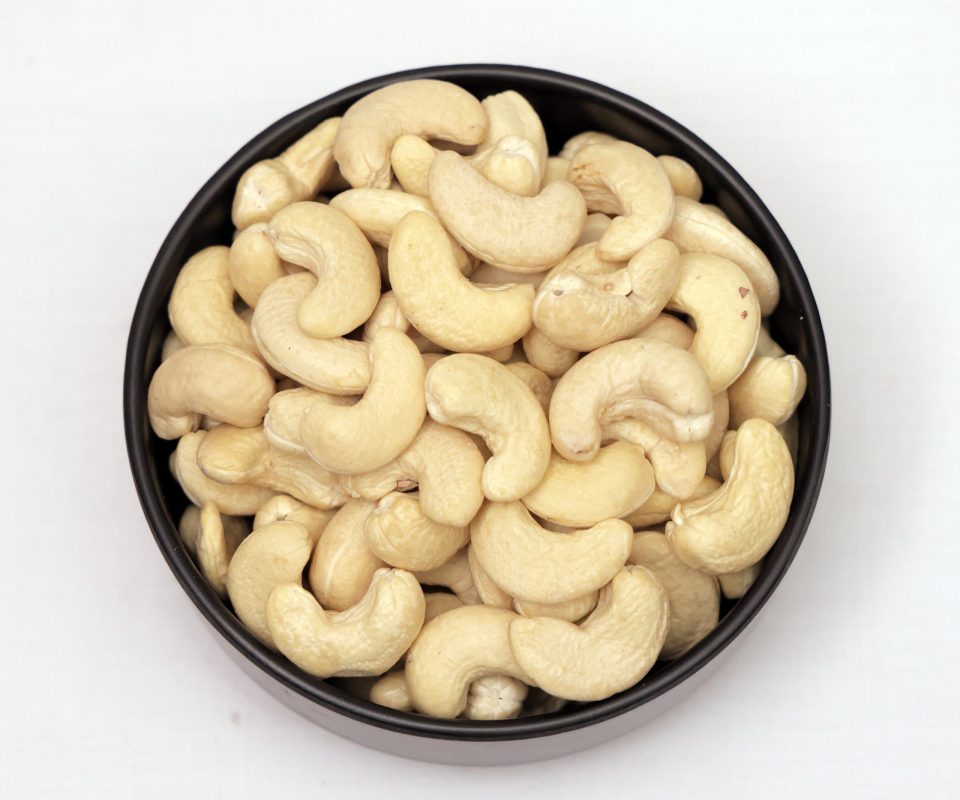
Ask around Lashkar or Morar and you hear the same answer. One jar is for cooking, and it holds the smaller, cheaper kernel that disappears into a paste or a mawa mix. The second jar is for the table, and it holds a larger, paler kernel that looks good in a steel katori. Splitting the buying this way gives you a lower average rate without changing how the food tastes or how the plate looks.
| Jar | Grade | Pieces in 100 g | Used for |
|---|---|---|---|
| Kitchen jar | W320 | About 70 | Barfi, kheer, gravy paste |
| Table jar | W240 | About 53 | Plates, garnish, guests |
| Gift jar | W180 | About 40 | Weddings and Diwali exchange |
You can read how delivery to the city works on our Gwalior dry fruit page, which also lists the pack sizes we usually ship there.
Which winter sweets of the Chambal belt call for kaju?
Gwalior is known for its gajak, the crisp sesame and jaggery sweet that appears as soon as the first cold morning arrives. Sweet makers add chopped kaju to the fancier versions, and home cooks do the same with a handful in the pan just before the syrup sets. Mawa-based sweets, from simple barfi to the rich kind served at weddings, take a thick layer of ground kaju between the mawa. Many families also keep a tin of roasted kaju for evening tea in the colder months.
Why does demand jump in the second half of November?
The wedding calendar in the Gwalior-Chambal region starts quickly after Diwali. Marriage halls book out, caterers order in volume, and sweet shops lay in their winter stock a week before. Prices at the counter often reflect that, but the effect on a household buying online is small if you plan a few days ahead.
- Order before the first big wedding date, not on the week of it.
- Keep the W240 for gifts and the W320 for cooking, so the total weight is sensible.
- Ask relatives to share an order, as a single basket is easier than three small ones.
Read the kaju price page to see how the figure moves through the month, and our winter dry fruits page to pair kaju with the jars that people usually add in the cold season.
What sort of basket suits a family of five?
The rule at Raj Dry Fruit is simple: orders start at ₹1,000 and every order ships free. For five people through a Gwalior winter, a good start is 500 g kaju, 500 g badam and 250 g pista. Kaju is at today's shop rate today, badam at today's shop rate and pista at today's shop rate. That basket has a cooking jar, a nibbling jar and a small garnish jar, which covers most of a month.
If you make gajak or barfi at home, add a second 250 g of broken or W320 kaju. If you only buy mithai from a shop, you can skip it and spend that money on a better almond instead.
How do you tell fresh kaju from tired kaju?
- Look at the colour. Fresh kernels are pale ivory; yellow-brown patches mean age.
- Smell the pack. A faint sweet smell is right; a sour or crayon smell means rancid oil.
- Bite one. It should crunch with a clean snap, not feel soft or leathery.
- Rub two pieces together. A powdery residue suggests damp storage.
Our quality checking guide covers the same tests for other nuts as well.
What is the best way to keep kaju through a Gwalior summer?
Winter is easy, but the heat from April to June is sharp. Keep the jar in the coolest cupboard, away from the kitchen window and the gas hob. Use steel or glass with a tight lid, and keep a smaller working jar for each week. If your house gets very warm, put the spare pack in the fridge door in a zip bag. Kaju has a lot of natural oil, so heat shortens its life faster than almost any other nut.
Gwalior’s history and climate are summarised on Wikipedia if you want the background to the weather.
One last practical point for fort-city households: many homes in Gwalior have a joint kitchen with several families sharing the same cupboard. Label each jar with the owner and the date, and agree who restocks which grade. It saves arguments and avoids the situation where three small jars are half empty while one sits forgotten at the back and goes stale.


Questions people ask
Is gajak made with kaju or only sesame?
Traditional gajak is sesame and jaggery or sugar. Many makers add nuts for a richer version, and kaju pieces are a common choice.
Can I use W240 for barfi to save time on grinding?
You can, but the extra cost does not show in the finished sweet. W320 or broken pieces give the same taste for less.
How many kaju are in a 250 g pack?
Roughly 130 pieces of W240, or about 175 of W320. Counts vary a little with every batch.
Does Raj Dry Fruit ship kaju to Gwalior during the wedding rush?
Orders ship free to Gwalior all year. Place yours a few days ahead of the date you need it, as courier loads rise in the wedding months.
Written at our counter, where these questions get asked every week.