In this guide
Quick answer
Aliv seeds are the seeds of the garden cress plant (Lepidium sativum), called halim or chansur in Hindi, aliv in Marathi and asaliya in Gujarati. They are tiny, reddish-brown and slightly peppery, and are usually soaked in milk or water until they swell with a soft gel coat before being eaten in laddoo, kheer or drinks.
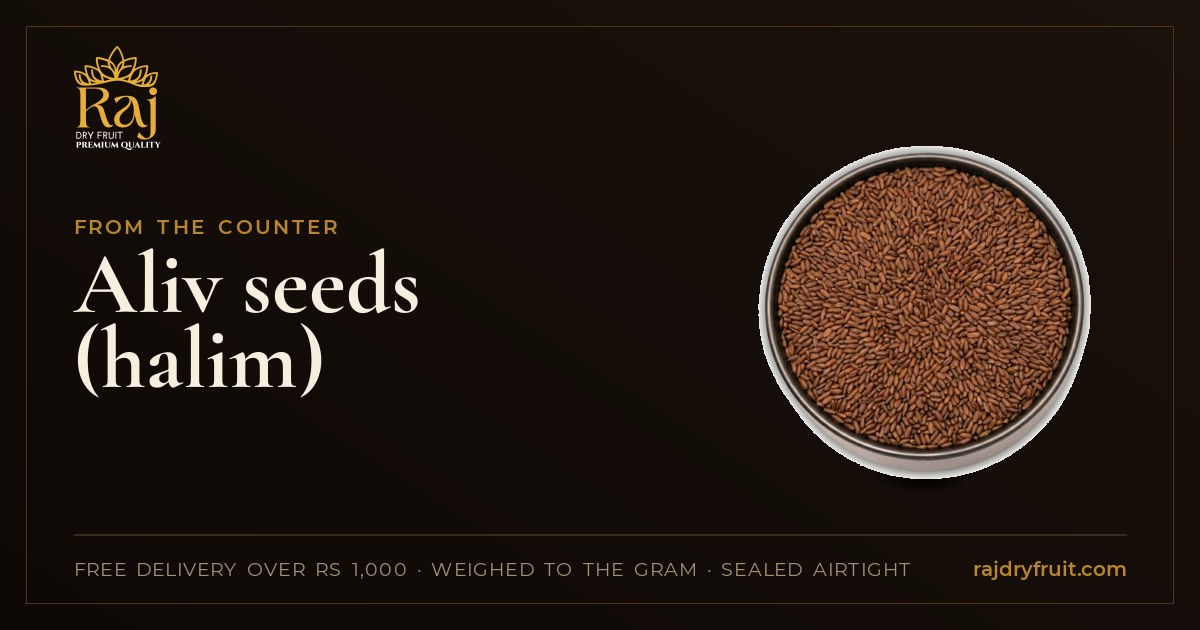
They look nothing like the other soaking seeds in an Indian kitchen. Sabja is black and round, chia is grey and oval, but aliv is small, long and a rusty red-brown, a little like a grain of rice shrunk many times over. Once you have seen them you will not confuse them again.
What are halim seeds called in English?
Halim seeds are called garden cress seeds in English. Garden cress is the same leafy plant grown as peppery sprouts and microgreens, and it belongs to the mustard family, which is where the sharp taste comes from.
The many names cause most of the confusion when people shop:
- Hindi: halim, haleem, chansur or chandrasur
- Marathi: aliv or ahliv
- Gujarati: asaliya
- English: garden cress seeds
Halim seeds have nothing to do with haleem, the slow-cooked meat and grain dish. The names only sound alike.
Aliv, sabja, chia or flax: how are they different?
All four swell or turn slippery in liquid, which is why they get mixed up, but they are different plants with different uses. Aliv is the smallest and the only one with a peppery bite.
| Seed | Plant | How it looks | In water | Common Indian use |
|---|---|---|---|---|
| Aliv / halim | Garden cress | Tiny, long, red-brown | Swells slowly, soft gel coat | Laddoo, kheer, milk |
| Sabja / tukmariya | Sweet basil | Small, round, black | Swells in minutes, white gel | Falooda, sherbet |
| Chia | Salvia hispanica | Oval, grey and black speckled | Swells over some minutes, clear gel | Puddings, smoothies |
| Flax / alsi | Linseed | Flat, glossy, brown | Turns slippery, little swelling | Ground into roti, laddoo, chutney |
If you came here looking for the falooda seed, that is sabja; our sabja seeds guide covers it. We keep Sabja Seeds, Chia Seeds and Flax Seeds alongside aliv on the same shelf.
How do you eat aliv seeds?
Aliv seeds are almost always soaked before eating, because dry they are hard and gritty. Soaked, they swell, turn soft and take on a jelly-like coat, which makes them easy to eat in milk, kheer or laddoo.
- Measure a small amount. A teaspoon is a usual portion; they are strong, and a little goes a long way.
- Rinse quickly in a fine strainer. The seeds are small enough to slip through a normal one.
- Soak in milk, water or coconut water until they swell and soften, usually an hour or two. Many families soak them overnight in the fridge.
- Use the whole thing. Stir the swollen seeds into warm milk, a kheer, a lemon or kokum sherbet, or a laddoo mixture.
Soaked aliv has a mild peppery, slightly bitter taste. Milk, jaggery and cardamom soften it, which is why most traditional recipes are sweet.
You can also sprout them. Spread a few seeds on damp cotton or tissue and in a few days you have garden cress shoots, the same microgreens sold in salad packs, with a sharp mustardy bite.
Why is aliv laddoo given after childbirth?
In Maharashtra and many other Indian homes, aliv laddoo is a traditional food prepared for new mothers in the weeks after delivery. The usual recipe soaks aliv seeds in coconut water or milk, then cooks them with grated coconut, jaggery and ghee, often with nutmeg and cardamom, and shapes the mixture into small laddoos.
The tradition sits alongside other postpartum foods such as gond laddoo and dink laddoo. Indian food composition tables list garden cress seeds among the richer plant sources of iron, which is one reason they are valued, but we are not quoting a figure because published values vary widely between sources.
Every family has its own rules about when to start aliv and how much. Please check with your doctor before adding it to a new mother’s diet, and especially during pregnancy, when many families traditionally avoid it altogether. The same applies to anyone on medication or with a thyroid or other condition.
Other ways aliv seeds are used
- Aliv kheer: soaked seeds simmered briefly in milk with jaggery or sugar and cardamom.
- Aliv milk: a teaspoon of soaked seeds in a glass of warm milk.
- Summer drinks: soaked seeds in nimbu pani or kokum sherbet, used like sabja.
- Laddoo and chikki: mixed with coconut, jaggery and chuara or other dry fruits.
When buying, look for seeds that are evenly red-brown, dry and free-flowing, with no clumps or musty smell. Clumping means the seeds have met moisture, and damp seeds go stale quickly. Because the seeds are so small, a little dust at the bottom is normal, but a pack that is mostly powder has been handled too long.
Store dry aliv in an airtight jar away from moisture, where it keeps for months. Once soaked, keep it in the fridge and use it within a day.
Our Aliv Seeds come in 100 g packs, which is plenty for a household, and the rest of the range is on our seeds shelf. We send them across India; orders start at ₹1,000 and every order ships free.
Aliv appears with munakka, anjeer and til on our page of dry fruits rich in iron.
Questions people ask
Are aliv seeds and halim seeds the same?
Yes. Aliv is the Marathi name and halim the Hindi name for the same seed, garden cress. In Gujarati it is called asaliya.
Can aliv seeds be eaten without soaking?
They can be, but they are hard and gritty dry, so nearly every recipe soaks them first. Soaking makes them soft and easy to eat.
Can you eat aliv seeds during pregnancy?
Many families traditionally avoid aliv during pregnancy. Ask your doctor before eating it while pregnant or breastfeeding.
Is aliv the same as sabja?
No. Sabja is sweet basil seed, round and black; aliv is garden cress seed, small, long and red-brown, with a peppery taste.
How long do soaked aliv seeds last?
Use them within a day, kept covered in the fridge. Dry seeds in an airtight jar keep for months.
We deliver across India See 87 city pages
Written at our counter, where these questions get asked every week.


