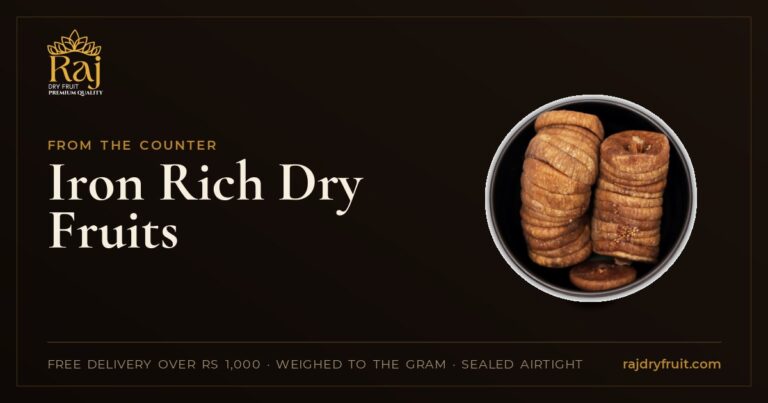
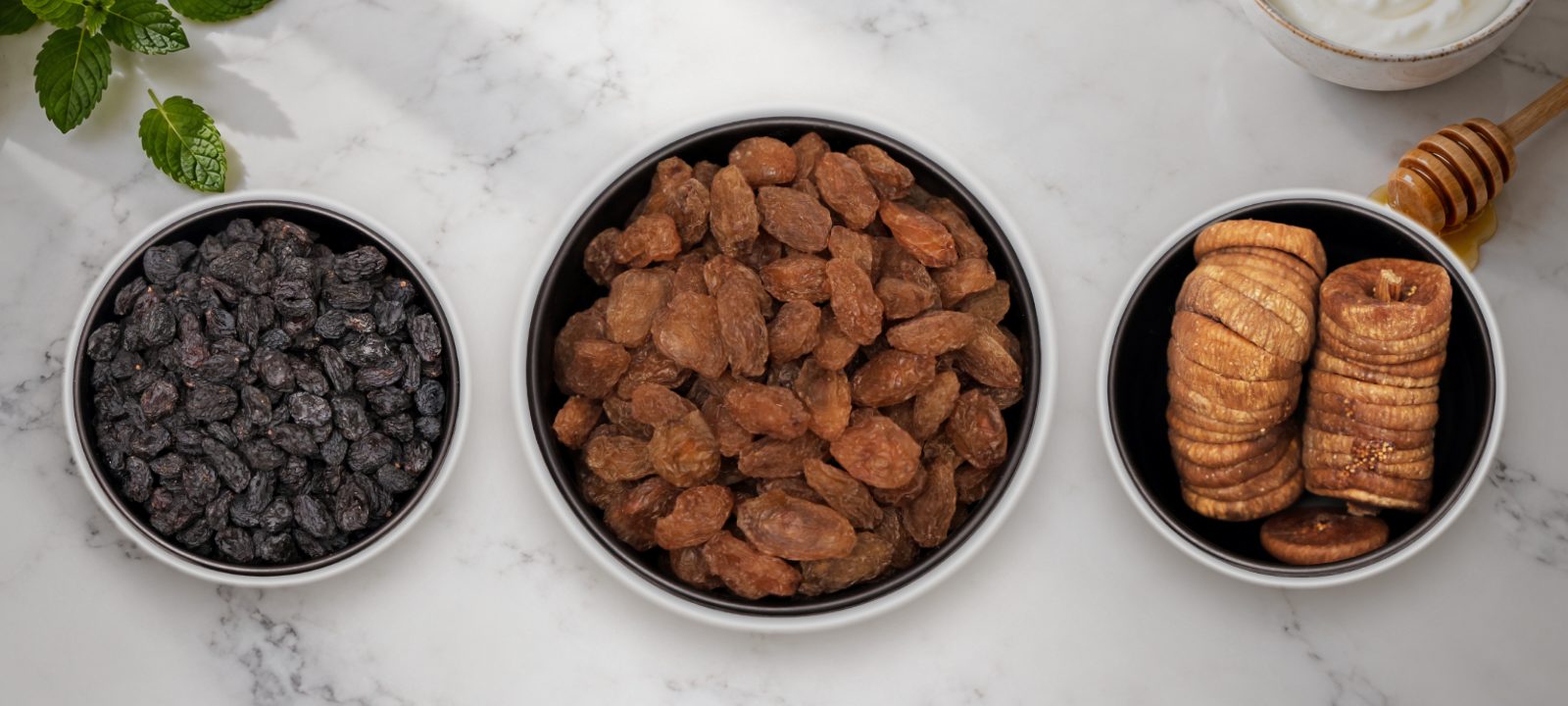


The dry fruits Indian homes reach for when they want more iron are munakka, kali dakh (black raisins), anjeer (figs), khubani (apricots) and khajur. Two seeds belong on the same shelf: aliv, which carries more iron than any of them, and til.
None of these is a large dose on its own. They are useful because they are easy to eat every single day, soaked at night and finished in the morning, and that steadiness is what a food habit is good for.
The iron shelf, one item at a time
- Munakka and kali dakh: the large dark raisins. Munakka is the classic overnight soak; seedless kali dakh is easier for children. Both are listed for iron in our product facts.
- Kishmish: the small golden raisin, sweeter and milder. It is the same family, and the one most children will happily eat.
- Anjeer: soft, mildly sweet and high in fibre. Two soaked figs are the usual portion.
- Khubani: Turkish apricots are the lowest in calories of the group and easy to carry for a mid-morning gap.
- Khajur: black dates are filling and sweet, though they carry less iron than people assume. Count them as energy first.
- Aliv and til: aliv (halim) goes into laddoos and kheer, and til into chikki and chutney. A spoon a day is enough.
What they give per 100 g
These are the approximate per 100 g figures we use on every product page. For milligram iron figures, item by item, read our guide to iron-rich dry fruits; this table shows the rest of what comes with them.
Approximate values per 100 g
| Item | Hindi name | Calories (kcal) | Protein | Carbs | Fibre | Known for |
|---|---|---|---|---|---|---|
| Munakka, large raisins | Munakka | 299 | 3.1 g | 79 g | 3.7 g | Natural sugars, Iron, Potassium |
| Black raisins | Kali dakh | 299 | 3.1 g | 79 g | 3.7 g | Natural sugars, Iron, Potassium |
| Dried figs | Anjeer | 249 | 3.3 g | 64 g | 9.8 g | Fibre, Calcium, Potassium |
| Dried apricots | Khubani | 241 | 3.4 g | 63 g | 7.3 g | Fibre, Vitamin A, Potassium |
| Dates | Khajur | 282 | 2.5 g | 75 g | 8 g | Natural energy, Fibre, Potassium |
| Garden cress seeds | Aliv, halim | 454 | 25 g | 33 g | 8 g | Iron, Plant protein, Fibre |
| Sesame seeds | Til | 573 | 18 g | 23 g | 12 g | Calcium, Iron, Healthy fats |
| Nigella seeds | Kalonji | 375 | 16 g | 44 g | 10 g | Fibre, Iron, Healthy fats |
The raisins, dates and figs are mostly natural sugar, about 79 g of carbohydrate per 100 g for munakka. The seeds are the opposite: aliv brings about 25 g of protein per 100 g and very little sugar. A mix of both kinds keeps the daily handful from being all sweetness.
The overnight soak most families already know
- At night, put 8 to 10 munakka and 2 anjeer in a small bowl of water.
- In the morning, eat them and drink the water, with or before breakfast.
- Later in the day, 3 or 4 khubani or 2 khajur for the gap before lunch.
- A few times a week, an aliv laddoo or a spoon of roasted til.
Two plain kitchen facts help. Iron from plant foods is taken up better when something with vitamin C is on the same plate, such as amla, a squeeze of nimbu or an orange. Tea and coffee do the opposite, so keep the chai an hour away from the morning bowl.
For children, mothers and grandparents
For children, a smaller bowl works: 4 or 5 seedless kali dakh and one anjeer, chopped for little ones. Aliv laddoo is a traditional food for new mothers in many Indian homes, and grandparents often prefer soaked munakka because it is soft to chew. If a doctor has found low haemoglobin, or during pregnancy, follow the treatment and the diet your doctor gives; these foods sit alongside that advice, never in place of it.
A month’s order for one person
500 g of munakka or kali dakh, 250 g of anjeer, 250 g of khubani or khajur, and 100 g of aliv. For two people, double the raisins and figs. The rest of the raisin family, golden kishmish included, is on the dakh and kishmish shelf. If fibre matters as much as iron, see fibre-rich dry fruits, and for walnuts and seeds, dry fruits rich in omega-3.
Questions people ask
Which dry fruit is richest in iron?
Among the dried fruits, munakka, kali dakh, khubani and anjeer carry the most, while dates carry less than people expect. Aliv seeds carry more than any of them, which is why aliv laddoo is a traditional choice.
Can dry fruits fix low haemoglobin or anaemia?
No food fixes anaemia on its own. It needs a doctor to find the cause and set the treatment, and iron-rich foods such as munakka and anjeer can be part of the everyday diet that goes along with it.
Which dry fruits are rich in both iron and calcium?
Anjeer and til are the usual answers: anjeer is listed for calcium in our product facts and til for both calcium and iron. Pairing soaked anjeer with a spoon of til chikki covers both in one snack.
Are these safe to eat in pregnancy?
Many families include munakka, anjeer and dates during pregnancy, but they are high in natural sugar. Ask your doctor how much suits you, especially if blood sugar is being watched.
Should munakka be soaked before eating?
Soaking does not add iron, but it softens munakka and makes it easier to eat every day. Most homes soak 8 to 10 overnight and drink the water in the morning.