
In this guide
Quick answer
The sabja seeds price per kg works out lower than chia seeds, and you rarely need a kilo: our sabja (tukmariya) packs are at today's shop rate. One level teaspoon, about 5 g, swells to fill a glass, so a 250 g pack makes around fifty drinks, enough for a family of four for three to four weeks of regular use.
Why do sabja prices vary so much?
Sabja, also called tukmariya or sweet basil seed, is the seed of Ocimum basilicum, the sweet basil plant, as the Wikipedia article on basil describes. It is a different plant from tulsi, though the two are related. Most Indian sabja comes from Gujarat, Madhya Pradesh and Rajasthan, and the price moves with the harvest, cleaning and packing.
Three things explain most of the gap between one seller’s price and another’s:
- Cleaning: well-cleaned sabja has almost no dust, stems or stones. Poorly cleaned seed is cheaper by the kilo but loses weight when you rinse it.
- Freshness: fresh seed swells fully within fifteen minutes. Old seed swells slowly and unevenly.
- Pack size: a kilo costs less per gram, but sabja is used a teaspoon at a time, so a kilo can last a small family for months.
How long does a 250 g pack last?
Count in teaspoons, not grams. One level teaspoon is about 5 g, and it is enough for one glass of falooda, nimbu pani or sherbet.
| How the family uses it | Teaspoons a week | A 250 g pack lasts |
|---|---|---|
| Two people, one drink a day each | 14 | About 3.5 weeks |
| Family of four, a drink each three times a week | 12 | About 4 weeks |
| Family of four, a drink each every day | 28 | Just under 2 weeks |
| Occasional falooda and summer sherbet | 4 to 5 | Around 2.5 months |
That is why most homes buy 250 g at a time in winter and 500 g in the summer months, when sabja drinks are on the table every afternoon.
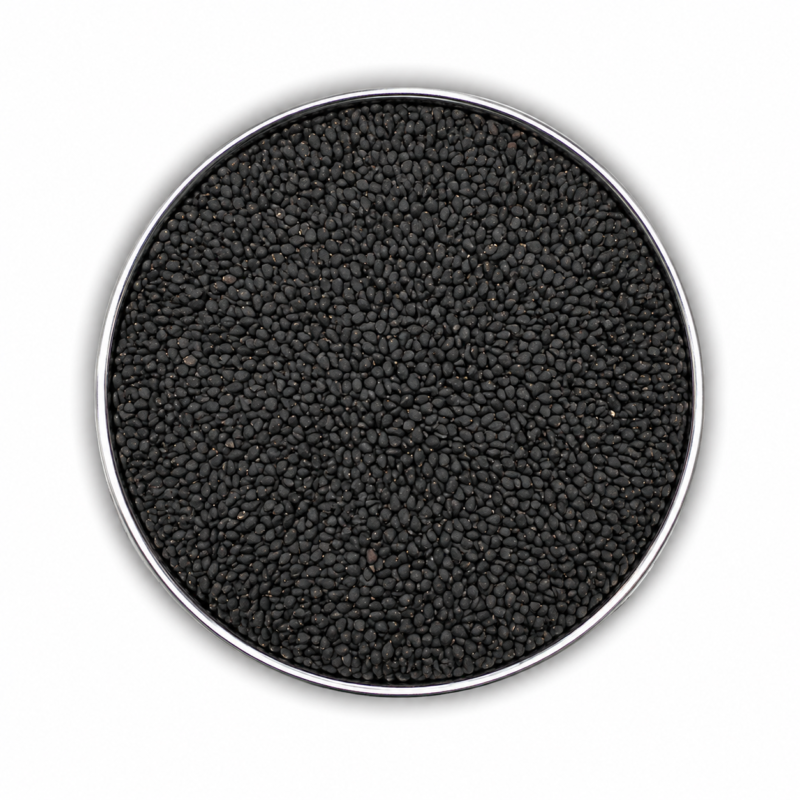


Is sabja cheaper than chia?
Yes, usually by a clear margin per kilo. Chia today works out to at today's shop rate, and flaxseed, alsi, to at today's shop rate. The three seeds are often confused but are used differently:
- Sabja: swells in seconds into a soft gel with a crunchy centre. Must be soaked; never eaten dry. Best in cold drinks, falooda, kulfi and sherbet.
- Chia: swells more slowly into a thicker gel. Can be soaked or sprinkled. Best in puddings, overnight oats and smoothies.
- Flax or alsi: does not swell much. Best ground into rotis, chutneys or laddus.
Our flax vs chia seeds post compares those two in detail, and the sabja seeds guide covers soaking times and recipes.
How do you check sabja quality at home?
- Look: seeds should be uniformly black, small and oval, with very little grey dust.
- Rinse: put a spoonful in a bowl of water and swirl. Bits of stem and dust float up; a little is normal, a lot is not.
- Soak: a teaspoon in a glass of water should swell into translucent grey-white beads within ten to fifteen minutes.
- Smell: faintly herbal. Any musty smell means damp storage.
Always soak sabja fully before eating or giving it to children, as dry seeds swell in the throat. If you are pregnant, on medication or managing a health condition, speak to your doctor before making it a daily habit.
Which drinks use sabja most?
Falooda is the best known, with rose syrup, milk, vermicelli and kulfi, but everyday use is simpler. Nimbu pani with a spoon of soaked sabja is the most common summer drink in North and West India. Rooh Afza or kokum sherbet with sabja is a classic in Mumbai and Gujarat. In the South, sabja goes into nannari sherbet and buttermilk. Many families also add it to coconut water or thandai. Each of these takes the same single teaspoon per glass, which is why a small pack goes so far.
How should you store sabja?
Dry sabja keeps well: a year or more in an airtight glass jar in a cool, dark cupboard. Keep it away from the kitchen sink and the stove, where steam can get in. Soaked sabja should be used the same day; it turns sour if kept overnight, even in the fridge.
What else goes into a seeds order?
Most families buy sabja with other seeds and their regular dry fruit. Our orders start at ₹1,000 and every order ships free, and a sensible seeds-plus-pantry basket gets there easily: 250 g sabja, 250 g chia, 250 g flax, 500 g badam and 250 g kaju. All seeds are in the seeds collection, and the single pack is on the sabja (basil seeds) product page. If you are in the South and want drink ideas for the hot months, our Chennai summer sabja drinks post has them.

Questions people ask
What is the sabja seeds price 1kg in India?
It varies with the season and how well the seed is cleaned. Our live pack prices are shown at the top of this page, and larger packs work out cheaper per gram.
What is the tukmariya price?
Tukmariya is simply the Gujarati and Hindi name for sabja, so the price is the same. Check that the seed is clean and swells quickly, whatever the label says.
Are sabja seeds and chia seeds the same?
No. Sabja comes from sweet basil and swells within seconds, while chia comes from a desert plant and swells slowly. Sabja suits drinks; chia suits puddings and oats.
How much sabja should I use per glass?
One level teaspoon soaked in a quarter cup of water for ten minutes is enough for one glass. More than that makes the drink too thick.
Written at our counter, where these questions get asked every week.