
In this guide
Quick answer
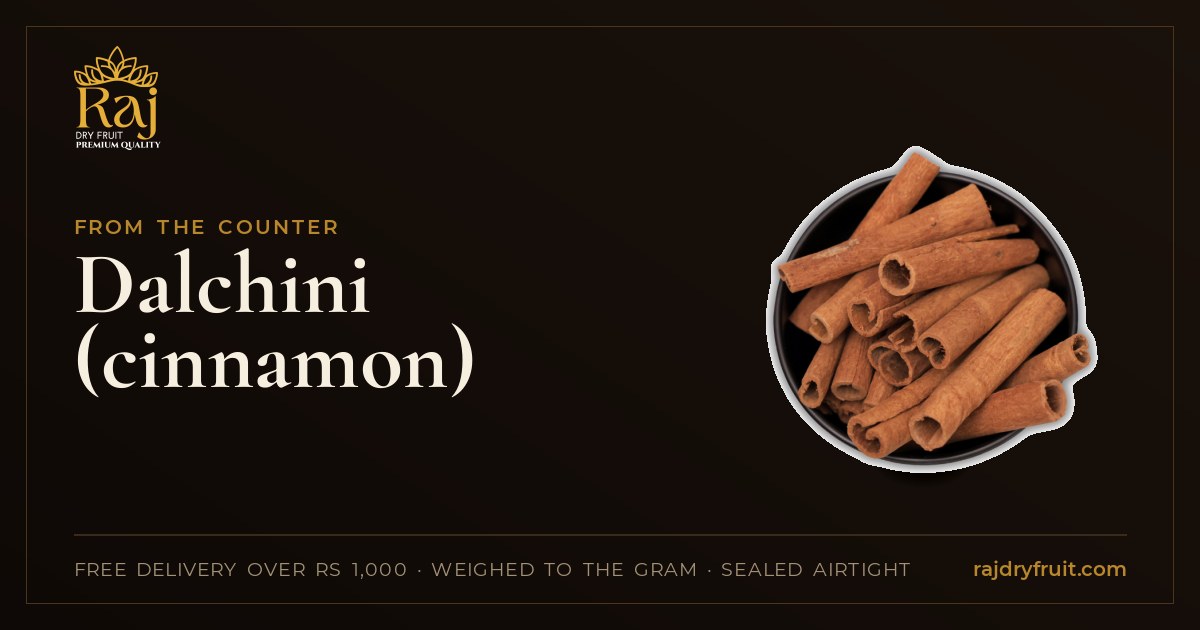
Dalchini is the Hindi name for cinnamon, the dried inner bark of trees in the Cinnamomum family, sold as rolled sticks called quills. It gives garam masala, biryani, chai and many sweets their warm, sweet-woody smell. There are two main kinds in shops: Ceylon cinnamon, which is thin and mild, and cassia, which is thick and strong.
Most dalchini sold in Indian markets is cassia or a close relative. That is not a problem for cooking; cassia is what a lot of Indian recipes were built around. It helps, though, to know which kind you are holding, because the two behave differently in the pot and in the grinder.
What is dalchini called in English?
Dalchini is called cinnamon in English. The word comes from Persian and means, roughly, “Chinese wood”, a reminder that cassia, the stronger type, has long been traded from China and Southeast Asia. In Tamil it is lavanga pattai, and in Malayalam karuvapatta.
Do not confuse dalchini with tej patta. Indian bay leaf comes from a related tree (Cinnamomum tamala), which is why it has a faint cinnamon smell, but it is a leaf, not bark.
Ceylon vs cassia: what is the difference?
Ceylon cinnamon (Cinnamomum verum) comes mainly from Sri Lanka and is made of many paper-thin layers rolled together; cassia is a single thick layer of bark curled into a hollow tube. You can usually tell them apart by snapping a stick.
| Point | Ceylon (“true”) cinnamon | Cassia |
|---|---|---|
| Look | Many thin layers, like a rolled cigar | One thick layer, hollow tube |
| Colour | Light tan | Reddish to dark brown |
| Texture | Brittle, crumbles easily | Hard, woody |
| Flavour | Mild, sweet, delicate | Strong, sharp, spicy-sweet |
| Coumarin | Very low | Much higher |
| Best in | Desserts, chai, light dishes | Garam masala, biryani, gravies |
A note on coumarin: it is a natural compound found in much higher amounts in cassia, and food safety agencies advise limiting how much of it people take in regularly. The small amounts used in everyday cooking are not the concern. If you plan to take cinnamon daily in large spoonfuls, as some people do, ask your doctor first, and more so if you have a liver condition or are pregnant.
Cigar-roll vs Vietnam stick: which should you buy?
Buy the cigar-roll dalchini for chai, sweets and anything where you want a gentle, even warmth, and the Vietnam stick when you want a bold cinnamon hit in a masala or long-cooked dish. We keep both on our Spices shelf.
- Dalchini (Cinnamon Sticks) – Cigar: the name describes the shape, thin bark rolled tightly into long, neat quills. That shape is the classic look of Ceylon-style cinnamon, although shape alone does not prove the species. It breaks easily and releases flavour quickly.
- Cinnamon Stick (Dalchini) – Vietnam: a thicker bark stick of the cassia type. Vietnamese cinnamon is known for being rich in aromatic oil, so it tastes hotter and sweeter than most. Use less of it.
Whichever you buy, check that the sticks smell sweet and strong when you snap one. Dalchini that smells of nothing, or of dust, has been sitting too long. See today’s price on each product page.
How do you use dalchini in cooking?
Use whole dalchini by frying a small piece in hot ghee or oil at the start of cooking, so its oil goes into the fat and carries through the dish. A piece about the length of your thumb is plenty for a pot of rice or dal for four.
- Biryani and pulao: a piece of dalchini with green elaichi, laung and tej patta in the ghee before the rice goes in.
- Garam masala: dry-roasted and ground with black pepper, cloves, cardamom and cumin.
- Chai: a small piece boiled with the water before you add tea and milk. Ceylon-style sticks give a softer taste here.
- Kheer and desserts: simmer a stick in the milk and remove it before serving, or dust a little powder on top.
- Baking: powder in cakes, cookies and apple dishes.
- Warm water in winter: many households steep a piece in hot water. Treat it as a comforting drink, not a remedy.
Take whole pieces out before serving, or warn people, as biting into bark is unpleasant.
How do you make dalchini powder at home?
Break the sticks into small pieces, warm them briefly in a dry pan, cool, and grind to a fine powder. Home-ground powder smells far stronger than shop powder, and you know exactly what is in it.
- Break the sticks into pieces about the size of a fingernail. Thin cigar quills snap by hand; thick cassia may need a mortar.
- Dry-roast on low heat for a minute or two until fragrant. Do not let them darken.
- Let them cool fully, so the powder does not clump.
- Grind in a dry mixer jar in short bursts. Thick bark is hard on small blades, so go slowly.
- Sieve and grind the coarse bits again.
- Store in a small airtight jar away from light and use within a couple of months.
How should you store dalchini?
Keep dalchini sticks in an airtight jar in a cool, dark cupboard. Whole sticks keep their aroma for a year or more; powder fades within months. Keep it away from the stove, where heat and steam dull the oils fast.
For more on the other sweet-warm spices that go with it, see our guide to jaifal and javitri.
Questions people ask
Is dalchini the same as cinnamon?
Yes. Dalchini is the Hindi name for cinnamon. In Indian shops it is most often cassia-type bark, while thin, layered Ceylon cinnamon is the milder “true” cinnamon.
How can I tell Ceylon from cassia at home?
Look at the cut end. Ceylon shows many thin layers rolled together and crumbles easily; cassia is one thick layer of hard bark curled into a tube.
Is dalchini the same as tej patta?
No. Tej patta is the leaf of a related tree, Cinnamomum tamala. It smells faintly of cinnamon, but it is used differently and tastes milder.
How much dalchini should I use in a dish?
A thumb-length piece is enough for a pot of biryani or pulao for four. For the stronger Vietnam stick, start with half that.
Can I use a dalchini stick more than once?
A stick simmered briefly in milk or chai can be rinsed, dried and used once more, though it will be weaker. Sticks fried in oil are best thrown away.
We send whole spices across India; orders start at ₹1,000 and every order ships free. Add cigar dalchini or the Vietnam stick to your next order of dry fruits.
We deliver across India See 87 city pages
Written at our counter, where these questions get asked every week.


