
In this guide
Quick answer
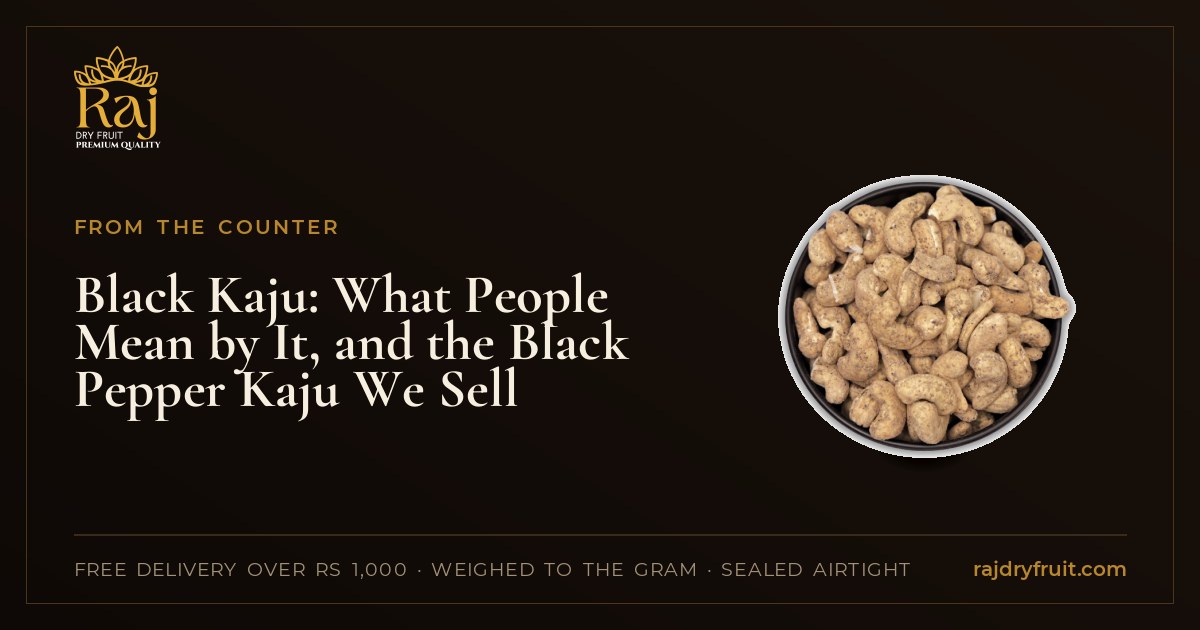
Black kaju usually means whole cashews roasted and coated with crushed black pepper and kala namak, which leaves dark specks all over the nut. Some people also use the name for fire-roasted Konkan cashews with a darker skin. What we sell under this idea is Kaju Black Pepper: roasted whole kaju with a peppery, salty, slightly smoky coat.
What do people mean by black kaju?
The name is used loosely, so it helps to know the three things a shopkeeper might hand you when you ask for it.
| What is sold as black kaju | What it actually is | Taste |
|---|---|---|
| Kaju black pepper, also called pepper cashew | Roasted whole kaju tossed with crushed kali mirch, kala namak and a little oil | Salty, peppery heat that builds slowly |
| Kala kaju from the Konkan and Goa | Cashews roasted inside the shell over an open fire, then cracked out, leaving a darker, sometimes smoky kernel | Smoky, deeper roast, less sweet |
| Kaju with the skin left on | Kernels that were not fully peeled, with brown or reddish testa still attached | Slightly astringent, earthy |
There is no separate black cashew variety. All three start as the ordinary pale kernel of the cashew tree, Anacardium occidentale, which the Portuguese brought to the Goa coast in the sixteenth century, as the Wikipedia article on cashew notes. The colour comes from the coating, the roasting method or the skin. Our Goa kaju post explains the fire-roasting tradition in more detail.
What is kaju black pepper, exactly?
It is whole kaju roasted until crisp, then coated while still warm with crushed black pepper and black salt so the seasoning sticks. The pepper gives a slow warmth rather than chilli heat, and the kala namak adds a faint sulphur tang that Indian palates know from chaat. It is the flavoured kaju that adults tend to reach for with evening tea or a drink, while children often prefer plain roasted or peri peri.
Pepper kaju also travels well as a gift add-on. A 250 g pack slipped into a Diwali box beside plain badam and pista gives the recipient something savoury among the sweet dry fruit, and it is one of the few flavoured nuts that suits both a family table and an office pantry. Check the pack date on arrival, as you would with any roasted nut.



How does pepper kaju compare with peri peri and plain roasted?
All three are roasted whole cashews. The difference is only the coat, which decides who in the house will finish the jar.
- Kaju Black Pepper: peppery, salty, mild tang. Best with tea, as a guest bowl for adults, or on a cheese board.
- Kaju Peri Peri: chilli, garlic and tang, with visible red seasoning. Popular with teenagers and at parties.
- Kaju Roasted: lightly salted, no spice. Suits children, elders and anyone who wants the cashew taste to lead.
Pack prices today: Kaju Black Pepper is at today's shop rate, and Kaju Peri Peri is at today's shop rate. For comparison, plain kaju across our grades works out to at today's shop rate today. Flavoured kaju costs a little more than plain because of the roasting and seasoning, and the salted kaju price post breaks down why.
How do you tell good pepper kaju from a poor one?
The coating can hide a lot, so look past it.
- Size: the kernels should be whole and fairly even. A bag full of halves and pieces under the pepper means a cheaper grade was used.
- Crunch: a fresh roast snaps cleanly. A soft or chewy nut has picked up moisture.
- Seasoning: you should see pepper on every nut, not a pile of loose powder at the bottom.
- Smell: sharp pepper and roasted nut. Any stale or oily smell means old stock.
- Salt: it should taste seasoned, not like a salt lick. Too much salt usually covers a tired nut.
How should you store and serve black pepper kaju?
Roasted, seasoned nuts lose their crunch faster than raw ones once opened. Tip the pack into an airtight glass jar, keep it away from the stove, and finish it within three to four weeks. In Mumbai, Chennai or Kolkata humidity, keep a small serving jar out and the rest in the fridge.
For a party, 200 to 250 g fills two bowls for eight to ten guests over an evening. Pair it with roasted pista and plain roasted kaju so there is something for every taste. The full roasted and salted nuts range is on one page, and every plain and flavoured grade is in the cashew collection.
How do you build a sensible order around it?
Flavoured kaju is a snack, so most homes buy it in 250 g packs alongside their regular dry fruit. Our orders start at ₹1,000 and every order ships free, and a practical household basket clears that easily: 500 g regular kaju for the kitchen, 500 g badam for soaking, 250 g pista, and a 250 g pack of Kaju Black Pepper for the tea table.

Questions people ask
Is black kaju a different type of cashew?
No. There is no black cashew variety. The dark colour comes from a pepper coating, from roasting in the shell over a fire, or from skin left on the kernel.
What is kala kaju?
Most often it is cashew roasted in its shell the traditional Konkan way, which darkens the kernel and gives a smoky taste. In some shops the name is also used for pepper-coated kaju.
Is pepper cashew spicy?
It is warm rather than hot. Black pepper builds slowly on the tongue, so most adults find it mild, though young children may prefer plain roasted kaju.
How long does kaju black pepper stay crunchy?
Three to four weeks in an airtight jar once opened, longer in the fridge. Close the jar right after serving, especially in humid weather.
We deliver across India See 87 city pages
Written at our counter, where these questions get asked every week.