In this guide
Quick answer
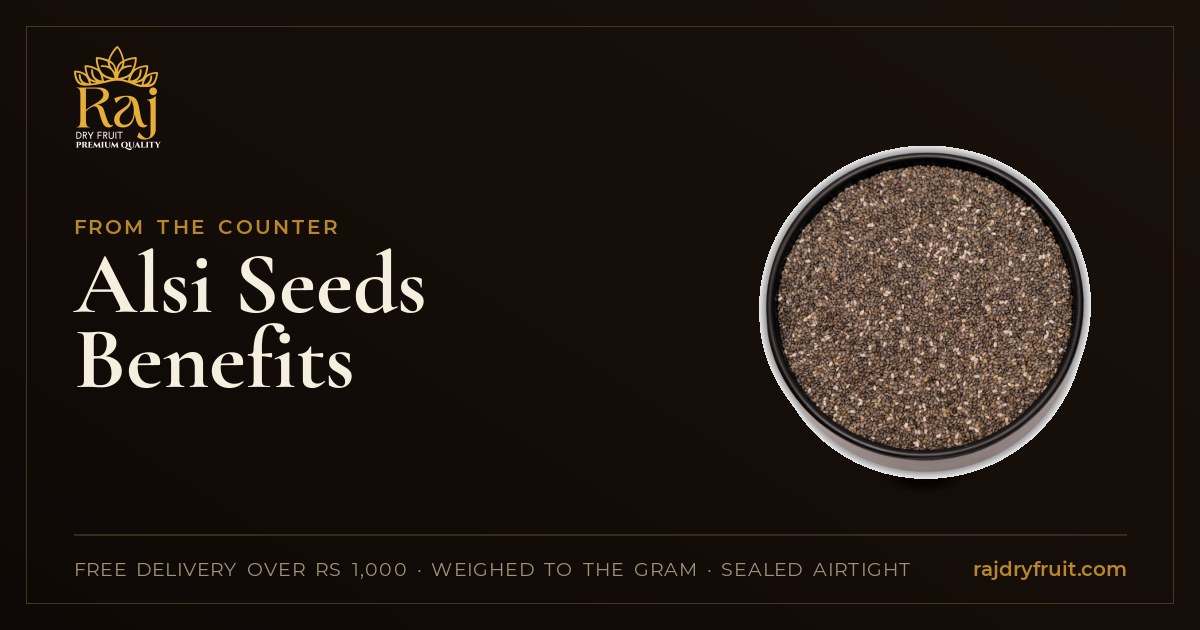
Alsi seeds benefits come mainly from fibre, plant fat and protein. One tablespoon, about 10 g, of ground alsi (flax) seeds gives roughly 3 g of fibre and 4 g of fat in a tiny volume. Eat one spoon a day, roasted and ground, stirred into curd, atta or a smoothie.
What do alsi seeds actually give you?
Using USDA FoodData Central values, 100 g of flaxseed has around 530 calories, 18 g of protein, 29 g of fibre and 42 g of fat, a good part of which is the plant omega-3 called ALA. Nobody eats 100 g, so scale it down: one tablespoon, about 10 g, brings about 3 g of fibre, 1.8 g of protein and 4 g of fat. You can check the figures on USDA FoodData Central.
That is useful for a vegetarian kitchen that wants more fibre and fat without cooking anything new. It is a food, not a remedy. If you have a health condition or take medicines, speak to your doctor before adding a seed daily.
Why must alsi be ground or roasted first?
Whole flax seeds are hard and often pass through the body undigested, so the goodness inside never reaches you. Grinding breaks the shell. Roasting adds the nutty taste of the traditional Maharashtrian and Gujarati alsi chutney, and also dries the seed so it keeps for longer.
- Dry roast on a low flame for 3 to 4 minutes until the seeds crackle and smell nutty.
- Cool fully before grinding in short pulses, not one long run.
- Store the powder in a small jar and use within 3 weeks; ground seed turns stale faster than whole.

How do you eat alsi seeds every day?
One spoon a day is the usual household serving. The table shows easy ways to fit it in without a new recipe.
| Meal | How to add it | Amount |
|---|---|---|
| Breakfast | Stir into curd or oats | 1 spoon powder |
| Roti or paratha | Mix into atta dough | 1 spoon per 2 rotis |
| Lunch | Alsi chutney with rice or bhakri | 2 spoons, roasted |
| Snack | Roast with makhana and salt | 1 spoon |
| Laddoo | Fold into dry fruit laddoo mix | 2 spoons for 10 laddoos |
A 250 g pack of whole alsi lasts about 8 to 10 weeks at one spoon a day. At today’s rate alsi works out to at today's shop rate, so a daily habit adds very little to the monthly grocery list.
Alsi, chia or pumpkin seeds: which is better for daily eating?
They are good in different ways. Alsi has the most fibre and ALA per spoon but needs grinding. Chia can be soaked and eaten as it is, and it works out to at today's shop rate today. Pumpkin seeds are crunchy and bring more protein and zinc per handful. Our alsi how to eat guide and chia guide compare the methods.
For most homes the practical answer is a rotation. Alsi in the morning curd, chia in a soaked pudding, pumpkin seeds as an evening snack. A ready seeds mix removes the decision.


How should you buy and store alsi?
Choose seed that is glossy, brown and uniform. Dull, dusty or sticky seed is old, and a clean, even colour usually means careful sieving. Smell a pinch: it should smell mild and nutty, never like old oil or paint, which means the fat has gone rancid. Buy whole seed and grind small batches yourself.
Keep whole seed in an airtight jar in a cool, dark spot for up to 6 months, and the roasted powder in the fridge in warm weather. A simple basket for the winter months is 500 g alsi, 500 g chia, 500 g badam and 250 g pista, because orders start at ₹1,000 and every order ships free. See all seeds or head to our dry fruits online page.
How do you make alsi chutney and alsi laddoo?
For chutney, dry roast 100 g of alsi until it crackles, then grind it with 6 to 8 garlic cloves, 2 teaspoons of red chilli powder, salt and a squeeze of lemon. It keeps for about 3 weeks in a dry jar and goes with bhakri, paratha and plain rice with ghee. Use a dry spoon each time.
For laddoo, roast 150 g of alsi, grind it coarsely and mix with 100 g of chopped badam, 2 tablespoons of ghee and 120 g of jaggery syrup. Roll into about 15 small balls. One laddoo a day is plenty, as the seed and the jaggery are both energy dense.
Both keep better if you make them in small batches and store them away from the stove, where steam softens the powder.
Questions people ask
Can I eat alsi seeds every day?
One spoon a day is a common amount in Indian homes. Drink enough water with it, because the fibre needs it. If you are pregnant, on medicines or have a thyroid or digestive condition, check with your doctor.
Is it better to eat alsi raw or roasted?
Either works, but whole raw seed passes through largely undigested. Light roasting and grinding gives better flavour and makes the seed easier to use in chutney, atta and curd.
What is the best time to eat alsi?
Morning with curd or oats is the habit most families keep up, because it is easy to remember. There is no strict clock, so pick a time you will stick to.
How long does ground alsi stay fresh?
About 3 weeks in a closed jar at room temperature and a little longer in the fridge. Whole seed lasts much longer, so grind only what you need.
Written at our counter, where these questions get asked every week.