In this guide
Quick answer
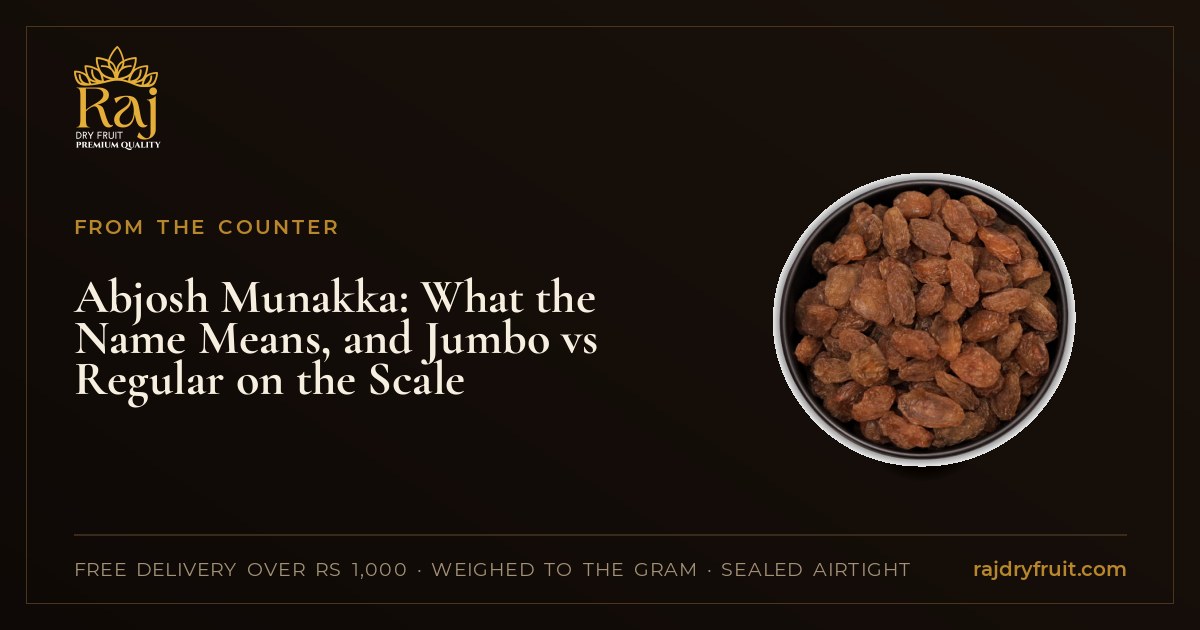
Abjosh munakka is a large raisin made the Afghan way: whole bunches of grapes are dipped briefly in hot water before drying, which softens the skin and gives an amber to golden-brown colour. The word comes from the Persian ab, water, and josh, boiling. In India it is sold as munakka dakh, in jumbo and regular sizes.
What does abjosh actually mean?
Abjosh describes the process, not a grape variety. Traditional Afghan producers dip ripe grapes into boiling water, sometimes with a little alkali or oil, for a few seconds. The dip cracks the waxy bloom on the skin so the grape dries faster and more evenly, and the sugars caramelise lightly, giving the familiar amber colour. Grapes dried in the shade without a dip become green raisins, and grapes dried in the sun turn dark brown or black. The Wikipedia article on raisins explains how drying method changes colour and texture.
Munakka, meanwhile, is the Indian name for the largest raisins, traditionally from big seeded grapes. Put the two together and abjosh munakka means a large, plump, amber raisin dried by the hot-water method.
How is munakka different from kishmish and kali dakh?
All three are dried grapes. They differ in size, seeds and how they are dried.
| Name | Size | Colour and texture | Usual use |
|---|---|---|---|
| Abjosh munakka, jumbo | Largest, roughly 2 to 2.5 cm | Amber, very soft, fleshy | Soaking, eating as is, gifting |
| Abjosh munakka, regular | Large, slightly smaller and more varied | Amber to brown, soft | Daily soaking, kheer, halwa |
| Kishmish, lambi dakh | Small to medium, long | Green to golden, firm-chewy | Cooking, pulao, snacking |
| Kali dakh, black seedless | Medium | Near black, soft, deeper taste | Soaking overnight, iron-rich diets |
Traditional munakka contains seeds, while kishmish is seedless. Many abjosh lots now come with small soft seeds or none at all, so check the label on the pack. The kishmish, munakka and dakh difference post goes into this in more detail.


Jumbo or regular: which should you buy?
Buy by how you will eat it. The taste is the same, so you are paying for size and evenness.
- Jumbo: each raisin is a mouthful on its own. Choose it for eating straight from the jar, for a gift box, or for elders who soak five or six a night and like a large, soft raisin in the morning.
- Regular: slightly smaller and less even, at a lower rate. Choose it for daily soaking in a family, for kheer, halwa and sheera, or when munakka is going into a recipe.
Across our munakka, the rate works out to at today's shop rate today. The jumbo abjosh packs are at today's shop rate, and the regular abjosh packs are at today's shop rate. Every lot is listed on the munakka price per kg page.
How do people eat abjosh munakka?
The most common habit in Indian homes is the overnight soak:
- Rinse five to eight munakka in plain water.
- Soak them in a small bowl of water overnight.
- Eat them in the morning and drink the soaking water if you like.
- If the raisins have seeds, remove them after soaking, when they slip out easily.
Munakka is also simmered in milk at night for children and elders, chopped into halwa and kheer, and added to winter laddus. Like all raisins it is high in natural sugar, so anyone watching their sugar should speak to their doctor about portions. Our munakka benefits and how to eat it post covers soaking and portions.
How do you judge a good lot on the scale?
Tip a handful onto a plate and look for these signs:
- Even amber colour, with a natural slight variation. Very dark or patchy pieces mean uneven drying.
- Plump and soft when pressed, springing back slowly. Hard, shrivelled pieces are old.
- Slightly sticky, never wet or crystallised with white sugar spots.
- A clean, sweet, fruity smell, with no sour or fermented note.
- Few stems. A stem or two is normal in natural raisins; a lot full of stems is poorly cleaned.
How much should a household buy?
Two adults soaking six munakka a day use roughly 300 to 350 g a month. A family that also cooks with it gets through 500 g in a month comfortably. Store it in an airtight jar in a cool cupboard for up to three months, or in the fridge through summer and the monsoon.
Our orders start at ₹1,000 and every order ships free, so munakka usually goes in with the rest of the month’s dry fruit: 500 g abjosh munakka, 500 g badam, 250 g akhrot and 250 g kali dakh is a sensible basket for a family of four. See the full dakh and kishmish collection or go straight to jumbo abjosh munakka.

Questions people ask
What is abjosh dakh?
It is another name for abjosh munakka: large raisins dried after a short dip in hot water, the Afghan method. Dakh is simply the Hindi and Gujarati word for grape or raisin.
Is jumbo munakka better than regular?
It is larger and more even, not better in taste. Choose jumbo for eating whole or gifting, and regular for daily soaking and cooking.
Does munakka dakh have seeds?
Traditional munakka does, and some abjosh lots still have small, soft seeds. Soak them overnight and the seeds come out easily.
How many munakka should I eat in a day?
Most families soak five to eight a day for an adult. Because they are high in natural sugar, check portions with your doctor if you have diabetes.
We deliver across India See 87 city pages
Written at our counter, where these questions get asked every week.