In this guide
Quick answer
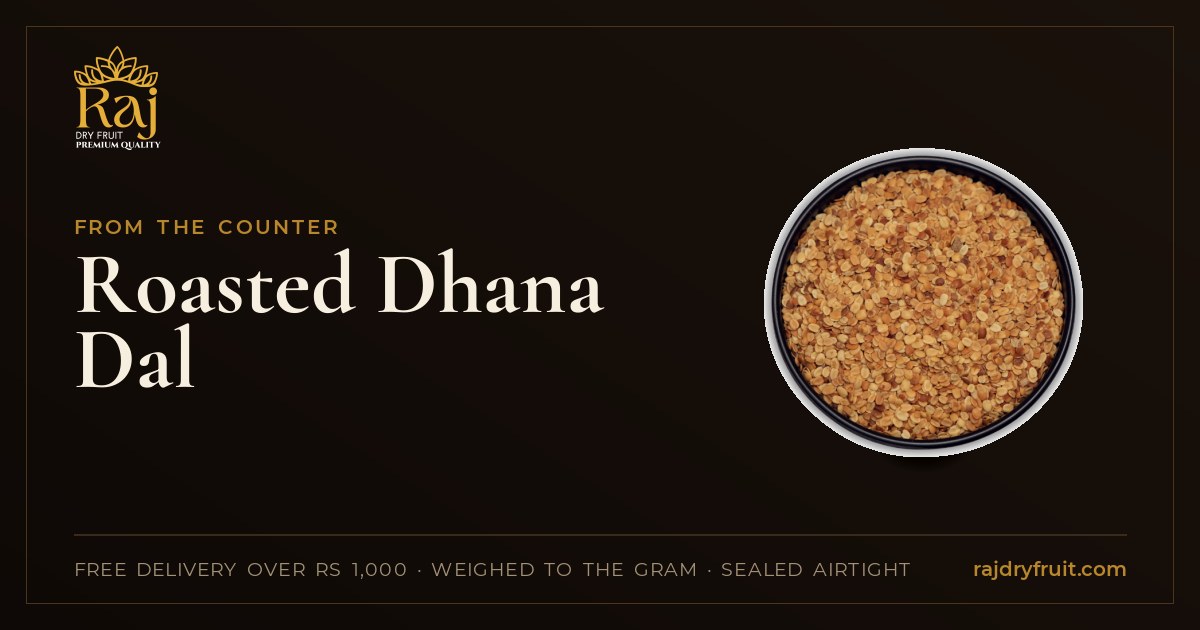
Dhana dal is coriander seed that has been lightly roasted, split and husked, leaving crisp, pale yellow halves. It is the base of most Gujarati mukhwas and is eaten after meals on its own or mixed with saunf, til and a pinch of salt. In English it is called split roasted coriander seed.
What is roasted dhana dal, exactly?
Whole coriander seed, dhania, is a small round husk with two seed halves inside. To make dhana dal, the seeds are cleaned, lightly roasted, and then cracked so the husk falls away. What remains are the inner halves, the “dal” of the coriander, just as chana dal is the split of the chickpea. The result is crunchy, slightly nutty, citrus-scented and much milder than whole coriander.
Most dhana dal is then roasted a second time with a little oil and salt, which gives it the glossy finish and savoury edge you see on the mukhwas tray. Gujarat and Rajasthan grow much of India’s coriander, and the Wikipedia page on coriander explains how the seed differs from the leaf.
How is dhana dal different from dhania and saunf?
All three end up near the after-meal bowl, but they are not the same thing:
| Item | What it is | Texture | Taste | Main use |
|---|---|---|---|---|
| Dhana dal | Split, husked, roasted coriander seed | Light, crisp | Mild, nutty, citrus | Mukhwas, eaten after meals |
| Whole dhania | Whole coriander seed with husk | Hard, fibrous | Strong, earthy | Ground into masala, tadka |
| Madrasi saunf (green) | Fennel seed, slim and green | Chewy-crisp | Sweet, aniseed | After meals, mukhwas |
| Roasted mukhwas | A ready mix of roasted seeds | Crunchy | Savoury-sweet | After meals, guests |
Dhana dal is gentler than saunf and less sweet, which is why many Gujarati households keep both and mix them to taste. Our guide to saunf types covers the fennel side of the bowl.


How do Gujarati homes eat dhana dal?
Straight from a small bowl after lunch and dinner, a pinch at a time. It sits on the dining table in most Gujarati homes and at the counter of every Gujarati thali restaurant. Families also use it in a few other ways:
- Mixed half and half with green saunf as a daily after-meal blend.
- Added to homemade mukhwas with til, ajwain and a little sugar-coated saunf.
- Sprinkled over chevdo or bhel for crunch.
- Put out at weddings and festivals on the mukhwas tray, often with dhana dal in the centre.
Our post on Gujarati mukhwas after meals goes through the whole tradition, from Surat to Rajkot.
How do you make a simple mukhwas mix at home?
This is a mild everyday blend that keeps for two months in a jar:
- Dhana dal: 100 g, the base.
- Green saunf: 100 g, for sweetness and aroma.
- White til: 25 g, dry roasted in a pan until it just colours.
- Ajwain: one teaspoon, dry roasted for 30 seconds.
- Black salt: a pinch, if your dhana dal is unsalted.
Let the roasted seeds cool fully, mix everything in a bowl, and store in an airtight glass jar. Keep it away from the stove; heat and steam make seeds go soft. A tablespoon after a meal is the usual amount.
What does dhana dal cost today?
Roasted Dhana Dal pack sizes are at today's shop rate, and our ready Roasted Mukhwas, if you would rather not mix your own, is at today's shop rate. Green saunf is at today's shop rate. The full range is in the mukhwas and herbs collection.
How do you check dhana dal quality?
Good dhana dal is crisp, clean and fragrant. Check four things:
- Colour: pale yellow to light golden. Dark brown bits are over-roasted and bitter.
- Husk: a little husk is normal; a lot of papery skin means poor cleaning.
- Crunch: it should snap. Chewy dhana dal has absorbed moisture.
- Smell: bright and citrusy. A stale, oily smell means it is old.
If it goes soft in the monsoon, spread it on a plate and warm it in a dry pan for a minute; it crisps again. Do not add oil at this stage, and let it cool completely before it goes back in the jar, or the steam will soften it all over again. Buying smaller packs more often is the simplest way to keep it crisp through the rainy months.
How to add dhana dal to an order
A small pack of dhana dal lasts a family a month or two, so it usually comes along with the main jars. A sensible basket is 500 g kaju, 500 g badam, 250 g pista and a pack each of dhana dal and saunf for the table; orders start at ₹1,000 and every order ships free. You can order straight from the Roasted Dhana Dal product page.

Questions people ask
What is dhana dal in English?
Dhana dal in English is split roasted coriander seed, sometimes sold as coriander dal or roasted coriander splits. It is the inner part of the coriander seed with the husk removed.
Is dhana dal the same as dhania?
It comes from dhania seed, but it is not the same product. Whole dhania is the seed with its husk, used for cooking. Dhana dal is husked, split and roasted, and it is eaten as is after meals.
How do you eat dhana dal mukhwas?
Take a small pinch, about a teaspoon, after a meal and chew it slowly. Many people mix it with saunf. It is not cooked further.
How long does roasted dhana dal last?
Two to three months in an airtight jar in a cool, dry place. It loses crunch if left open, especially in humid weather. Warm it briefly in a dry pan if it softens.
Written at our counter, where these questions get asked every week.