In this guide
Quick answer
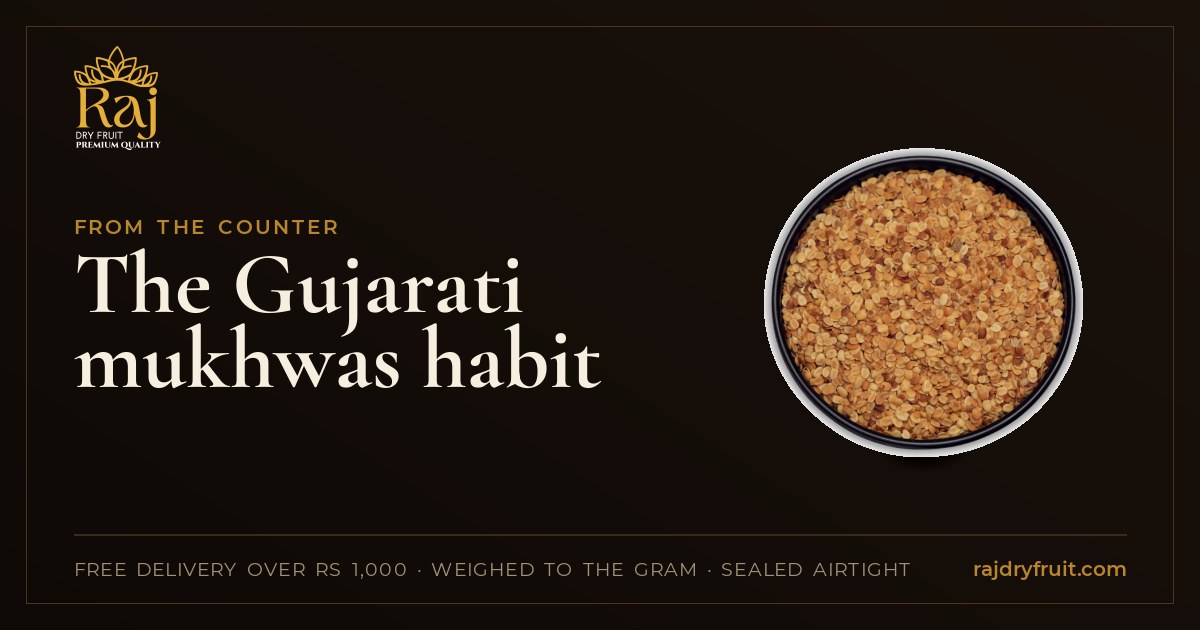
A good Gujarati mukhwas is built on saunf and roasted dhana dal, with til, ajwain and often alsi, either roasted with salt and lemon or coated in sugar. In many Ahmedabad homes a box of it sits on the dining table, and a pinch after every meal is as much a part of eating as the thali.
We have written separately about what mukhwas actually is and why every shop’s differs. This piece is about the Gujarati way of using it, and making your own.
Why mukhwas is so Gujarati
Mukhwas is eaten across western India, but Gujarat has made more of it than most places. A Gujarati thali is sweet, salty and sour all at once, and full of flavour, so something to freshen the mouth afterwards feels natural. Restaurants in Ahmedabad put a bowl of it by the counter, homes keep a box of several compartments, and the mix is part of what guests are offered at the end of a visit.
It is also a family matter. Plenty of households still roast their own, and each has a view on how much ajwain is too much.
What goes into a good mix
| Ingredient | What it adds | Share of the mix |
|---|---|---|
| Saunf (fennel) | Sweet, cooling, the main body | About 40% |
| Dhana dal (split roasted coriander seed) | Crunch and a toasty, citrus note | About 20% |
| Til (white sesame) | Nuttiness | About 15% |
| Alsi (flax seeds) | Crunch, a mild nutty taste | About 10% |
| Ajwain | Sharpness; a little goes far | About 5% |
| Dry coconut, sugar-coated saunf, or other extras | Sweetness and colour | About 10% |
Dhana dal is the ingredient that makes a mix taste Gujarati. It is coriander seed that has been roasted and split, which leaves the husk behind and gives a light, crisp piece. Our Roasted Dhana Dal can be eaten on its own, and plenty of people do.
For saunf, the thin green variety is sweeter and more aromatic than the plump kind used in cooking. Madrasi Saunf is what we keep for mukhwas.
Roasted or sweet
Gujarati mukhwas splits broadly into two kinds, and most homes keep both.
- Roasted (salty): the seeds are dry-roasted with salt, often a little lemon juice and sometimes turmeric. Savoury, crunchy, and the one most people reach for after a heavy meal. Roasted Mukhwas is this style.
- Sweet (coated): saunf and seeds coated in coloured sugar, sometimes with rose, dried fruit or coconut. Children like it, and it looks bright in a box. Satrangi Mukhwas is the many-coloured one.
- Between the two: Manpasand Mukhwas mixes sweet and savoury in one pack, for tables where everyone wants something different.
How to make a roasted mukhwas at home
This makes about 250 g, which lasts a family a few weeks.
- 100 g saunf
- 50 g dhana dal
- 40 g white til
- 25 g alsi
- 1 to 2 teaspoons ajwain
- Juice of half a lemon, ½ teaspoon salt, a pinch of turmeric
- Mix the lemon juice, salt and turmeric. Toss the saunf in it and leave for half an hour.
- Roast the saunf in a heavy pan on low heat, stirring, until dry and fragrant. This takes eight to ten minutes. Tip out.
- Roast the alsi until it starts to pop, then the til until pale gold. Roast each separately, because they cook at different speeds.
- Warm the ajwain for a minute only. It burns quickly.
- Cool everything completely, then mix in the dhana dal, which is already roasted.
- Store in an airtight jar. If it loses its crunch, warm it in a dry pan for a minute.
For a sweet version, stir in a spoon of sugar-coated saunf or a spoon of dry coconut once the roasted mix is cold.
Keeping a mukhwas box
A compartment box with three or four mixes is the Gujarati way: one roasted, one sweet, plain dhana dal, and plain saunf. Refill small amounts often rather than filling it for a month, because roasted seeds lose their aroma once the jar is opened again and again.
Everything above is on our mukhwas and herbs shelf, with seeds on the seeds shelf. Orders to Ahmedabad usually take two to four days, and today’s dry fruit prices in Ahmedabad are on the city page. Delivery is free on every order, and orders start at ₹1,000.
Questions people ask
What is dhana dal in mukhwas?
It is coriander seed that has been roasted and split, with the husk removed. It gives mukhwas its crunch and a toasty, citrus flavour.
Is roasted or sweet mukhwas better after meals?
It is a matter of taste. Roasted is the more common choice after a heavy meal, and sweet is popular with children and guests.
How long does homemade mukhwas last?
Kept in an airtight jar, a few weeks at its best. After that it is still fine but loses aroma and crunch.
Should mukhwas contain supari?
It does not need to. Many good mixes have none, including the home recipe above, and a seed-only mix is the better choice for children.
We deliver across India See 87 city pages
Written at our counter, where these questions get asked every week.