In this guide
Quick answer
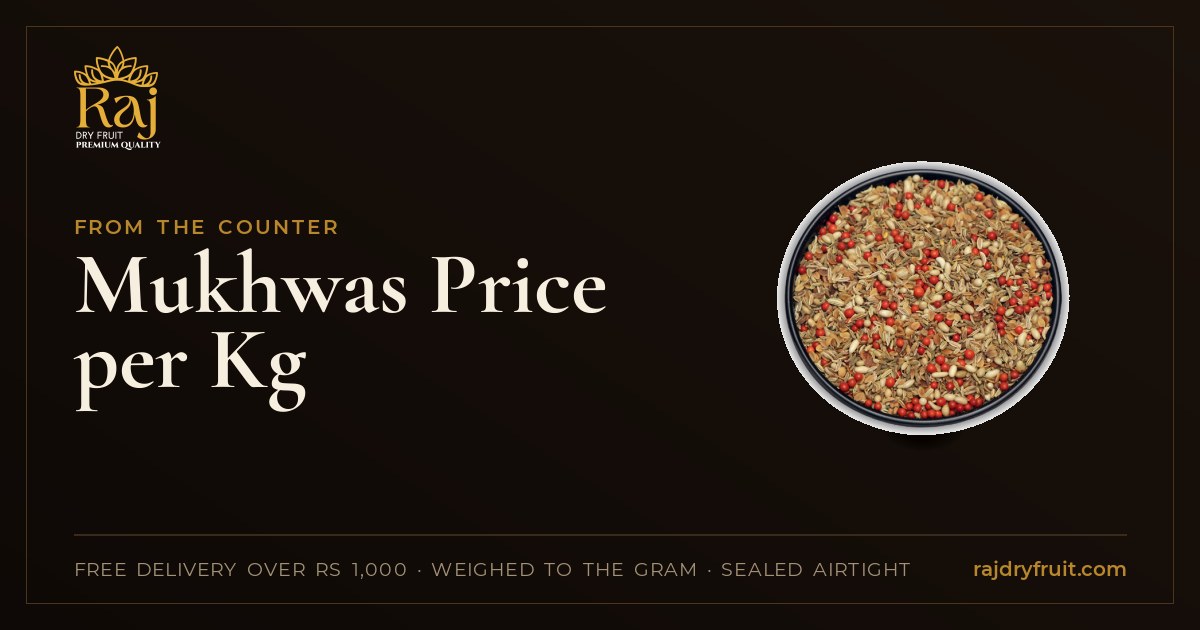
The mukhwas price per kg depends on what the mix is made of: plain roasted saunf and dhana dal blends cost the least, sugar-coated satrangi and manpasand mixes sit in the middle, and rose, supari or paan blends cost the most. The best one suits the meal: roasted after heavy food, sweet after a festive thali.
What decides the price of mukhwas?
Mukhwas is a mix, so its price follows the share of each ingredient. Three things move it:
- The base: saunf (fennel) is the most common base and the least costly. Dhana dal, til and ajwain sit alongside it.
- The coating: sugar-coated saunf, the colourful kind, adds sugar, colour and a lot of handling.
- The special ingredients: rose petals, gulkand, supari, kattha, mint and cardamom raise the price noticeably, even in small quantities.
The Wikipedia entry on mukhwas traces the after-meal habit across Gujarat, Rajasthan and the rest of India. Our own what mukhwas actually is post explains the ingredients one by one.
Which kind of mukhwas suits which meal?
| Type | What it is like | Serve it after |
|---|---|---|
| Roasted mukhwas | Savoury-salty, roasted saunf, til and dhana dal | A heavy dinner, dal-baati, chole, biryani |
| Manpasand mukhwas | A balanced sweet and savoury mix | Everyday lunch and dinner, the family table |
| Satrangi mukhwas | Seven colours, sugar-coated saunf, mostly sweet | Children’s parties, festive thalis, weddings |
| Jaipuri mukhwas | A rich Rajasthani-style blend | Guest meals and Diwali visits |
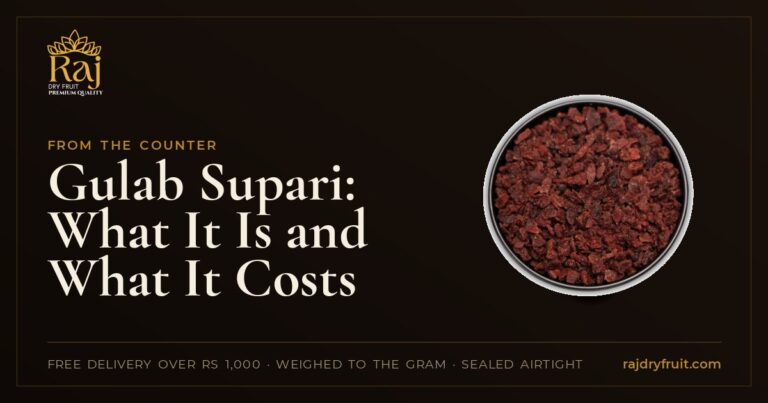
| Rose or gulab supari | Floral, sweet, with supari pieces | As a paan substitute after a big meal |
Paan mukhwas, flavoured with dried paan leaf and gulkand, is very popular right now. If that is the taste you are after, our Gulab Supari is the closest in our range, with a rose and supari profile.


What does each mukhwas cost today?
Pack prices change with the cost of saunf and sugar, so here are today’s live figures. Manpasand mukhwas packs are at today's shop rate. Satrangi mukhwas comes to at today's shop rate. Jaipuri mukhwas is at today's shop rate. Our Gulab Supari is priced on its own page, and the whole range is in the mukhwas and herbs collection.
Per kilo, a bigger pack usually works out cheaper per gram. But mukhwas loses its crunch and aroma once the pack is opened, so for most homes a 250 g pack of two different kinds is better than a kilo of one.
How much mukhwas does a household go through?
Less than people think, except at Diwali. A rough guide:
- A family of four taking a pinch after two meals uses about 150 to 200 g a month.
- A house that hosts often, or keeps a mukhwas dani on the dining table, uses 300 to 400 g.
- Diwali week, with guests every evening, can take 500 g of two or three kinds.
- A wedding or large function needs about 1 kg per 150 to 200 guests, served in small bowls.
How do you serve and store mukhwas?
A mukhwas dani, the small steel or silver box with compartments, is still the easiest way to offer three kinds after a meal. Fill one section with roasted, one with sweet and one with something special such as gulab supari. Refill from airtight jars every few days so the dani never holds stale mix.
Keep the main stock in glass jars, away from the stove. Roasted mukhwas holds its crunch for six to eight weeks, and sugar-coated mixes keep a little longer, though in humid weather the colours can bleed and stick. Gujarati homes have whole rituals around after-meal mukhwas, covered in our Gujarati mukhwas after meals post.
Is it cheaper to make mukhwas at home?
Sometimes, if you only want a simple roasted mix. Dry-roast saunf, til, ajwain and dhana dal separately, toss them with a little salt, lemon and a pinch of haldi, and you have a basic roasted mukhwas in twenty minutes. The cost is mostly saunf. What is hard to make at home is the rest: evenly sugar-coated saunf, the seven colours of satrangi, rose and supari blends, and the balance of a good manpasand mix, which takes many ingredients bought in small amounts. Most families do both. They roast a plain mix for daily use and buy one or two ready blends for guests and festivals, when the look of the dani matters as much as the taste. A useful starting point for a home blend is equal parts saunf and dhana dal, half as much til, and a quarter as much ajwain.
How do you put together a sensible order?
Mukhwas is light and usually goes into a larger dry fruit order. Our orders start at ₹1,000 and every order ships free, and a Diwali basket that covers both the guest table and the after-meal dani might be: 250 g manpasand mukhwas, 250 g satrangi mukhwas, 500 g kaju, 500 g badam and 250 g pista. If you want a mix that carries more saunf flavour, add a pack of Madrasi saunf for your own blend.

Questions people ask
Which mukhwas is best?
It depends on the meal. Roasted mukhwas suits heavy food, manpasand suits everyday meals, and satrangi or rose blends suit festive meals and children.
What is paan mukhwas?
It is a mukhwas flavoured with dried betel leaf, often with gulkand and supari. It is meant as a lighter, mess-free substitute for a paan after a meal.
What is a mukhwas dani?
It is a small box with compartments, usually steel, silver or brass, kept on the dining table to offer two or three kinds of mukhwas after meals.
Is mukhwas good after every meal?
A small pinch is a common habit across India. Sugar-coated kinds add sugar, so people watching their intake often prefer roasted or plain saunf blends.
Written at our counter, where these questions get asked every week.