In this guide
Quick answer
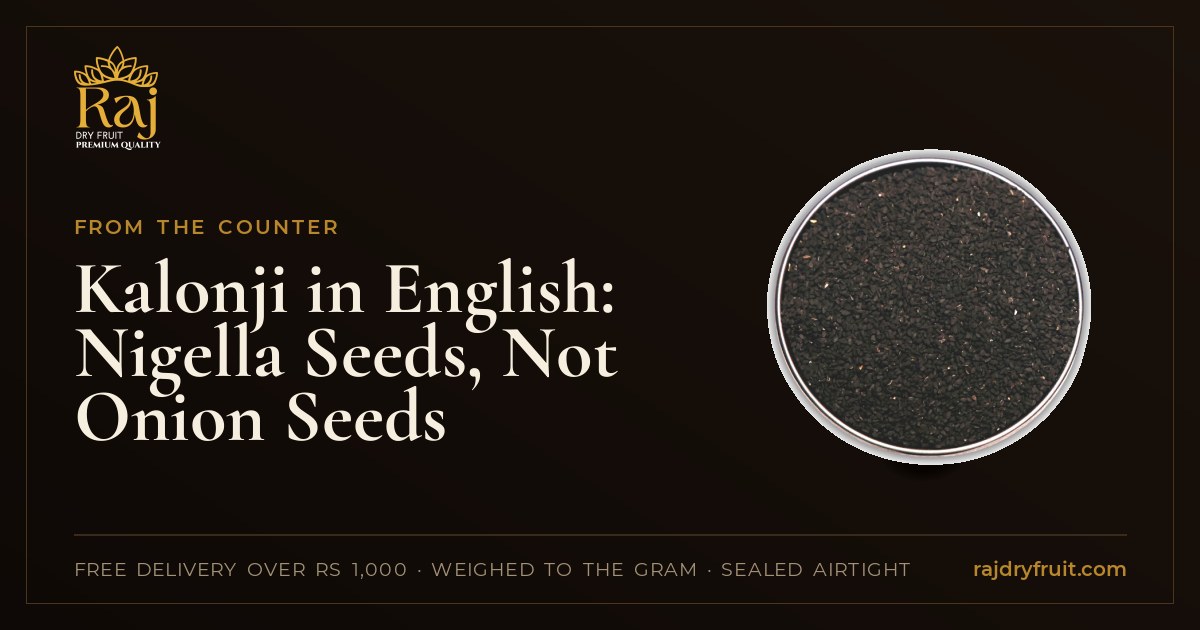
Kalonji is called nigella seeds in English. It is the small, black, sharply angled seed of the Nigella sativa plant, with a slightly bitter, peppery, faintly oniony taste. In India it is often sold as “onion seeds”, but it does not come from the onion plant, and it is not the same as shah jeera, the spice most Indian cooks mean by black cumin.
In the kitchen, kalonji is a finishing and tempering seed. It goes into mango and lime pickles, onto naan and kulcha, into Bengali panch phoron, and into a hot tadka for dal and vegetables. A little goes a long way.
What is kalonji called in English?
Kalonji is nigella seed in English, and nigella is the correct botanical name. You will also see it labelled black seed, black caraway, fennel flower and, very often in India, onion seed. All of these mean the same seed.
| Language | Name for nigella | Note |
|---|---|---|
| Hindi / Urdu | Kalonji, kalaunji | The name most shops use |
| Bengali | Kalo jeere, kalo jira | Means “black cumin”, a source of confusion |
| Tamil | Karunjeeragam | Also means “black cumin” |
| Telugu | Nalla jeelakarra | Also means “black cumin” |
| English | Nigella seed, black seed | “Onion seed” on many Indian labels |
We list it as Kalonji (Onion Seeds), because that is the name people search for and ask for. The seed inside the bag is nigella.
Is kalonji the same as onion seeds?
No, kalonji is not onion seed, botanically. The true seed of the onion plant is also small and black, which is almost certainly how the trade name started, but it is a different plant and is sown to grow onions rather than used as a spice. Nigella belongs to the buttercup family and has nothing to do with onions.
The name has stuck anyway, and it is harmless as long as you know what it means. When an Indian recipe or a shop says onion seeds, it means kalonji. When a seed catalogue says onion seeds, it means seed to plant in a garden.
Is kalonji black cumin or shah jeera?
Kalonji is not shah jeera, even though both get called black cumin. Several Indian languages name nigella “black cumin” (kalo jeere, karunjeeragam), and English-language books sometimes do the same. But in North Indian cooking, black cumin, kala jeera or shah jeera is a different spice altogether.
- Shape: kalonji is a small, matte, angular seed, like a tiny black teardrop with sharp edges. Shah jeera is long, thin and curved, like a darker, finer version of ordinary jeera.
- Smell: kalonji is peppery and slightly bitter. Shah jeera is sweeter and smells like a refined cumin.
- Use: kalonji goes into pickles, breads and panch phoron. Shah jeera goes into biryani, pulao and rich Mughlai gravies.
If a biryani recipe asks for black cumin, it almost always means shah jeera. If a Bengali recipe asks for kalo jeere, it means kalonji. When in doubt, read what the dish is.
How is kalonji used in Indian cooking?
Kalonji is used whole, either fried in hot oil for a few seconds or sprinkled on before baking or pickling. It is rarely ground. The main uses:
- Pickles: it is a regular part of North Indian mango pickle and Bengali and Punjabi achaar, usually alongside mustard seed, fennel and methi, all in mustard oil.
- Naan and kulcha: pressed onto the top of the dough, often with sesame, before it goes into the tandoor or oven.
- Panch phoron: the Bengali five-seed tempering of fenugreek, nigella, cumin, black mustard and fennel, used whole in equal parts.
- Tadka: a pinch in hot oil or ghee for dal, aloo sabzi, pumpkin and other vegetables.
- Snacks: in the dough for nimki, mathri and namak pare, where the seeds show as black specks.
For panch phoron, mix equal spoons of each seed and keep the mix in a jar. The fennel is saunf, which we keep as well.
When tempering, add kalonji to oil that is hot but not smoking. It crackles within a few seconds. Leave it longer and it turns bitter, which is the most common mistake people make with it.
How to buy and store kalonji
Good kalonji is jet black, matte, dry and clean. Rub a few seeds between your palms and smell them: fresh nigella has a clear, sharp, peppery smell. If there is almost no smell, the seeds are old.
- Look for dust and stones. Tip a spoonful onto a white plate. A few specks are normal for any seed; grit and husk are not.
- Store it airtight, in a glass or steel jar, away from the stove and sunlight.
- Use a dry spoon. Moisture is what turns seeds musty.
- Buy what you will use. Whole kalonji keeps its smell for many months in a closed jar, but it slowly fades.
Kalonji sits on our seeds shelf with the other seeds people keep at home. If you are putting together a jar of mixed seeds for eating rather than cooking, start with our seeds mix page; seeds such as alsi, pumpkin and sunflower suit that job better than kalonji.
We send kalonji across India in 100 g, 250 g and 500 g packs; orders start at ₹1,000 and every order ships free. See today’s price on the Kalonji product page.
Questions people ask
Is kalonji the same as black sesame?
No. Black sesame is a flat, oval, slightly shiny seed with a nutty taste. Kalonji is smaller, matte and angular, with a peppery, slightly bitter taste.
Can I eat kalonji raw?
Yes, it is often sprinkled on breads and salads without cooking, but its flavour is much better after a few seconds in hot oil. Use it in small amounts; it is a seasoning, not a snack seed.
Is kalonji safe during pregnancy?
The small amounts used in cooking are a normal part of many Indian diets, but for anything beyond that, including kalonji oil or large daily amounts, ask your doctor first.
What is kalonji called in Bengali?
In Bengali it is kalo jeere or kalo jira, which literally means black cumin. It is one of the five seeds in panch phoron.
Why do my kalonji seeds taste bitter?
They were probably fried too long or in oil that was too hot. Kalonji needs only a few seconds; take the pan off the heat as soon as the seeds crackle.
We deliver across India See 87 city pages
Written at our counter, where these questions get asked every week.