




What to give, and how much
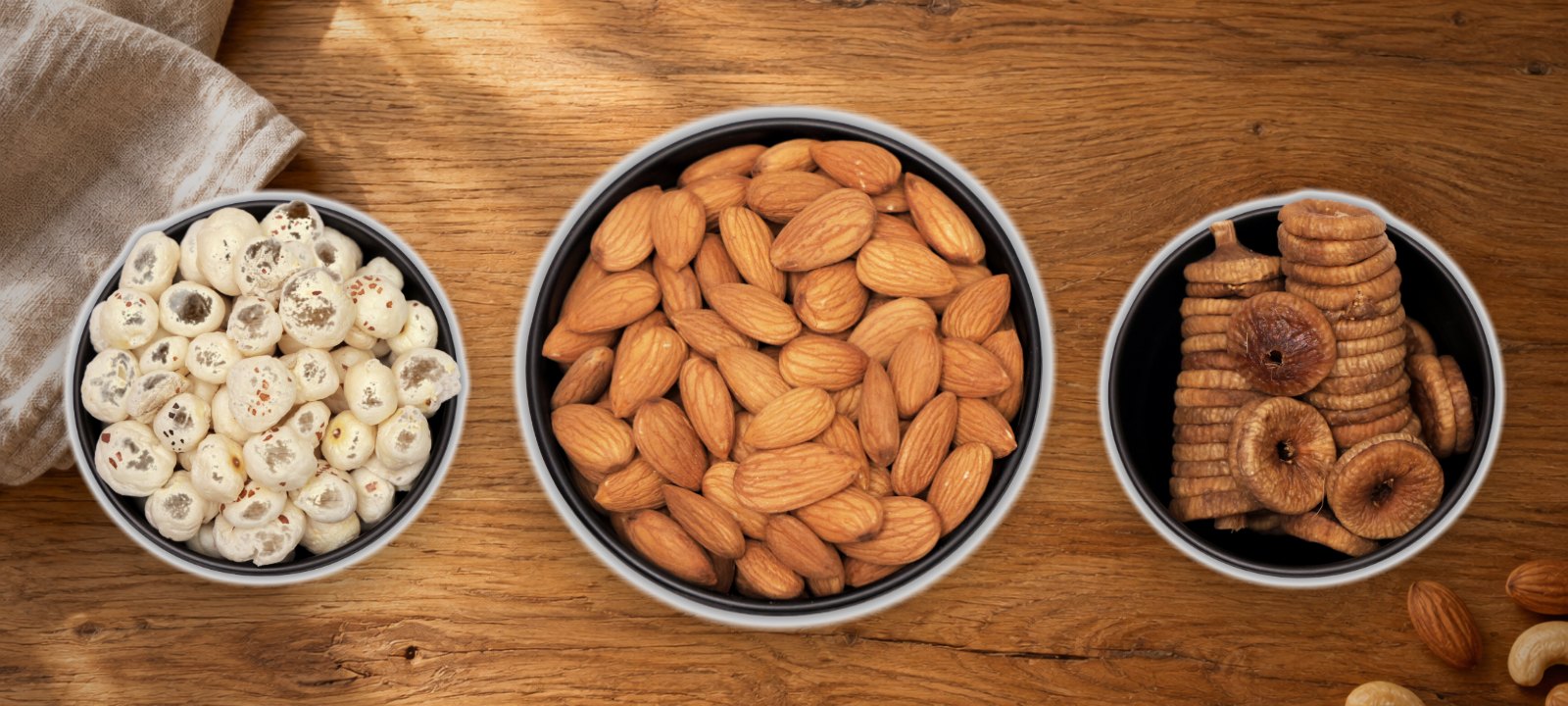
For a parent who finds hard nuts tiring to chew, give 5 soaked badam (almonds) with the peel removed, 2 soft anjeer (figs) and 6 munakka (large dark raisins) a day. All three are soft after soaking, small in portion and gentle on teeth.
Keep the daily total near 30 to 40 g. Older appetites are smaller, so a few pieces spread across the day work better than one big handful. Walnut halves can be crushed with the back of a spoon and stirred into warm milk or porridge.
Check with the family doctor if your parent has a medical condition or takes regular medicines, and let that guide any change to the plan. The quantities here are ordinary food portions. Offer water with every serving, because older people often forget to drink, and dry fruit is more comfortable to swallow with a few sips alongside.
A simple day plan
- Morning, with tea or milk: 5 badam soaked overnight, peeled and sliced thin.
- Mid-morning: 2 anjeer, soaked 3 hours, cut into small pieces.
- Afternoon: 6 munakka, seeds removed, eaten with a glass of water.
- Evening: 2 walnut (akhrot) kernels, crushed, over dalia or curd.
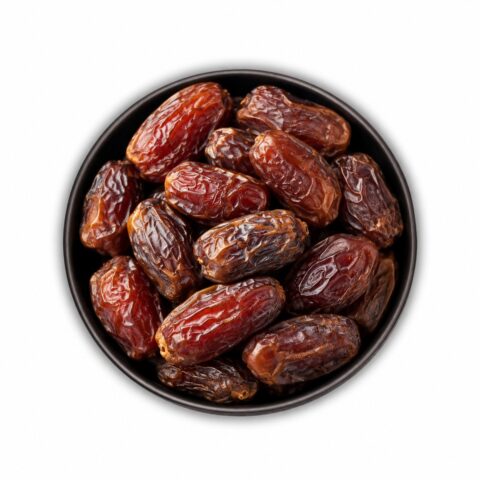
- Bedtime: 1 soft Medjool date if sweetness is wanted, or a spoon of ground flax seeds (alsi) in warm milk.
Softness at a glance
| Item | Chew level | Best prepared as | Daily amount |
|---|---|---|---|
| Anjeer | Very soft | Soaked 3 hours, chopped | 2 pieces |
| Medjool date | Very soft | Stone removed, mashed in milk | 1 piece |
| Munakka | Soft | Soaked, seeds out | 6 pieces |
| Badam | Medium after soaking | Soaked 8 hours, peeled, sliced | 5 pieces |
| Walnut | Medium | Crushed into porridge | 2 kernels |
| Makhana | Crisp but light | Dry roasted, then crushed | A small bowl |
Texture matters more than anything else for this age group. If dentures are fitted, skip whole badam and use thin slices or powder. Anjeer seeds are tiny and soft, so they rarely bother, but the stalk end should be trimmed off before serving. Munakka seeds are hard, and it takes ten seconds to pop them out with a thumbnail.
Sweet tooth in the house? A date mashed into warm milk with a pinch of cardamom replaces a spoon of sugar and feels like dessert. Makhana crushed into a coarse powder thickens kheer and soup without any chewing at all. Rotate these through the week so mealtimes do not get boring, and keep portions small enough to finish.
Soaking and storing
Soak badam in a bowl of water overnight, around 8 hours; the skin then slips off between two fingers. Anjeer and munakka need only 2 to 3 hours. Always soak a fresh day’s portion; soaked fruit left in water for more than a day turns sour.
Keep the unsoaked stock in a dry steel or glass jar with a tight lid, away from the stove. Whole nuts stay fresh for about 3 months in that jar. For parents who cannot chew at all, grind badam and walnut into a coarse powder once a week and keep it in a small airtight tin.
A month’s shopping list for one parent
- Jumbo badam: 250 g
- Anjeer: 250 g
- Munakka: 250 g
- Walnut kernels: 250 g
- Medjool dates: 250 g
- Makhana: 250 g
Looking for something sweeter and softer? Browse the dates collection. Sending a pack to parents in another city works well too, because every order is weighed to the gram and sealed airtight. For a bigger gift, see the dry fruit gift boxes. Orders start at ₹1,000 and every order ships free. Payment is online only.
Questions people ask
How many soaked badam should an elderly person eat in a day?
Five soaked badam, peeled, is a comfortable portion. Peeling makes them softer to chew, and slicing them thin helps if teeth are weak.
Which dry fruits are softest for people with weak teeth?
Anjeer, Medjool dates and soaked munakka are the softest. Crushed walnut and ground badam powder also work well when stirred into milk or porridge.
Can nuts be ground for parents who cannot chew?
Yes. Grind badam and walnut to a coarse powder once a week and keep it in an airtight tin. A spoon in warm milk or dalia is an easy daily portion.
How long do soaked dry fruits stay good?
Use soaked badam, anjeer and munakka within a day, and keep them in a covered bowl in the fridge once soaked. Store the dry stock in a tight jar away from heat.