



What families usually eat on a vrat day
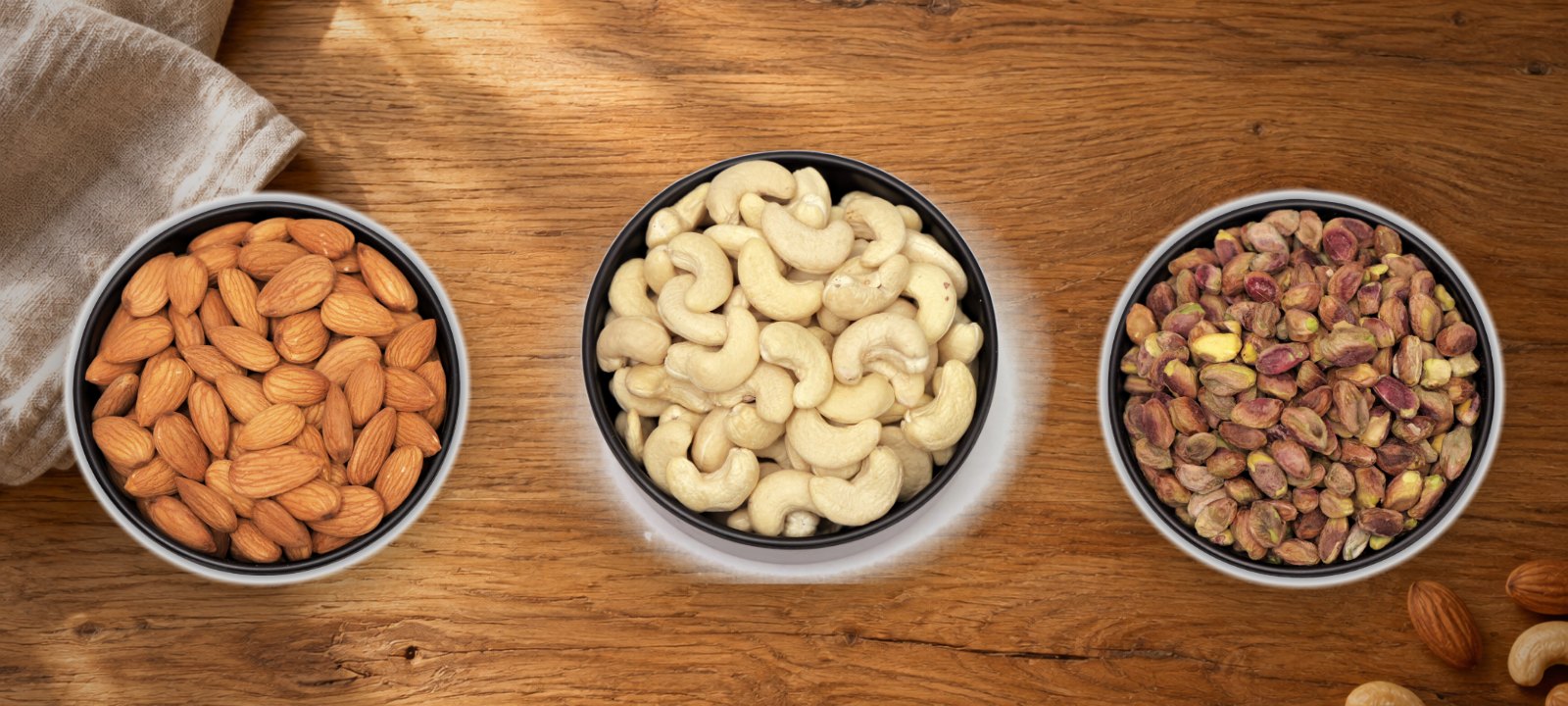
Most fasting households keep to makhana (fox nuts), dates, kaju (cashew), badam (almonds), pista and kishmish (raisins). All are dry fruits or seeds with no grain, and all are plain, unprocessed food. Customs differ by family and by vrat, so check yours: the usual question is only whether salt should be sendha namak (rock salt).
Choose plain, unflavoured packs for a vrat. Masala or peri-peri coatings often contain ingredients that many households avoid on fasting days, so read the pack or ask before buying. Plain makhana, kaju, badam, dates and kishmish leave you in full control of salt, ghee and spices.
A full-day vrat plan
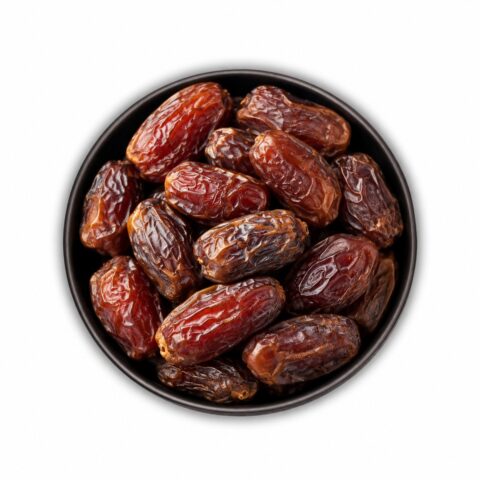
- Breakfast, around 8 am: 3 Medjool dates and a glass of milk or thin lassi.
- Mid-morning: a bowl of makhana, about 25 g, roasted in 1 tsp ghee with a pinch of sendha namak.
- Lunch: kheer or fruit, plus 8 soaked kishmish and 6 badam.
- Afternoon: 6 kaju and 1 tbsp pista with tea.
- Evening, after puja: makhana kheer or another bowl of roasted makhana.
Dry fruits are filling, but they are not a full meal for everyone. Drink plenty of water between servings, and break the fast gently with something soft before eating a heavy meal.
Vrat snack comparison
| Item | Portion | Calories (approx.) | Why it suits a fast |
|---|---|---|---|
| Makhana, roasted | 25 g, 1 bowl | 90 | Light, crisp, easy to carry |
| Medjool date | 1 piece, 24 g | 65 | Natural sweetness, quick energy |
| Kaju | 6 pieces, 10 g | 55 | Creamy, good in kheer |
| Badam | 6 pieces, 8 g | 45 | Gives protein and healthy fats |
| Kishmish | 1 tbsp, 10 g | 30 | Sweetens milk and kheer |
| Pista | 10 pieces, 6 g | 35 | Garnish and snack |
A long fast asks for steady, small servings rather than big ones. Many people start the day with something sweet and soft, like dates in milk, then move to crisp snacks in the afternoon and a light kheer at night. Spacing the servings two to three hours apart keeps you comfortable and avoids the heavy feeling that comes from eating a large quantity of dry fruit in one go.
If you are cooking for the whole family, make one tray of roasted makhana and one jar of mixed nuts at the start of the vrat. Everyone can help themselves, and nobody has to stand at the stove for each snack. Label the jar with the date so it is finished in good time.
Roasting makhana the vrat way
Heat 1 tsp ghee in a heavy pan on low flame. Add 2 cups of makhana and stir for 8 to 10 minutes until a piece breaks with a clean snap. Add a pinch of sendha namak and black pepper off the flame. Cool completely before storing, or the pops go soft. A closed steel tin keeps roasted makhana crisp for about a week.
Navratri shopping list for nine days
- Makhana: 500 g
- Medjool dates: 500 g
- Kaju: 250 g
- Badam: 250 g
- Kishmish: 250 g
- Pista kernels: 100 g for garnish
Short on time? The 12 nuts and dry fruits trial mix covers several of these in one pack. Many families also send a prasad box to relatives; see the dry fruit gift boxes and browse the makhana collection. Orders start at ₹1,000 and every order ships free. Payment is online only.
Questions people ask
Is makhana allowed during vrat?
Makhana is a seed, not a grain, and is widely eaten on vrat days in most households. Customs differ by family, so confirm with your own tradition, especially about salt.
How much makhana can I eat in a day of fasting?
A bowl of about 25 g roasted makhana, two or three times through the day, is a common portion. Pair it with water, milk or fruit.
Can I eat dates and raisins while fasting?
Dates and kishmish are dried fruit with no grain, so they are commonly eaten on vrat days. A Medjool date with milk makes a quick, sweet breakfast.
How do I keep roasted makhana crisp?
Let it cool fully after roasting, then store it in a closed steel or glass tin. Roasted in ghee it stays crisp for about a week.