In this guide
Quick answer
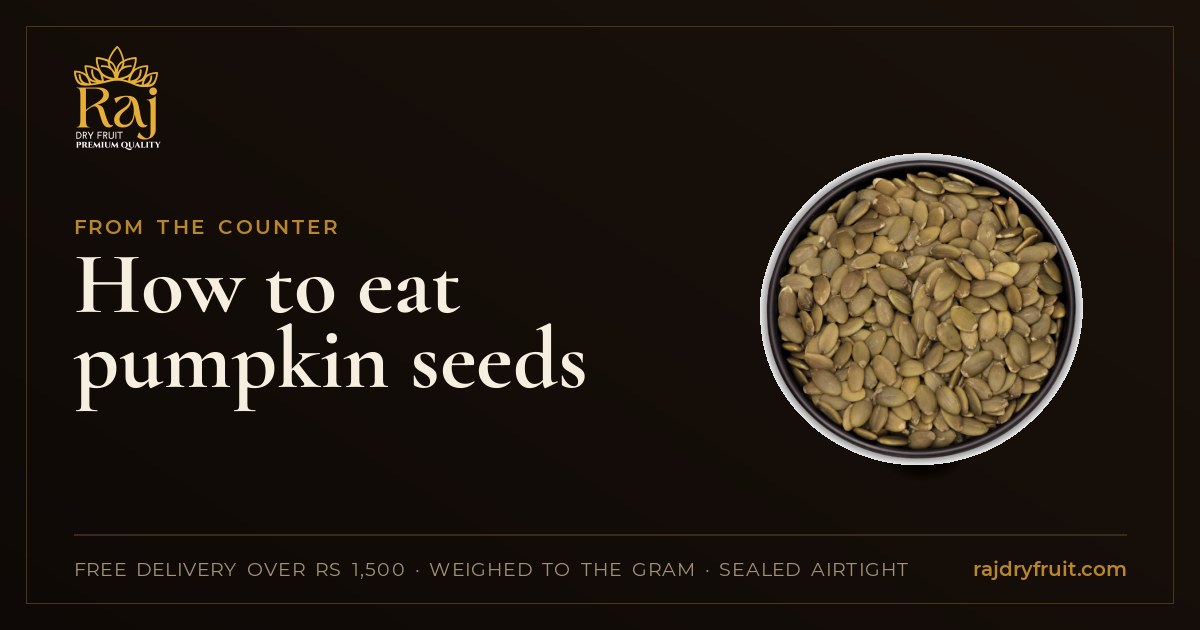
To eat pumpkin seeds, take a small handful, about 20 to 30 grams, and eat them as they are, dry-roast them in a pan for a few minutes, or scatter them over curd, poha, salads and porridge. The green kernels are soft enough to eat raw; roasting makes them crunchier and nuttier.
In Hindi they are kaddu ke beej, the seeds of the kaddu or pumpkin. What most people buy in packets is the flat, dark-green kernel with the white outer shell already taken off, and that is the one this guide is about. The white-shelled seed you scoop out of a pumpkin at home is edible too, but its shell is tough and fibrous, and most people either roast those well or leave them.
What are pumpkin seeds called in Hindi?
Pumpkin seeds are called kaddu ke beej in Hindi. You will also see the English word pepitas on imported packets, which usually means the same green hulled kernel.
A small note on names, because the counter hears the mix-up often: magaj or magaz is a different seed. In most Indian kitchens magaj means the small white kernels of watermelon or melon seeds, used in thandai, laddoos and gravies. If a recipe says magaj, you want Watermelon Seeds (Magaj Beej) or muskmelon seeds, not pumpkin. For the full list of what each seed and dry fruit is called, see our guide to dry fruit names in English and Hindi.
How to eat pumpkin seeds: six easy ways
The easiest way is straight from the jar, a spoonful at a time. Beyond that, these are the ways we see people actually use them in Indian homes:
- As a snack, dry-roasted. A handful roasted in a pan with a pinch of salt is the simplest evening snack there is.
- On curd or raita. A tablespoon on a bowl of dahi, with a little roasted jeera, adds crunch without changing the taste much.
- In poha, upma and salads. Stir them in at the very end so they stay crisp.
- In oats, daliya or muesli. Add them after cooking, not before.
- In a seed mix. Many people keep one jar of mixed seeds on the table and take a spoon a day. Our Five Seeds Mix is exactly that, already mixed.
- Ground into chutney or a laddoo. Roasted and ground with coconut, they make a green-tinged chutney; pounded with jaggery and other seeds, they go into a winter laddoo.
One thing they are not good at is long cooking. Boiled in a dal or a gravy for twenty minutes, they go soft and lose the crunch that is the point of them.
Raw or roasted pumpkin seeds: which is better?
Neither is better in any way that matters; raw and roasted pumpkin seeds carry nearly the same nutrition, and the choice is mostly about taste and texture. A light dry roast changes the flavour far more than it changes what is inside.
| Point | Raw | Dry-roasted |
|---|---|---|
| Taste | Mild, slightly grassy | Nutty, fuller |
| Texture | Soft, a little chewy | Crisp, some puff up |
| Best for | Smoothies, grinding, salads | Snacking, toppings |
| Keeps | Longer, if stored airtight | Best eaten within a week or two |
| Salt | None | Easy to add while hot |
If you roast them, keep the heat gentle. Very high heat burns the outside before the inside warms, and scorched seeds taste bitter.
How to roast pumpkin seeds at home
- Heat a heavy kadhai or tawa on low to medium flame. No oil is needed.
- Add the seeds in a single layer, not a heap.
- Stir constantly for about three to five minutes. They will start to swell, some will pop, and the smell will turn nutty.
- For salted seeds, sprinkle a pinch of salt and a few drops of oil or ghee while they are still hot and toss.
- Tip them onto a plate at once. Left in the hot pan, they keep cooking.
- Let them cool completely before they go into a jar, or the steam will soften them.
How many pumpkin seeds should you eat a day?
A small handful a day, about 20 to 30 grams or two to three tablespoons, is the usual everyday amount. That is enough to add some protein and minerals to your day without adding too many calories, because pumpkin seeds are dense: about 170 calories in 30 grams.
There is no magic number, and more is not better. Pumpkin seeds are high in fat and fibre, and eating a large bowl in one sitting can leave some people feeling heavy or bloated. If you are new to them, start with a tablespoon and build up.
For young children, whole seeds and nuts are a choking risk, so for a child under five grind them into a powder and mix it into food. If you are pregnant, diabetic, have a kidney condition or are on medicine, ask your doctor what amount suits you.
Pumpkin seeds benefits: what is actually in them
Pumpkin seeds are one of the richer plant sources of protein, magnesium and zinc, which is why they turn up in so many healthy-eating lists. The figures below are the widely published approximate values for dried, hulled kernels.
| Per 100 g (about) | Amount | In a 30 g handful (about) |
|---|---|---|
| Energy | 560 kcal | 170 kcal |
| Protein | 30 g | 9 g |
| Fat | 49 g | 15 g |
| Fibre | 6 g | 2 g |
| Magnesium | 590 mg | 175 mg |
| Zinc | 7.8 mg | 2.3 mg |
| Iron | 8.8 mg | 2.6 mg |
Most of the fat is the unsaturated kind found in most nuts and seeds. The protein makes them a useful addition for vegetarian households, alongside dal, paneer and curd; our page on protein-rich dry fruits lists the other good vegetarian sources on our shelves.
What they are not is medicine. Eaten as part of an ordinary balanced diet, they are good food. Claims that a spoonful of seeds will fix a specific health problem are best ignored, and anyone managing a condition should talk to a doctor rather than a seed packet.
How to store pumpkin seeds so they stay fresh
Because they are so rich in oil, pumpkin seeds go stale and then rancid if they sit in warm air. A few simple habits keep them tasting fresh:
- Airtight jar, away from the stove. Heat and light are what age the oil fastest.
- Fridge for anything beyond a month or two, especially through a hot Indian summer or a humid monsoon.
- Dry spoon only. Moisture makes them soft and invites mould.
- Roast only what you will eat in a week or two. Roasted seeds lose their snap faster than raw ones.
- Smell before you eat. Fresh seeds smell faintly nutty. A sharp, paint-like or bitter smell means the oil has turned, and they should go.
Pumpkin seeds sit happily next to Sunflower Seeds and Flax Seeds (Alsi) in a daily jar; you can see all of them together on our Seeds shelf. We send them across India in 100 g, 250 g and 500 g packs; orders start at ₹1,500 and every order ships free, and today’s price is on the Pumpkin Seeds page.
Questions people ask
Can we eat pumpkin seeds raw?
Yes. The green hulled kernels sold in packets are ready to eat raw, straight from the jar. Roasting is only for flavour and crunch.
Should pumpkin seeds be soaked before eating?
There is no need to. Some people soak them overnight to make them softer and easier to chew or blend, but soaked seeds lose their crunch and should be eaten the same day.
What is the best time to eat pumpkin seeds?
Any time suits them. Most people take them in the morning with breakfast or as an evening snack in place of something fried.
Can you eat the white shell of pumpkin seeds?
The white shell is edible, but it is hard and fibrous, so it needs good roasting and thorough chewing. Most people prefer the green kernel inside, which is what packets usually sell.
Are pumpkin seeds and magaj the same thing?
No. Pumpkin seeds are kaddu ke beej, flat and green. Magaj usually means the small white kernels of watermelon or melon seeds used in thandai and sweets.
Written at our counter, where these questions get asked every week.